Mountain Men Encampment at the Adirondack Museum

The fur trade comes to life at the Adirondack Museum this weekend, Friday, August 17 and Saturday, August 18. Join the museum and educational interpreters in period dress as they showcase a variety of survival skills at the annual American Mountain Men Encampment.

Visitors will see colorful demonstrations of tomahawk and knife throwing, campfire cooking, firearms and shooting, and fire starting. There will be displays of pelts and furs, clothing of eastern and western mountain styles, period firearms and much more.
Mountain men are powerful symbols of America’s wild frontier. Legends about the mountain man continue to fascinate because many of the tales are true: the life of the mountain man was rough, and despite an amazing ability to survive in the wilderness, it brought him face to face with death on a regular basis.

The American Mountain Men group was founded in 1968. The association researches and studies the history, traditions, tools, and mode of living of the trappers, explorers, and traders known as the mountain men. Members continuously work for mastery of the primitive skills of both the original mountain men and Native Americans. The group prides itself on the accuracy and authenticity of its interpretation and shares the knowledge they have gained with all who are interested.

Participants in the museum encampment are from the Brothers of the New York, Vermont, New Hampshire, and Massachusetts segment of the national American Mountain Men organization. Participation in the encampment is by invitation only.

All of the American Mountain Men activities and demonstrations are included in the price of Adirondack Museum admission. There is no charge for museum members. The Adirondack Museum is open 7 days a week, from 10 a.m. &#8211 5 p.m., through October 14. The museum will close at 3 p.m. September 7 for special event preparations.

This Weeks Top New York History News

Each Friday morning New York History compiles for our readers the previous week’s top stories about New York’s state and local history. You can find all our weekly news round-ups here.

Subscribe! More than 2,800 people get New York History each day via E-mail, RSS, or Twitter or Facebook updates.

This Weeks New York History Web Highlights

Each Friday afternoon New York History compiles for our readers the previous week’s top weblinks about New York’s state and local history. You can find all our weekly round-ups here.

Subscribe! More than 2,800 people get New York History each day via E-Mail, RSS, or Twitter or Facebook updates.

Survey Underway for National Council on Public History

How do you stay informed about the field of public history? The National Council on Public History (NCPH) is conducting a readers survey to learn how public historians at all stages of their careers use journals, blogs, newsletters, listservs, and other venues to engage in critical reflection and keep up with new developments in the profession.

They are interested in hearing from wide variety of practitioners, educators, and students. With your help we hope to strengthen NCPH’s journal, The Public Historian, and to discover new intersections among and formats for professional and scholarly publications.

The survey takes 10-15 minutes and is available at https://www.surveymonkey.com/s/public-history-readers-survey The survey closes August 15.

Group to Study Economic Impact of Erie Canalway Trail

Visitors to the Erie Canalway Trail this summer may encounter students wanting to know more about their visit as part of a an economic impact study being conducted by the statewide not-for-profit advocacy group, Parks & Trails New York (PTNY). Paul Scipione, Ph.D., Professor Emeritus of Business and Director of the Survey/Research Center at SUNY Geneseo is leading the eight-month effort.

Throughout July and August, Dr. Scipione and his team will survey 600-800 current trail users to gather data on demographics, trail usage and spending patterns, and overall trail experience. Approximately 30 SUNY Geneseo undergraduates who live within the Canalway Trail corridor will administer the survey to persons selected randomly at multiple points along the trail. In addition, students will be noting the number and nature of trail users as part of an expansion of the annual Erie Canalway Trail count.

Students will also survey local business owners and government, economic development and tourism officials. The information obtained from the surveys will be used to ascertain current and potential economic impacts of the Erie Canalway Trail on New York’s economy, in terms of dollars as well as jobs generated and sustained. Study results will be published in early 2013.

“We are certain the Erie Canalway Trail has a positive effect on the economy of hundreds of local communities, but we don’t presently have statistically valid data to back that up. We look forward to receiving the survey results and sharing them with business owners, elected officials, and community residents,” said PTNY Executive Director Robin Dropkin.

Dr. Scipione has directed more than 1,000 research studies, a number of which have dealt with travel and tourism, recreational venues and the measurement of quality-of-life issues.

Parks & Trails New York is the leading nonprofit organization, working since 1985, to expand, protect and promote a network of parks, trails and open space throughout New York State through advocacy, outreach, technical assistance to communities, and promotion of bicycle tourism. For more than a decade, PTNY has actively promoted the Canalway Trail through its annual Cycling the Erie Canal tours- popular guidebook, Cycling the Erie Canal: A guide to 400 miles of adventure and history along the Erie Canalway Trail– and interactive on line version of its guidebook. PTNY has also worked with local business people and elected officials to attract and meet the needs of bicycle tourists in their communities through its Bicyclists Bring Business workshops and guidebook, Bicyclists Bring Business: A Guide for Attracting Bicyclists to New York’s Canal Communities. For more information, go to www.ptny.org.

The study is funded in part by the New York State Canal Corporation and the Erie Canalway National Heritage Corridor.

Prescribed Fire Program at Saratoga National Historical Park

With favorable weather conditions in place, certified wildland firefighters at Saratoga National Historical Park, will undertake prescribed burning of approximately 40 acres of park land during the last two weeks of August.

This “summer burn” will include the Chatfield Farm area of the Battlefield.  The burns may take up to three days to complete, and the park will remain open to visitors during this time.  The park has historically conducted prescribed burns in the Spring.

This shift from spring to summer burning is an experimental approach to see if the application of fire at a  different time will yield better results in the management of the types of plants found in the fields.  It is hoped the summer burn will result in  greater success in ridding the park of unwanted invasive and woody stemmed  plants.

For over twenty years, prescribed fires have been a valuable and safe tool in managing Saratoga Battlefield’s 3200 acres.  Planned burns allow the park to maintain its historic 1777 landscape, reduce the spread of exotic plant species, encourage regeneration of natural grasses and eliminate the
need for personnel to work on hazardous slopes with mechanical equipment.  Additionally, hazard fuel reduction around developed areas provides for firefighter safety and structure protection in the event of a natural wildfire.

Before such a prescribed fire can occur, an official Fire Management Plan  is required. Saratoga National Historical Park’s Fire Management Plan was approved by regional National Park Service Fire Management Officers. Neighboring fire departments are informed of daily plans and prior to
igniting a fire, and park staff runs down a go/no go checklist prior to any  firing.

If you have any questions about prescribed fires at Saratoga National Historical Park or park events, please contact the park’s visitor center at (518) 664-9821 ext. 1777.

Fort Ticonderoga 1759 Living History Weekend

Join General Amherst’s British and provincial army at Fort Ticonderoga this Saturday and Sunday, August 4 and 5 and experience the daily life of a soldier in the aftermath of the destruction of France’s southernmost stronghold on Lake Champlain.

Hear the roar of musketry as these well-trained soldiers continue to prepare for conflict. Lend a hand as these soldiers move men and material from Lake Champlain to supply the army encamped around the Fort. Meet British staff officers and learn about their overall strategy in the French and Indian War in 1759.
Highlighted programming will be offered throughout the weekend including musket drills and firing demonstrations, activities on the shores of Lake Champlain as troops unload supplies, Fife & Drum Corps performances, and even an 18th-century Sunday morning Divine Service. Admission to “1759 Relief & Refit” is included with FortTiconderoga’s general admission ticket. Fort Ticonderoga is open from 9:30 am until 5 pm daily. A complete event schedule can be found online or by calling 518-585-2821.

“’Relief & Refit’ will take place on the very ground where General Amherst’s troops secured this strategic victory,” said Stuart Lilie, Director of Interpretation. “This weekend-long program will dramatically bring to life the experience of the British and American provincial soldiers who were part of the 1759 campaign. In this British living history weekend event, we will recreate and practice the regular, naval, and ranging elements of this Army as it prepared to move on towards Canada in August of 1759.”

“Fort Ticonderoga offers an unparalleled and unique experience for visitors to be immersed in a dramatic moment in time,” said Beth Hill, Fort Ticonderoga’s Executive Director. “What took place at Fort Ticonderoga determined in part the fate of North America. The capture of the Fort in 1759 was critical to the overall British strategy which ultimately led to their victory during the French and Indian War.”

This living history weekend will include a Friday evening program at the site of the 18th-century French saw mill, located in present-day Historic Ticonderoga. Visitors will watch as a detachment of Massachusetts Provincial soldiers haul timber back to the Fort with a bateau. Talk with men from Rogers’ Rangers, fresh from a scout up Mount Defiance. The French & Indian War history ofTiconderoga will come to life in this fascinating evening program located in the town park from 5:30 – 7:30 pm.

Bike Tour: Champlain Canal and Rev War Road to Saratoga

On Sunday August 12, enjoy a free 20-mile guided bicycle tour along the Champlain Canalway Trail between Hudson Crossing Park in Northumberland and Saratoga Battlefield in Stillwater.

This tour will take bikers past historic sites of interest related to the Revolutionary War and the Champlain Canal. Sites include Hudson Crossing Park, Champlain Canal Lock 5, the Schuyler House, the Champlain Canalway Towpath Trail and Saratoga National Historic Park. Read more

New Drama to Bring Roebling, Brooklyn Bridge to Stage

A new drama Roebling: The Story of the Brooklyn Bridge is in development for a New York City Equity Showcase Production to be produced by special arrangement between the author Mark  Violi and Theater to Go. Plans are underway to present this show in March 2013.

Based on the true story of the Roebling family who helped conceive, design and finally build the New York’s Brooklyn Bridge, the play has been endorsed by the Roebling Museum and by descendants of John Roebling. &#8220Roebling: The Story of the Brooklyn Bridge&#8221 brings to the stage the human drama surrounding the construction effort to complete one of the most enduring engineering icons in the world. The play examines the beginnings of the project to build the Brooklyn Bridge in1869, through its completion in 1883. It is a play about a forward thinking family on the cutting edge of the Industrial Revolution. The play shows how this project foreshadowed the 20th century in its huge ambition, the revolutionary construction techniques developed by John Roebling and implemented by his son Washington, and in the recognition of the invaluable role that a woman, Emily Roebling, played in the completion of this enormous project. &#8220Roebling: The Story of the Brooklyn Bridge&#8221 has had two widely acclaimed non-equity productions in Pennsylvania and in New Jersey. The New Jersey premier was produced in 2010 by invitation of the Roebling Museum to open the restored Roebling Auditorium and it was because of the overwhelming response to this play that plans were implemented to bring it to NYC. Fundraising has begun through IndieGoGo. Through a special arrangement with Fractured Atlas, Theater to Go is able to accept tax deductible contributions and has arranged to offer some incentives donated by the Roebling Museum including artifacts from the Roebling factories. With the success of the fundraising, this showcase production is seen as a first step toward a larger New York production. Theater to Go is well known throughout the Mid-Atlantic region for their  unique interactive theater events. At the helm is Ruth Markoe who has produced, directed and performed throughout the region for many years and who brought the NJ premier to the stage. Photo: Mark Violi and Ruth Markoe holding original cable from the Brooklyn Bridge (provided).  

2012 Horse Racing Hall of Fame Inductees Set

The National Museum of Racing will induct its 2012 Hall of Fame class Friday at 10:30 a.m. at the Fasig-Tipton sales pavilion. Jockeys John Velazquez and Anthony Hamilton, trainers Roger Attfield and Robert Wheeler, and racehorses Ghostzapper and Planet will be enshrined. Tom Durkin, the track announcer for the New York Racing Association, will serve as the event’s master of ceremonies.

The ceremony is free and open to the public. The inductions are also available through a live stream on the Museum’s website. Radio coverage will be provided by Horse Racing Radio Network.

Through Monday, Velazquez has won 4,841 races and has earned more than $268 million. He won the Eclipse Award for Outstanding Jockey in 2004 and 2005 and led all North American riders in earnings during those years. He led all New York jockeys in wins from 2001 through 2004 and set a record with 65 wins at Saratoga in 2004. Velazquez has won 22 riding titles at New York Racing Association tracks and has nine Breeders’ Cup wins. He posted 50 Grade 1 wins from 2006 through 2011. Velazquez won the Kentucky Derby in 2011 with Animal Kingdom and the Belmont Stakes in 2007 with Rags to Riches and 2012 with Union Rags. His other major victories include the Travers, Alabama, Champagne, Sanford, Personal Ensign, Whitney, King’s Bishop, Hollywood Derby, and Kentucky Oaks.

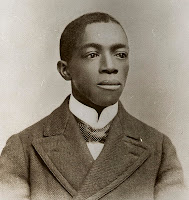
Hamilton was born in Charleston, S.C., in 1866 and won many of the most prestigious races of the 19th century. In 1890, Hamilton rode Potomac to victory in the third edition of the Futurity, which at the time was the richest race in American history with a purse of $67,675. That year, Hamilton led the nation in winning percentage (31.2). In 1891, he boosted his national-best win percentage to 33.8 and won 154 races to place second in the national standings.

In 1895, Hamilton won two of the most prominent races in the country by taking the Brooklyn Handicap on Hornpipe and the Suburban Handicap aboard Lazzarone. The next year, Hamilton added the third major New York handicap event, the Metropolitan Handicap, with Counter Tenor. Hamilton is the only African-American jockey to win all three of New York’s major handicap races. During this era, these races were generally considered to be more important than the likes of the Kentucky Derby, Preakness Stakes, and Belmont Stakes.

Hamilton’s other major victories included the American Derby (1887), Lawrence Realization Stakes (1891), Monmouth Oaks (1889, 1890), Monmouth Invitational Handicap (1889, 1892), Juvenile Stakes (1890), Gazelle Handicap (1887, 1890), Nursery Stakes (1886), Flatbush Stakes (1889, 1890), Sapling Stakes (1891), Swift Stakes (1892), Toboggan Handicap (1890), Twin City Handicap (1886, 1888, 1889, 1892, 1894), Great Trial Stakes (1892), Tidal Stakes (1891), Hudson Stakes (1889), and St. Louis Derby (1888), among others.

Through Monday, Attfield has saddled the winner of 1,745 races and has purse earnings of more than $90 million. He has won the Sovereign Award for Outstanding Canadian Trainer a record eight times and trained three Canadian Triple Crown winners (Izvestia, With Approval, and Peteski). Attfield has won a record-tying eight runnings of the Queen’s Plate and seven editions of the Canadian Breeders’ Stakes. He won his first Breeders’ Cup race in 2011 when Perfect Shirl took the Filly and Mare Turf. Attfield is a member of the Canadian Racing Hall of Fame. The many other stakes races he has won in the United States include the Wood Memorial, Flower Bowl, Shadwell Turf Mile, Maker’s Mark Mile, Elkhorn, Yellow Ribbon, Orchid, and Carter Handicap.

Wheeler, whose career spanned from 1938 through 1992, won 1,336 races and trained for prominent owners such as C.V. Whitney, J. Rukin Jelks, Greentree Stable, and Nelson Bunker Hunt. He conditioned 56 stakes-winning horses, including 1982 Champion Older Female Track Robbery. The majority of his career predates the grading of races, but from 1976 on he won 18 of the 69 (26 percent) graded stakes his horses ran in and 44 of his 175 (25 percent) overall stakes attempts. In 1959 and 1960, Wheeler’s West Coast-based division included Tompion, winner of the Santa Anita Derby, Blue Grass Stakes, and Malibu, and the distaff pair of Bug Brush and Silver Spoon.

Bug Brush won six stakes at 4 and set a world record the day she beat males Hillsdale and Terrang in the San Antonio Stakes. Silver Spoon, a member of the Hall of Fame, won 10 stakes in two years, including the trainer’s first of back-to-back wins in the Santa Anita Derby, in which she defeated Preakness winner Royal Orbit. He also sent out five winners of the Hollywood Juvenile Championship, which prior to the Breeders’ Cup era was one of the nation’s top races for 2-year-olds. From 1959 through 1969, Wheeler was on the leaders list of the top 30 North American trainers seven times in terms of earnings. His division accounted for more than 60 percent of the earnings of the C.V. Whitney stable when it led all owners in 1960.

Ghostzapper (Awesome Again-Baby Zip, by Relaunch) won 9 of 11 career starts and earned $3,446,120. He was named Horse of the Year and Champion Older Male in 2004 when he posted a 4-for-4 record. Trained by Hall of Fame member Bobby Frankel, Ghostzapper won the 2004 Breeders’ Cup Classic in stakes-record time, covering the 1?-mile distance in 1:59.02. That year, he also won the Woodward Stakes, Tom Fool Handicap, and Iselin Handicap. At 3, Ghostzapper won the Vosburgh Stakes. He closed out his career with a victory in the Metropolitan Handicap at age 5. Ghostzapper raced for Frank Stronach and is currently a stallion at Stronach’s Adena Springs in Kentucky. Foaled in Virginia at Maj. Thomas W. Doswell’s Bullfield Stable in 1855, Planet was sired by Revenue out of the Boston mare Nina.

Planet was a sensation from the start. He made his debut with a victory over four others in mile heats for a purse of $10,750 in Fairfield, Va., on May 4, 1858, and went on to establish a record for career purse earnings that stood for 20 years. Planet displayed his remarkable skill and versatility by compiling a record of 27-4-0 from 31 starts and earning $69,700. Known as “The Great Red Fox,” Planet was regarded by many turf experts to be second only to the mighty Lexington among the greatest American racehorses prior to the Civil War.

Photo: Anthony Hamilton.