History of Technology in Western New York Exhibit

The University at Buffalo Libraries has announced a new exhibit, &#8220History of Technology in Western New York&#8221 at the 2nd Floor, Oscar A. Silverman Library, Capen Hall, University at Buffalo North Campus. Researched and written by Nancy Schiller, Engineering Librarian, and produced by Rose Orcutt, Architecture & Planning Librarian, &#8220History of Technology in Western New York&#8221 offers a glimpse into Western New York’s rich industrial heritage.

The exhibit pays homage to Buffalo’s iconic grain elevators, to Pierce-Arrow and its sleek automobiles and even sleeker advertising, to the region’s contributions to early aviation, and to the massive steelmills in Lackawanna, and the men and women who labored in them.

Photographs, text and images featured in the exhibit recallan era when 50 percent of Buffalo’s population was engaged in industrial endeavors of one sort or another, and factories, grainelevators, blast furnaces and steel refineries dotted the local landscape.

Inspiration for the exhibit came from a recent UB Honors Seminar taught by Professor John Van Benschoten, Department of Civil, Structural, and Environmental Engineering. The course explored the role of Buffalo, Niagara Falls, and Western New York in our nation’s history, and provided students with an opportunity to consider the history of Western New York and its future through anunderstanding of technology, and the benefits and costs that come with it.

The exhibit is open during regular library hours and runs through May 31, 2012.

Photo: Great Northern Grain Elevator (2007), courtesy forgottenbuffalo.com

Budget, New Funding Boosts New York History

This week Governor Andrew M. Cuomo announced $89 million for in New York Works funding for capital improvements at 48 specific state parks and historic sites that account for 37 million of the park system’s 57 million annual visitors. The state budget signed last week also includes $35.6 million in total funding for the New York State Council on the Arts grants, an increase of $4 million. The Environmental Protection Fund is unchanged, at $134 million which includes 9M for the Zoos, Botanical Gardens and Aquariums Program and additional monies for some historic preservation projects. According to the Museum Association of New York (MANY), there are no cuts in jobs or programs at the state Office of Parks, Recreation and Historic Preservation, but &#8220Parks would be down 12 jobs, to 1,736, reflecting attrition and the ongoing hiring freeze.&#8221 Funding to run the parks would dip slightly, about 2.5 percent, to $211.3 million according to MANY.

According to a press statement issued by the Governor’s office, New York Works is designed to reinvent state economic development with innovative new strategy that will put New Yorkers back to work rebuilding the state’s infrastructure. The Task Force is expected to help create tens of thousands of jobs by coordinating comprehensive capital plans, overseeing investment in infrastructure projects, and accelerating hundreds of critical projects across the state.

Parks & Trails New York was among those who reacted enthusiastically to the New York Works plan. Through a series of reports over the last few years, Parks & Trails New York has attempted to document the challenges facing the New York State Office of Parks, Recreation and Historic Preservation (OPRHP), particularly the agency’s enormous capital projects backlog, and the economic benefit the park system generates for the people and economy of the Empire State.

On a statewide basis, Parks & Trails New York reports that direct spending by OPRHP and spending by visitors to state parks supports up to $1.9 billion in output and sales, $440 million in employment income, and 20,000 jobs. The benefit-to-cost ratio is more than 5-to-1—more than $5 in benefits for every $1 in costs.

A detailing of projects in each region of the state can be found by using the Governor’s press releases here.

New Carnegie Exhibit at Museum of American Finance

On Tuesday, April 10, the Museum of American Finance will open “Andrew Carnegie: Forging Philanthropy,” an exhibit on Carnegie’s life and work, with a spotlight on his love of Scotland, his business life and his philanthropic activities. The exhibit will be unveiled at an event presented in conjunction with the American-Scottish Foundation in celebration of Scotland-Tartan Week in New York City.

The exhibit will feature objects and documents from the Museum’s collection, as well as from the Andrew Carnegie Birthplace Museum and the Carnegie Corporation of New York Archives at Columbia University’s Rare Book and Manuscript Library. Highlights include George Soros’s Carnegie Medal for philanthropy, a $100,000 US Steel gold bond certificate issued to Carnegie for part of the sale of Carnegie Steel to JP Morgan, and the two-sided American/Scottish flag that flew at Carnegie’s Scotland estate, Skibo Castle, in the 19th century.

A “Life & Legacy of Andrew Carnegie” panel discussion which begins at 6 pm, will be followed by a reception (at 7 pm). Participants in the panel discussion include Carnegie experts Vartan Gregorian, President, Carnegie Corporation of New York (Introduction)- Peter Krass, award-winning author of Carnegie (Moderator)- Ellen Condliffe Lagemann, Levy Institute Research Professor, Bard College- Martyn Evans, Chief Executive, Carnegie UK Trust- and Anthony Marx, President, New York Public Library.

The Museum of American Finance, 48 Wall Street (corner of William Street), NYC. Tickets cost $45 and include a one-year membership in the Museum of American Finance. For information and reservations, contact Tempris Small at 212-908-4110 or [email protected].

“Andrew Carnegie: Forging Philanthropy” will be on view through October 2012.

Citizenship: NYS Social Studies Conference Update

The New York State Council for the Social Studies annual conference which I attended was held March 22-24 in Saratoga Springs. Several of the sessions were related to the new common core curriculum in social studies. The primary presenter was Larry Paska of the New York State Education. Also speaking was Regent James Dawson. In addition to the formal presentations both answered questions, Paska in a scheduled second session and Regent Dawson in an impromptu setting for close to an hour after his talk. In both sessions, teachers raised the issue of citizenship not being a goal for the proposed new curriculum. They are to prepare students for college and work but not to be adult human beings in a democratic society. Read more

New Windsor Revolutionary War Encampment

New Windsor Cantonment State Historic Site will host a weekend of Revolutionary War military firing demonstrations and period activities on Saturday April 28 and Sunday April 29, presented by the Brigade of the American Revolution, an international organization dedicated to recreating the life and times of the common soldier of the War for Independence, 1775-1783. Formed in 1962, the BAR celebrates its 50th anniversary this year.

A battle demonstration takes place at 2:00 PM each day with colorfully uniformed soldiers firing muskets and maneuvering to the music of fifes and drums. The soldiers will also set up tents, prepare cooking fires and demonstrate other aspects of 18th century life.

Visitors will also see women and children, the family members of the soldiers who traveled with the army. Members of the Brigade of the American Revolution use this weekend to teach the latest knowledge in recreating life from that era. The presentations are an enjoyable experience, something to be long remembered. Through lectures and demonstrations, a wide variety of 18th century period life is revealed. New Windsor Cantonment site staff is present to perform blacksmithing, and military medicine throughout the weekend. The new exhibit galleries provide an overview of life at the New Windsor Cantonment and 18th century artillery.

The variety of dress worn by participates provides a living window to the past. Green-coated Loyalists, Germans in blue, collectively called Hessians and British regulars in red, stand poised to defend the interests of the King and Parliament. Among the Patriot forces, you will find not only Continentals, like the Light Infantry, dressed in blue coats as they would have been at the Battle of Yorktown, Virginia, in 1781, but also regiments in gray, brown or whatever color happened to be available at the time.

In addition to the special programs and activities, the National Purple Heart Hall of Honor and the New Windsor Cantonment Visitor Center are open. These buildings feature the story of the Purple Heart, the history of the New Windsor Cantonment, Revolutionary War artifacts and the exhibit The Last Argument of Kings, Revolutionary War Artillery. A picnic grove is available and there is free parking.

The site is open to the public Saturday April 28 and Sunday April 29 from 10:00 to 5:00 PM. On Sunday the visitor center does not open until 1:00 PM. For more information please call (845) 561-1765 ext. 22. Admission is free. The New Windsor Cantonment is co-located with the National Purple Heart Hall of Honor on Route 300 (Temple Hill Road) in the Town of New Windsor, four miles east of Stewart Airport and three miles from the intersection of I-87 and I-84 in Newburgh, New York.

Iroquois Indian Museum Prepares Opening, Events

The Iroquois Indian Museum opens for its 2012 season on May 1 with a new exhibit and special events planned throughout the year. From May 1 until the closing day on November 30, the Museum hosts the exhibition, &#8220Birds and Beasts in Beads: 150 Years of Iroquois Beadwork.&#8221 The exhibit features more than 200 beaded objects, largely from the collection of retired archeologist and Museum trustee, Dolores Elliott.

A great number of animal images appear in Iroquois beadwork including pets, forest wildlife, farm animals, and exotic beasts. The exhibition highlights these animals that appear on varied beaded household items such as purses, pincushions, wall pockets and picture frames made popular during the Victorian era.

In addition to the exhibit, the Museum has a Nature Park of 45 acres and a Children’s Museum &#8212- an active, hands-on area &#8212- where Iroquois traditions are introduced through crafts, games and technologies.

The Museum has a full schedule of special events in 2012 (see below). Events at the Museum are free with paid admission. The Museum is open from 10 a.m. to 5 p.m. Tuesday through Saturday and from 12 Noon to 5 p.m. on Sunday. It is closed Monday. Regular admission is $8 for adults, $6.50 for seniors/students and $5 for children ages 5-12. Children under five are free when accompanied by an adult. Special group rates are available by calling the Museum at 518-296-8949. For more information, visit www.iroquoismuseum.org.

2012 SPECIAL EVENTS

May 26 & 27: IROQUOIS CULTURAL FESTIVAL: Join the Iroquois Indian Museum at New York State Historical Association in Cooperstown for their first festival featuring Iroquois artists, dancers and storytellers.

May 29: NATIVE AMERICAN ARTISAN SERIES: Carla Hemlock, Mohawk quilter and Babe Hemlock, Mohawk painter demonstrate at Iroquois Indian Museum. (May 26 – 28: Carla and Babe will be at the Fenimore Art Museum/New York State Historical Association, Cooperstown)

June 3: from 1:00 – 3:00: PLANTING A THREE SISTERS GARDEN AND STORYTELLING: Visitors are invited to help us plant a Three Sisters Garden of corn, beans and squash. Traditional Iroquois stories about planting and the natural world will be shared.

June 22: NATIVE AMERICAN ARTISAN SERIES: Natasha Smoke Santiago, Mohawk painter and sculptor demonstrates at Iroquois Indian Museum (June 17 – 21: Natasha will be at the Fenimore Art Museum/New York State Historical Association, Cooperstown)

July 4: EARLY TECHNOLOGY DAY: Visitors can watch and participate in the process of flint knapping, using local and semi-local cherts and lithics, fire making, atl-atl spear throwing, and early archery. There will be displays of projectile points, tools, and local archaeological finds from our archaeology department.

July 14: IROQUOIS SOCIAL DANCE SATURDAY with ONOTA’A:KA (Oneida Nation Dancers)
Onota’a:ka, based in the central New York Haudenosaunee community of Oneida, was founded by Elder and Wolf Clan Mother Maisie Shenandoah for the purpose of cultural education. While Maisie passed away in 2009, the troupe’s original purpose continues to be carried forth by daughter Vicky, granddaughter Tawn:tene (Cindy Schenandoah Stanford) and an extended family with common goals. For the Schenandoahs dance is not a separate expression of heritage and thanksgiving, but one that is thoroughly integrated into daily life. The dancers will demonstrate a variety of traditional Iroquois Social Dances and encourage participation from the audience. Social songs vary in length, verses and tempo depending on the song selection of the singers. All dances are done in a counter clockwise direction. The instruments used in the social dances in various combinations are the water drum, the horn rattle, hard sticks and the beating of the feet on the floor.

July 20: NATIVE AMERICAN ARTISAN SERIES: Penelope S. Minner, Seneca Basketmaker demonstrates at Iroquois Indian Museum (August 5 – 7: Penelope will be at the Fenimore Art Museum/New York State Historical Association, Cooperstown)

July 28: IROQUOIS SOCIAL DANCE SATURDAY: Iroquois performers will demonstrate a variety of traditional Iroquois Social Dances and encourage participation from the audience. Social songs vary in length, verses and tempo depending on the song selection of the singers. All dances are done in a counter clockwise direction. The instruments used in the social dances in various combinations are the water drum, the horn rattle, hard sticks and the beating of the feet on the floor.

August 2, 3, & 4: SONG QUEST WITH JOANNE SHENANDOAH: For the first time at the Iroquois Indian Museum, Grammy Award winning songwriter and performer Joanne Shenandoah offers a comprehensive song-writing workshop. Benefit Concert Performance at the conclusion of the workshop on Saturday evening. Pre-registration for workshop required. [email protected]

August 8: NATIVE AMERICAN ARTISAN SERIES: Karen Ann Hoffman, Oneida beadworker demonstrates at Iroquois Indian Museum (August 5 – 7: Karen will be at the Fenimore Art Museum/New York State Historical Association, Cooperstown)

August 11: IROQUOIS SOCIAL DANCE SATURDAY with the HAUDENOSAUNEE DANCERS from Onondaga. The Haudenosaunee Dancers perform Iroquois social dances as practiced in their small traditional community near Syracuse. Elegant and knowledgeable, leader Sherri Waterman-Hopper has traveled internationally as an artist and cultural speaker. The Dancers feature a core group of seasoned singer/musicians and talented and dedicated young adults. Pride in the culture and adherence to the traditions are the hallmarks of this disciplined troupe. The dancers will demonstrate a variety of traditional Iroquois Social Dances and encourage participation from the audience. Social songs vary in length, verses and tempo depending on the song selection of the singers. All dances are done in a counter clockwise direction. The instruments used in the social dances in various combinations are the water drum, the horn rattle, hard sticks and the beating of the feet on the floor.

August 24: NATIVE AMERICAN ARTISAN SERIES: Ken Maracle, Cayuga Wampum Maker demonstrates at Iroquois Indian Museum (August 21 – 23 : Ken will be at the Fenimore Art Museum/New York State Historical Association, Cooperstown)

September 1 & 2: 31ST ANNUAL IROQUOIS INDIAN FESTIVAL: Festival offerings include Iroquois music and social dance, traditional stories, all-Iroquois art market, games and Native food. More highlights include wildlife exhibits, archeology ID table, and flintknapping demonstrations.

September 2: NATIVE AMERICAN ARTISAN SERIES: Vince Bomberry, Cayuga Sculptor demonstrates at Iroquois Indian Museum (August 30 – September 1: Vince will be at the Fenimore Art Museum/New York State Historical Association, Cooperstown)

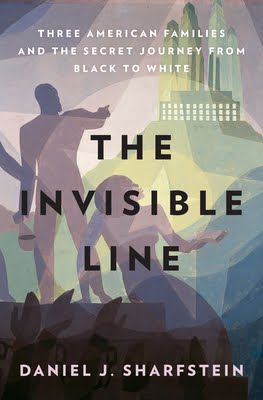
Lecture: Secret Journeys from Black to White

In America, race is a riddle. With the widespread availability of DNA testing and the boom in genealogical research, it has become even harder to view race neatly in black or white. Daniel J. Sharfstein, in conversation with Brent Staples, unravels the stories of three families who represent the complexity of race in America and force us to rethink our basic assumptions about who we are at an event on Thursday, April 12, 6:30 PM [note, new date] at The Robert H. Smith Auditorium at the New-York Historical Society, 170 Central Park West, NYC.

&#8220The Invisible Line: Three American Families and the Secret Journey from Black to White&#8221 is part of the Bernard and Irene Schwartz Distinguished Speakers Series. Daniel J. Sharfstein is an associate professor of law at Vanderbilt University and the author of a book by the same name. Brent Staples (moderator) has been a member of the editorial board of The New York Times since 1990 and is the author of Parallel Time, which won the Anisfield-Wolf Book Award.

The cost of the lecture is $24.00 (members $12). To purchase tickets to public programs by phone, call the New-York Historical Society’s new in-house call center at (212) 485-9268. Call center is open 9 am–5 pm daily. Advance tickets may also be purchased on site at the New-York Historical Society admissions desk. Advance purchase is required to guarantee seating.

Searching for Justice Joseph Crater (Part 2)

After NYS Supreme Court Justice Joseph Crater went missing in New York City in 1930, the search led to Plattsburgh and then to the Meridian Hotel, a few feet across the border from Champlain.

Nothing concrete was found in New York’s northeastern corner, but a few days later, Crater was sighted at Fourth Lake in the Old Forge area. He was also “positively” identified as one of two men seen at a Raquette Lake hunting lodge in late August. Two detectives followed that trail, while others were summoned to confirm a sighting at the Ausable Club near Keene Valley.

As if that weren’t enough, it was announced that Crater had spent a couple of days at Hulett’s Landing on the eastern shore of Lake George, and then at Brant Lake. Police and detectives pursued every lead, while headlines told the story from New York to Texas to Seattle.

A sure sighting was confirmed by three employees of Tupper Lake’s Altamont Hotel. Investigators there pursued the trail to Cranberry Lake. Elsewhere, police spent two days searching every room of every cabin on Saratoga Lake. Later, the Altamont sighting turned out to be a businessman from Buffalo, and the Horicon (Brant Lake) report was proven bogus.

By mid-September, the search had gone nationwide, but most of the top investigators still believed Crater was roaming through the Adirondacks.

Five months after Crater vanished, the plot thickened. Returning to their Fifth Avenue apartment for the first time, Stella found hidden envelopes containing insurance policies, cash, stocks, bonds, uncashed checks, a list of people who owed money to her husband—and a long note, ending with what appeared to be, “I am weary. Love, Joe.”

Police insisted those materials were not present when they searched the apartment months earlier. As the mystery deepened, suspicions and theories abounded. Why would a popular judge simply disappear? Speculation raged as the hunt continued.

It all proved futile—Crater was nowhere to be found, and none of the sightings were positively substantiated. Within a year, the modern equivalent of $4 million had been spent, and leads had been followed in New York City, Maine, Canada, Mexico, and Cuba.

At Crown Point on Lake Champlain, exactly a year after his disappearance, New York City investigators followed up on a report that an unidentified man, now said to be Crater, had died in a fall from the cliff at Big Hollow. Nothing conclusive was ever found.
Like the ubiquitous sightings of Elvis since his death, Crater was everywhere: hunting in the Adirondacks- lounging on the Boardwalk at Atlantic City- a patient in a Virginia sanatorium- prospecting in California- shaved by a barber in North Dakota- and found floating off the coast of New England. Eventually, he was seen in Europe, South America, and in all 50 states.

One caller from Montreal gave the hotel and room number where Crater could be found at that very moment. Authorities in Canada were notified. Rushing to the scene, they burst in to find a thoroughly embarrassed couple on their honeymoon. The prank caller must have been pleased.

Five years after Joseph’s disappearance, an inmate at Dannemora Prison claimed to have knowledge of Crater’s whereabouts, but would share the information only with Stella. She declined, based on the advice of the warden, who said it was nothing more than a scam to seek commutation of the prisoner’s sentence in return for his story.

For insurance purposes, Joseph Crater was declared legally dead in 1939, but the story had legs. The search went on and sightings continued for many decades. Those “I saw Judge Crater!” stories above are rooted among the 16,000 tips received through 1980, half a century after he vanished. He was long referred to as “the Most Missingest Man in New York.”

At the end of his act, Groucho Marx was said to have often commented, “I’m going to step out and look for Judge Crater.” Common for decades as a joke and in graffiti were lines like, “Judge Crater, call your office” and “Paging Judge Crater.” His name made it into the vernacular as well. For decades, the phrase “pulled a Crater” was an everyday expression referring to someone who suddenly disappeared or was being evasive.

His was a complex story with many possible endings: a new life, suicide, a mob hit, and death because of political problems, mistress troubles, or financial dealings. In August 2005, 75 years to the month after Crater disappeared, a new wrinkle surfaced with the death of 91-year-old Stella Ferrucci-Good in New York City.

Among her belongings in a safe-deposit box was a letter marked for opening only after her death. The letter said that over drinks long ago, her husband had heard the names of Crater’s killers. She named them (investigators have followed up with varying results), and said Crater was buried under the Boardwalk, beneath the current site of the New York Aquarium.

Perhaps he sleeps with the fishes after all.

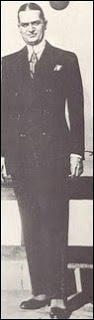
Photos: Judge Joseph Force Crater- Dapper Judge Crater was always dressed to the nines.

Lawrence Gooley has authored ten books and dozens of articles on the North Country’s past. He and his partner, Jill McKee, founded Bloated Toe Enterprises in 2004. Expanding their services in 2008, they have produced 19 titles to date, and are now offering web design. For information on book publishing, visit Bloated Toe Publishing.

Public Historians to Converge on Long Island

Public historians from across New York State will join forces for three days – from April 23-25, 2012 as the Association of Public Historians of New York State hold their annual conference at the Hyatt Regency Long Island in Hauppauge. The association is expecting its largest conference to date as over two hundred local government historians meet to enjoy the camaraderie and networking opportunities. Read more

Albany Institue Annouces Spring Lecture Lineup

The Albany Institute of History & Art has announced its 2012 Spring Lecture lineup. From April through June, visitors are invited to attend lectures given by local authors and nationally recognized scholars. Topics will range from United States presidents to New York’s French history to Japanese netsuke.

All of the lectures listed are with museum admission. Lectures are presented in the Key Cultural Center at the Albany Institute of History & Art, located at 125 Washington Avenue, Albany. The schedule is as follows:

* Susan Leath, “Bethlehem: Stories beyond the Book”
SUNDAY, APRIL 15 | 2 PM

* Dennis Gaffney, “The Presidents”
SUNDAY, APRIL 22 | 2 PM

* Eloise A. Briere “J’Aime New York”
SUNDAY, APRIL 29 | 2 PM

* Rob Naborn, “Memories of Eilardus Westerlo”
SUNDAY, MAY 6 | 2 PM

* Elle Shushan, “The Albany Influence: Portrait Miniatures in Federal New York”
SUNDAY, MAY 20 | 2 PM

* Sam Aldrich, “Dancing with the Queen, Marching with the King”
SUNDAY, JUNE 3 | 2 PM

* Jeffrey Klotz, “Netsuke: Function and Decoration”
SUNDAY, JUNE 10 | 2 PM

For more information on any of these lectures, visit albanyinstitute.org or call (518) 463-4478.