Bungalows of Rockaway: Film Screening, Discussion

The Historic Districts Council (HDC) will show the 2010 documentary film, “The Bungalows of Rockaway,” produced by Jennifer Callahan and Elizabeth Logan Harris follwed by a panel discussion.The film highlights the rich history of the Rockaway bungalows. Although of the more than 7,000 bungalows dotting the peninsula in 1933, fewer than 500 remain today. The documentary, narrated by Estelle Parsons, features rare archival footage, maps, and interviews with historians, prominent New Yorkers, and several of the longtime residents and vacationers.
In 2012, HDC named the Far Rockaway Beach Bungalows to its Six to Celebrate list, six historic New York City neighborhoods that merit preservation as priorities for HDC’s advocacy and consultation over a yearlong period. HDC is working with the Beachside Bungalow Preservation Association to get the remaining bungalows of Beach 24th, 25th and 26th Streets on the State and National Registers of Historic Places and to raise awareness about this irreplaceable part of New York City’s history.

The screening will be followed by a “Q & A” session and discussion with Richard George, executive director of the Beachside Bungalow Preservation Association- Nancy Solomon, director of Long Island Traditions and author of the National Register nomination- David Selig, owner of Rockaway Taco- Jeanne DuPont of Rockaway Waterfront Alliance, andthe filmmakers. The program will be moderated by journalist Eve M. Kahn.

The event will be held on Monday, June 11, at 6:30 pm at Anthology Film Archives, 32 Second Avenue at East 2nd Street, Manhattan.  Fees: $10 for the general public, $5 for Friends of HDC, seniors and students. Advance reservations are required. Tickets can beordered via Paypal through hdc.org or by calling 212-614-9107. A limited number of complimentary tickets will be available to Far Rockaway residents. Please contact [email protected] for more information.

Photo courtesy Historic Districts Council.

Researching NY: Science, Technology, Environment

The organizers of the Researching New York Conference invite proposals for panels, papers, workshops, roundtables, exhibits, and documentary and multimedia presentations on any aspect of New York State history —in any time period and from any perspective. The conference will be held at the University at Albany on November 15-16, 2012. This annual conference brings together historians, archivists, graduate students, public historians, documentarians, and multimedia producers, to share their work on New York State history.

Nature, science, and technology are reflected in the fabric of the State’s economy, public policy, and culture—and in the lives of its citizens. Environmental forces and human histories have long been intertwined. Among many concerns, policymakers today consider the implications of energy, light rail and nanotech research, while their predecessors sought to develop the economy of the state with infrastructure projects like the Erie Canal, the New York State Thruway, agricultural experiment stations, housing projects, and much more. For 2012, the organizers especially encourage submissions that call attention to transformations of the New York state landscape, while exploring historic ways of knowing and understanding the environment and the broader social, cultural, and political implications of technological and environmental transformations.

The proposal deadline is July 1, 2012. Complete panels, workshops, media presentations, or sessions are preferred- partial panels and individual submissions will be considered. For complete sessions please submit a one-page abstract of the complete session and a one-page abstract and curriculum vita for each individual participant. For individual submissions, submit a one-page abstract and one-page curriculum vita. Submissions must include name, address, telephone number, and e-mail address. Submit electronically to [email protected]. All proposals must detail any anticipated audiovisual needs or time constraints at the time of submission.

The organizers also seek commentators for panels. Please indicate your interest by contacting us at [email protected], noting your area of expertise and including a one-page vita.

Teaching NY Social Studies: A Modest Proposal

What do we need to do so when we pass the torch to next generation it is ready to grab it? With the upcoming vote by the New York State Regents on the social studies requirements for a high school diploma and the ongoing issue of the Common Core Curriculum with its lack of citizenship as a goal and probable minimizing of local history, I thought I would take this opportunity to issue my own modest proposal on what should be done. Read more

Museumwise Recognizes Museum Community

Museumwise (formerly Upstate History Alliance) in Oneonta, NY presented this year’s Awards of Merit to winners at a special reception in Albany on April 22nd to recognize outstanding work in the museum community, reward staff and volunteers, and provide encouragement for development of new and innovative projects. A total of seventeen projects from around the State, ranging from exhibitions to educational programs, received recognition with six receiving Awards of Merit and eleven projects received Certificates of Commendation.

Projects receiving Awards of Merit include the Essex County Historical Society’s Worked/Wild exhibit at the Adirondack History Center Museum in Elizabethtown- The Farmers’ Museum, Plowline: Images of Rural New York- Historic Cherry Hill and Schuyler Mansion State Historic Site, Got Class? Status and Power in Early America program series- Historic House Trust of New York City, Historic House Festival- Erie Canal Museum, Erie Canal Museum ArtsWeek Outdoor Projects- Tara Fracalossi, Individual Achievement- and The Teaching Gallery at Hudson Valley Community College. A full list of this year’s Award winners and project descriptions is available on the Museumwise website.

Museumwise is a non-profit organization which provides resources, training and expertise to New York’s heritage organizations and museums, in hopes of strengthening their capacity to better serve their communities and meet their institutional missions. Each year its Award of Merit program recognizes exceptional and innovative projects in the museum and history community such as exhibitions, collections care projects, heritage tourism, history publications, and websites. For more information on the Museumwise Awards program, contact Museumwise at (800)-895-1648- [email protected].

New Exhibit on the Great Fire of Troy

On May 10, 1862, as the nation was consumed by the ravages of the Civil War, Troy NY faced a devastating fire. As a train crossed the Hudson River on the Troy-Green Island Bridge, a spark from the engine ignited the wooden bridge. The fire spread rapidly, ultimately destroying over 600 buildings in the heart of the city in only six hours. Newspaper accounts, personal letters and even artist renderings depict a city in chaos as people struggled to save their homes and businesses. The Rensselaer County Historical Society (RCHS) has opened a new exhibit commemorating the 150th anniversary of Troy’s Great Fire. The exhibit runs through August 18, 2012.


Stacy Pomeroy Draper, RCHS Curator, said, “The Great Fire is one of Troy’s most significant events as it dynamically altered the look of the city. As many local towns learned after the hurricane and tropical storms of last year, natural disaster can dramatically change a location in the blink of an eye. The story of Troy’s rise after the fire is one that can inspire us today to rebuild after a tragedy.”

Advances in fire fighting technology, such as the use of steam-powered fire engines were applauded for their role in saving the city, and citizens joined together to re-emerge from the catastrophe. Well known architects designed new buildings in the latest styles and new building codes were introduced mandating the use of fire resistant building materials.

The exhibit focuses on four main themes- Troy in the 1860s, Mid-19th Century fire fighting techniques, the event itself known as The Great Fire of May 10, 1862 and the aftermath, including personal impacts, changes to city code and fire safety. A number of early photographic images, several recently discovered, show the city just before the fire and document the devastation.

Artifacts on display include firefighting equipment such as fire buckets, a rare fireman’s jacket and helmets. Accounts of the event from local newspapers and eyewitness descriptions found in personal letters, several of which came to light as research was undertaken, tell the story firsthand. A number of fire related artifacts from public institutions and private lenders will also be on display for the first time, including a toy steam fire engine from the FASNY Museum of Firefighting in Hudson, New York.

Programming during the exhibit will include a trip to see the extensive fire collections at the FASNY Museum of Firefighting. RCHS will lead a walking tour of the district impacted by the fire on Saturday, May 12 at 10:30am. The tour departs from the Market Table at the Troy Waterfront Farmers’ Market. Tour is $5 per person, free for RCHS members.

Stacy Pomeroy Draper, RCHS curator, is available to give illustrated lectures about the fire.

The exhibit is sponsored in part by B-Lann Equipment Co., John G Waite Associates and the Troy Uniformed Firefighters Association.

Illustration: Grandma Moses, &#8220The Burning of Troy in 1862&#8243- (1943)

Cooperstown: Milo Stewart Photo Exhibit Opens

The New York State Historical Association Research Library and The Cooperstown Graduate Program has announced the opening of a new exhibition celebrating the late Milo Stewart’s work, entitled Reflections of Home: Photography by Milo Stewart. The exhibition highlights Cooperstown landscapes and portraits taken by Mr. Stewart between 1965-1992. Split into three sections emphasizing Stewart’s eye for finding beauty in the ordinary, the exhibition includes quotations from his family and friends reflecting on his work as a teacher, friend, and artist. Reflections of Home opens May 16 and is free to the public.

Developed by second-year Cooperstown Graduate Program students Tramia Jackson, AshleyJahrling, Amanda Manahan, and Jenna Peterson, the exhibit is the culminating project of their Master of History Museum Studies coursework. Guided by Dr. Gretchen Sorin, the students produced the exhibition from concept to installation. “It has definitely been a learning experience,” says Jahrling. “But having the support of the program and the Stewart family has helped make this exhibit a wonderfully collaborative effort. We’re happy to share it with the greater Cooperstown community.”

Milo Stewart discovered his love for photography while growing up in Buffalo, New York. After graduating from Buffalo State University and marrying his high school sweetheart, Ruth, he taught high school English and Social Studies and helped his students incorporate photography in their reports. In 1961, he joined the staff at NYSHA and The Farmers’ Museum as an education associate. He went on to become the Director of Education and later the Vice President of NYSHA and The Farmers’ Museum. Over the course of twenty years he taught generations of teachers, local historians, and Cooperstown Graduate Program students. At the request of the Director of the New York Council on the Arts, he took on an important project documenting architecture and historic Main Streets throughout New York. He published several exhibition catalogues including Temples of Justice: Historic Churches of New York and At Home and On the Road, a collection of photographs from his travels through New York and abroad.

The exhibition opens May 16, 2012. The public is invited to see the exhibit at the library free of charge. The library’s hours are 10 a.m. to 5 p.m., Monday through Friday. Saturday hours are currently 1 to 4 p.m.

Photo: Augur’s CornerCooperstown, New York, 1988 by Milo Stewart. 

New Yorks Jehudi Ashmun, Founder of Liberia

Thursday, April 21, marked the birthday of one of the most famous men you never heard of, and surely the least known of all North Country figures who once graced the world stage. It is also appropriate to recall his story at this time for two other reasons. It has ties to slavery and the Civil War as we mark the 150th anniversary of America’s darkest period. And, in relation to recent world news, it involves fighting for change in Africa.

If you’re well familiar with the work of Jehudi Ashmun, you’re in a very small minority. Even in his hometown, little has been done to mark his achievements other than a single roadside historical marker. And yet, if you look, you’ll find him in dozens of encyclopedias and reference books as an important part of African and Liberian history.

Jehudi Ashmun was born in Champlain, a small village in the northeastern corner of New York State, just a mile from the Canadian border. Early on, he proved capable of advanced learning, and after schooling in Champlain, he attended Middlebury College in Vermont at the age of 16, preparing for life as a Christian minister.

Ill health, a problem throughout his life, found Jehudi back home in Champlain during the War of 1812. On healthier days, despite his young age, he preached in the local church and organized a military company to protect the village from British attackers threatening from Canada.

After returning to schooling at Middlebury, he entered the University of Vermont. Graduating from UVM in August, 1816, Ashmun gave the salutatory address and presented “An English Oration upon the Philosophy of the Mind.”

Jehudi soon found employment as school principal and Professor of Classical Literature at the Maine Charity School, one of the first educational societies in the country. Guided by a strong Christian belief, he published extensively, including sermons, lectures, and essays.

Ashmun’s opinionated persona was not always well received, and six months after marrying Catherine Gray in October 1818, he resigned from the school and moved to Washington, D.C. There, he linked with the Episcopal Church for three years, studying religion, continuing to publish, and becoming alarmingly aware of the plight of slaves in nearby Virginia.

Christian doctrine deplored slavery, and the more Ashmun (a white northerner) learned, the more he felt compelled to act. He became an active participant in the American Colonization Society (ACS), a group that many supported with the best of intentions, but an organization that attracted a pro-slavery element as well.

To understand that dichotomy, it is necessary to at least somewhat grasp the situation in America around 1820. As a young nation proudly touting “all men are created equal,” the US was embarrassed by other countries pointing out in newspaper editorials the great hypocrisy of allowing slavery to exist for any reason within America’s borders.

By 1808, the importation of slaves had been strictly forbidden by federal law, but some southern states claimed the feds had overstepped their bounds. Still, a very powerful anti-slavery movement existed in America. The problem was—what constituted a solution?

Groups like the American Colonization Society faced an unusual number of arguments for and against their efforts. Many leaders, both black and white, believed all citizens should remain in the US and battle for full equal rights for all. Others, including many black leaders, felt that blacks would never be treated justly or be free of discrimination in America, and thus favored the establishment of a colony where they could flourish.

Some said that promoting colonization was simply a cover for the goal of ridding America of blacks. Others saw great promise in black colonists succeeding, and helping to spread the Christian faith across Africa. Many slave owners supported the society because they feared that freed blacks would urge those in slavery to rise together in rebellion. By sending them to colonies, the owners were removing rabble-rousers from their midst.

At the time, the idea of going to Africa did seem sensible to some blacks since that was their place of origin. However, by that time, many had been in America long enough to have children born here and had established roots. A great number preferred to stay in the US and face the devil they knew, rather than the uncertainties of life (the devil they didn’t know) in Africa.

At various times, plans were made for colonies in Canada, Mexico, Africa, the Caribbean, and in several Central American countries. Finally, a real effort to settle on Africa’s west coast was tried, but it failed. Another similar attempt was made within two years.

The second opportunity arose when the Georgia state legislature authorized its governor to sell about 40 slaves who had been brought to the state illegally. Money from the sale was destined for state coffers, but by law, before selling the slaves, the state had to allow anyone the opportunity to purchase freedom for the slaves or assume the expense of taking them to a colony.

In stepped the ACS, and it was 18 of those slaves who formed the bulk of the colonization effort in Africa. The leader of the expedition was Jehudi Ashmun, who avoided many debts by leaving the country, but whose devotion to the cause was beyond reproach. He also saw the opportunity to establish trade and perhaps find a way to pay his own financial commitments.

Throughout his life, Ashmun had been a deep thinker and an activist, but was frequently beset with periods of strong self-doubt. With that in mind, it’s hard to imagine his thoughts when, arriving on Africa’s west coast on August 9, 1822, he found wretched living conditions and violent conflicts involving several regional tribes.
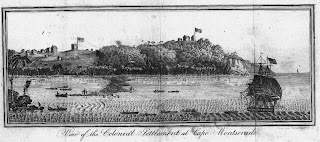
Adjacent to the British colony of Sierra Leone, he gained permission to land and establish a community. He managed interactions and informal agreements with several local tribes, but it soon became clear that they intended to set upon Ashmun’s group and destroy them.

Jehudi’s settlers were suffering badly from illness, and were certainly in no condition to defend themselves. Their position on the peninsula of Cape Montserado provided at least some natural protection, but their sickness was disabling, and the meager rations they shared were barely enough to sustain life. The future looked bleak for this fledgling enterprise.

Ashmun himself seemed near death at times, but feared more for his wife, who was dreadfully ill. She finally succumbed on September 15, barely a month after their arrival from America. Jehudi was devastated. There was great doubt that he could survive and carry on the mission.

Next week?the conclusion: A battle for the ages &#8230- twice! and one of the greatest all-time underdog stories.

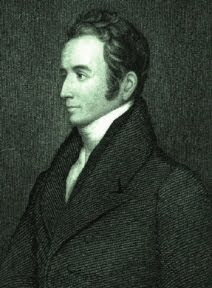
Photos?Top: Jehudi Ashmun, native of Champlain, New York. Bottom: Ashmun’s Liberian settlement at Cape Montserado.

The Jehudi Ashmun story is one of 51 original North Country history pieces appearing in Adirondack Gold: 50+ New & True Stories You’re Sure to Love (352 pp.), a recent release by author Lawrence Gooley, owner of Bloated Toe Publishing.

Brooklyn Museum Acquires Rare Folding Screen

An extremely rare mother-of-pearl-inlaid Mexican folding screen, commissioned about 1700 by the viceroy of New Spain has been purchased by the Brooklyn Museum from Salvart Limited in London.

The work was officially accessioned by the Museum’s Board of Trustees on April 19. Representing a combination of Asian, European, and American artistic traditions, this six-panel screen is encrusted with mother-of-pearl and painted with oil and tempera.


At the time it was acquired, it was the only recorded surviving shell-inlaid folding screen, or biombo enconchado, that remained in private hands. The funds for this acquisition came from the proceeds of the sale of Vasily Vereshchagin’s Crucifixion by the Romans (1887), which was sold last November at Christie’s London for nearly $2.7 million to benefit the Brooklyn Museum’s Acquisition’s Fund.

These panels constitute half of a twelve-panel screen, created after Asian models by artists working in the circle of the celebrated Gonzalez family in Mexico City, where it was displayed in the state rooms of the capital’s viceregal palace. The other half of the screen is in the collection of the Museo Nacional del Virreinato in Tepotzotlan, Mexico. The complete screen was commissioned by Jose Sarmiento de Valladares y Aines, the count of Moctezuma y Tula, during his reign as viceroy of New Spain from 1696 to 1701. Appointed by Spain’s last Habsburg king, Charles II, Sarmiento declared his allegiance to the Habsburg dynasty in the New World by having the front of his monumental folding screen painted with a major Habsburg victory over the Ottoman Empire, a scene from the Great Turkish War (1683-87). He requested a hunting scene modeled in part after prints by the Medici court painter Johannes Stradanus for the back of the screen, which would have served as a backdrop for the women’s sitting room in the palace. Both sides of the screen are framed with a mother-of-pearl encrusted floral decorative border inspired by Japanese lacquerware created for the export market.

In 1701, only one year after Spain’s new Bourbon king, Philip V, had ascended to the throne, Sarmiento, a Habsburg-appointed viceroy, was recalled to Spain- he returned with his prized biombo enconchado in tow. The screen was later divided into two in Europe, and one half found its way to the United States by 1965, when it was recorded in a private collection in San Francisco- it entered the Museo Nacional del Virreinato by 1970. The Brooklyn Museum’s half of the screen was in England (Yoxford, Suffolk) for generations, in the collection of Cockfield Hall, until the family sold its residual contents, including the screen, at auction through Phillips East Anglia in 1996.

Japanese folding screens, which inspired the format of Mexican biombos, were introduced to the Americas in the early seventeenth century as both diplomatic gifts from Japanese embassies and as elite Asian exported goods. Asian screens found immediate favor with the viceroyalty’s prosperous elite, and by the 1630s local artists were re-creating the screens in a new world style for privileged private collectors. Paintings inlaid with mother-of-pearl (pinturas enconchadas), of which this work is also an exceptional example, developed later, about 1660, by Mexican artists who combined the European art of tempera and oil painting with Asian and Mexican lacquer and mother-of-pearl encrustation techniques.

This extraordinary six-panel screen will be the highlight of Behind Closed Doors: Power and Privilege in the Spanish American Home, 1492-1898, a traveling exhibition organized by Richard Aste, Curator of European Art at the Brooklyn Museum, where it will be on view September 20, 2013, through January 12, 2014, before continuing on to three additional U.S. venues.

Also accessioned at the same board meeting and purchased with funds from the sale of the Vereshchagin painting is Hacienda La Fortuna (1885), an Impressionist landscape of southern Puerto Rico by Francisco M. Oller (Puerto Rican, 1833-1917). As the most important Puerto Rican painter of his era, Oller was commissioned by the Barcelona emigre Jose Gallart Forgas to paint a series of portraits of his five Puerto Rican sugar plantations. The Museum’s new acquisition is an early morning view of Gallart’s most important plantation, La Fortuna, with rural workers gathering sugarcane before the planter’s home (seen in the distance), his warehouse at left, and his sugar mill at right. Hacienda La Fortuna was the only one of Gallart’s five hacienda painting commissions that Oller completed for his Spanish patron.

Oller was born and raised in San Juan but trained in Madrid and Paris, where he quickly fell under the spell of the Realist painter Gustave Courbet and painted with his friends Paul Cezanne and Camille Pissarro. The Puerto Rican Realist and Impressionist painter exhibited at several of the Paris Salons and at the 1875 Salon des Refuses. Back home, Oller took an active role in the abolitionist movement&#8211slavery was finally abolished in Puerto Rico in 1873&#8211and in pedagogy, establishing several art schools in the island’s capital.

Beginning June 6, Oller’s masterpiece of Puerto Rican industrial landscape painting will be on view in the Museum’s European gallery alongside paintings by his fellow avant-garde artists Courbet, Pissarro, and Claude Monet. Hacienda La Fortuna will later join the shell-inlaid Mexican folding screen in the Behind Closed Doors exhibition.

Image: Circle of the Gonzalez Family (Mexican, late 17th to early 18th century). Folding Screen with the Siege of Belgrade (front) and Hunting Scene (reverse), ca. 1697-1701. Tempera and resin on wood, shell inlay (enconchado), 90 1/2 x 108 5/8 in. (229.9 x 275.8 cm). Brooklyn Museum, Gift of Lilla Brown in memory of her husband John W. Brown, by exchange, 2012.21

Lakes to Locks Passage Summer Travel Suggestions

Over 600 local travel suggestions have been submitted to the Lakes to Locks Passage website, just in time for the summer travel season. The site, which is co-branded with National Geographic, emphasizes travel and tourism opportunities that are submitted by local residents and locally-owned business owners.

A national advertising and marketing campaign is currently underway to promote the Lakes to Locks Passage, which stretches from Albany to Quebec, along the interconnected waterway of the Hudson River, Champlain Canal, Lake George and Lake Champlain and includes Albany, Rensselaer, Saratoga, Washington, Warren, Essex and Clinton Counties. The site is built on the principles of Geotourism, which is defined as tourism that contributes to the economic health of communities by enhancing the geographical character of a place – its environment, culture, aesthetics, heritage and well-being of its residents.

The site is as appealing to visitors as it is to people that live within the Lakes to Locks Passage according to Executive Director Janet Kennedy, who says “This website shines a spotlight on the region’s hidden gems, those places that provide local character to a destination. It is exciting to see the local commitment to delivering a distinctive travel experience.”

Lakes to Locks Passage is a New York and Federally designated byway, dedicated to stewardship of the natural, cultural, recreational and historic resources along the waterway. The collaboration with National Geographic unifies the region as a single destination, where users can pinpoint places of interest on a map and then learn about what the region offers in terms of nature, history, special events and outdoor experiences.

Place-Based Education Resource Fair Wednesday

Teaching the Hudson Valley (THV) invites teachers, 4H and scout leaders, home schoolers, PTA activists, and others working with children and teens to drop in for a free place-based education resource fair between 2:30 and 5:30 p.m., Wednesday, May 16, at the Wallace Education & Visitor Center on the grounds of the FDR Home and Presidential Library in Hyde Park.

Many educators are familiar with field trips offered by local museums, historical societies and sites, parks, and environmental groups in our region. Fewer are aware of the artifacts and primary sources, staff expertise, traveling trunks, in-school programs, and other resources sites are eager to share. The fair is designed to give educators from sites in the mid-Hudson area an opportunity to talk with teachers and youth group leaders one-on one and describe what they have to offer. At the same time, teachers and others will be able to explain what would be helpful to their students and programs.

Light refreshments will be served and drawings will be held for items ranging from private tours of area historic sites to books and water bottles. While the event is free, interested parties are asked to RSVP to [email protected] or 845-229-9116, ext. 2035, with their names and schools or organizations. Pre-registration is required to be entered into the drawings.