Northeast Public Radio Launches History Program

WAMC Northeast Public Radio and the New York State Archives Partnership Trust present the Power of Words, a new series of programs that follows American history through some of the most memorable and inspiring political speeches of our time. The series of 26 programs kicks off tomorrow Friday, June 25th at 1 p.m. and a new program will air every other week on WAMC.

On the debut program, WAMC’s Alan Chartock and Dr. David Woolner, senior fellow and resident historian at the Franklin and Eleanor Roosevelt Institute, will set the scene and provide context and analysis of Franklin D. Roosevelt’s first inaugural address. In addition, listeners will have an opportunity to actually hear the speech as it was delivered on March 4th, 1933. Other speeches in the year-long series include Barack Obama’s inaugural address, Ronald Reagan’s speech at the Berlin Wall, John F. Kennedy’s &#8220I am a Berliner&#8221 speech, and more.

WAMC’s President Alan Chartock says, &#8220It is imperative that everyone remember and learn where we came from and what this country has gone through in tough times. Great leaders are hard to come by and these great speeches can teach us a great deal about courage and leadership. WAMC is very proud of this series.&#8221

Support for the series is provided by the Archives Partnership Trust- Einhorn Yaffee Prescott Architecture & Engineering P.C.- the New York Council for the Humanities, a local affiliate of the National Endowment for the Humanities- and Assemblyman Jack McEneny.

&#8220We could not be more indebted to WAMC for their leadership on this series and to our sponsors for their support,&#8221 said Robert E. Bullock, President of the Archives Partnership Trust. &#8220It is our hope that this series will encourage citizens to truly understand the role of great ideas and transformational language in our everyday lives.&#8221

WAMC Northeast Public Radio broadcasts 24 hours a day with information and cultural programming from stations reaching parts of seven Northeastern states. WAMC is an award-winning producer of regionally based programming. WAMC is a member station of National Public Radio and is affiliated with Public Radio International and American Public Media.

The program will be broadcast over WAMC-FM 90.3 FM, Albany- WAMC, 1400 AM, Albany- WAMK 90.9 FM, Kingston- WOSR, 91.7 FM, Middletown- WCEL, 91.9 FM, Plattsburgh- WCAN, 93.3 FM, Canajoharie- WANC, 103.9 FM, Ticonderoga- WRUN, 90.3 FM, Remsen-Utica- WAMQ 105.1 FM, Great Barrington, MA- 93.1 FM, Troy- 99.3 FM, Oneonta- 97.1 FM, Hudson- 107.1 FM, Warwick- 107.7 FM, Newburgh- 103.9 FM, Beacon- 96.5 FM, Ellenville- 106.9, Middletown- 102.1, Highland, NY and 90.9 FM, Milford, PA.- 97.3 FM, Cooperstown and on-line at http://www.wamc.org/.

Warhorse’s Olympic Bronze at Olympic Museum

The Lake Placid 1932 and 1980 Winter Olympic Museum has added another piece to its collection of artifacts from last February’s 2010 Olympic Winter Games in Vancouver, Canada, Andrew Weibrecht’s men’s Super-G bronze medal.

Weibrecht’s bronze medal helped spark the U.S. alpine ski team to a record eight medals in Vancouver. Overall, the U.S. Olympic squad celebrated its best Olympics ever, claiming the overall medal count with 37.

“The medal was turned over for display and for safe keeping between appearances,” noted museum curator Liz Defazio. “It’s so nice for these athletes to have a place where they can share their accomplishments with others… sort of their home away from home.”

Nicknamed the “Warhorse” on the international alpine ski tour, Weibrecht began skiing at the age of five at Whiteface Mountain and began racing with the New York Ski Educational Foundation (NYSEF) program by the time he was 10. He had only been on the World Cup circuit since 2006 and Vancouver was his first Olympic Winter Games.

There are quite a number of artifacts on display in the museum from the 2010 winter games donated by several of the 12 area athletes who competed, as well as coaches and officials. The artifacts include race gear, Opening Ceremony clothing, official U.S. Olympic team clothing, event tickets, programs and pins.

Lake Placid’s 1932 and 1980 Winter Olympic Museum features the largest collection of winter Olympic artifacts outside the International Olympic Committee’s museum in Lausanne, Switzerland. Some of the artifacts include the first Winter Olympic medal awarded, gold in 1924 in Chamonix, France, to Lake Placid native and speedskater Charles Jewtraw, equipment worn by U.S. goalie Jim Craig during the 1980 winter games, parade clothing from the 1932 winter games, athletes participation medals and Olympic medals from every winter Olympics.

Admission to the museum is $6 for adults and $4 for juniors and seniors. Admission is also included when purchasing an Olympic Sites Passport. The Passport gives visitors access to each of ORDA’s Olympic venues—from Whiteface Mountain to the Olympic Sports Complex and everything in between. Sold for $29 at the ORDA Store and all of our ticket offices, the Passport saves you time, money, and gets you into the venues at a good value. For more information about the Olympic Sites Passport, log on to http://www.whiteface.com/summer/plan/passport.php.

Photo: Andrew Weibrecht’s Super-G Bronze Medal. Courtesy 1932 and 1980 Lake Placid Olympic Museum, Lake Placid, NY.

SUNY ESF Students Launch Olana Nature Walks

Olana State Historic Site interns Danielle and Jessica Zeller will launch three self-guided nature walks on Sunday, June 27th. Each of the three experiences will focus on a different part of Olana’s landscape- the lake, meadows and forests.

“Did you know Olana State Historic Site is one of only five known locations in the state where you can see Shrubby St. John’s Wort, a threatened species in New York? Or that Olana’s lake is home to invasive Chinese Mystery Snails?” ask the interns. “You can find out more about these species and others in the area on the nature walks.”

Starting on Sunday, visitors can pick up a map and guide in Olana’s Visitor Center or Wagon House Education Center, then venture out to learn more about the site’s natural history. On Sunday, June 27th, Danielle and Jessica will be at Olana’s Visitor Center between 12 p.m. and 4 p.m. promoting the new guides and seeking feedback on their content.

Danielle and Jessica are 2006 alumni of Cairo-Durham High School and 2008 alumni of Columbia Greene Community College. Both are now enrolled in the Natural History and Interpretation program at the State University of New York College of Environmental Science and Forestry at Syracuse.

Olana, the home and studio of Hudson River School artist Frederic E. Church, is a New York State Historic Site and a National Historic Landmark. It is located at 5720 Route 9G in Hudson. Olana is one of six historic sites and 15 parks administered by the New York State Office of Parks, Recreation and Historic Preservation – Taconic Region. The Olana Partnership is a private, not-for-profit organization, which works cooperatively with New York State to support the preservation, restoration, development, and improvement of Olana State Historic Site. Call 518-828-0135, visit www.nysparks.com or www.olana.org for further information.

Photo: Danielle and Jessica Zeller exploring Olana’s Lake Road, Image courtesy Olana State Historic Site, New York State Office of Parks, Recreation and Historic Preservation.

New Paltz: Moonlight Historic Harcourt Preserve Walk

Historic Huguenot Street and the Wallkill Valley Land Trust have come together with a unique and new offering in New Paltz, on Saturday, June 26th at dusk: a moonlight walk on the 54-acre Harcourt Preserve that borders Huguenot Street. As the sun sets and the moon rises, participants will enjoy a drink on the porch of the DuBois Fort before setting off to see the historic preserve as few do – by the light of the moon. Full moons were a much anticipated treat in the days before electricity – an opportunity for people to venture out at night and enjoy the ability to see by the light of the moon.

The tour will begin at 8:30pm at the DuBois Fort Visitor Center at 81 Huguenot Street in New Paltz with a toast to the rise of the full moon with a glass of sparkling cider or wine. The easy, flat one-and-a-half-mile walk is the perfect opportunity to experience the kind of summer nights the original inhabitants of Huguenot Street once did.

Advance reservations are not required, but are suggested. To make a reservation, visit www.huguenotstreet.org or call (845) 255-1889.

Historic Huguenot Street (HHS), located on the banks of the Wallkill River, is where small group of French-speaking Huguenots settled in 1678. Today, just steps from downtown New Paltz, the site features seven stone houses dating to 1705, a burying ground and a reconstructed 1717 stone church – all in their original village setting. HHS offers six acres of landscaped green space and public programming to the local community and visitors from around the world. For more information about Historic Huguenot Street, visit www.huguenotstreet.org or call (845) 255-1660.

Photo: Moonlight over the serene Harcourt Preserve along the Wallkill River in New Paltz.

Dead Apple Tours Offers History of NYCs Deceased

A new tour company is taking guests on a unusual look at New York City. The brainchild of Drew Raphael, a native New Yorker, Dead Apple Tours was inspired after watching fans gather outside the home of Heath Ledger immediately after the news of his death. Raphael figured with so many interesting locations in New York of famous and infamous accidental deaths, murders and suicides—why not collect a group of these experiences into one tour to get a fuller picture of the Big Apple? Why not present the “living history of New York’s deceased?” Dead Apple Tours gives passengers on its downtown tours a unique sightseeing experience in a rare, classic hearse that has been customized for a comfortable ride.

Highlights of the Dead Apple Tours include:

* The Soho spot where Heath Ledger spent his final hours.
* The secret of the “Hangman’s Elm” and “Dead Man’s Curve.”
* The Little Italy locale where mobster “Crazy Joe” Gallo ate his last bowl of pasta
* The spot where Sid Vicious allegedly killed girlfriend Nancy Spungen as well as the location where he eventually overdosed himself, and more.

The star of Dead Apple Tours is “Desdemona”- one of only 478 Cadillac Superior Crown Royale Hearses made in 1960 and believed to be one of only a handful left in existence today. This deluxe vehicle has been painstakingly restored and customized to provide a comfortable, modern ride in plush seats with the comfort of air conditioning, WiFi and video screens to help complete the story-telling adventure.

The downtown tour runs approximately two hours, starting at the Empire State Building and ending at the South Street Seaport. Winding through the streets of lower Manhattan participants learn “New York City Death Fun Facts” while Dead Apple Tours takes them to the exact locations the most famous deaths occurred.

CFP: Latino Folk Culture and Expressive Traditions

For over 65 years, the New York Folklore Society (NYFS) has held an annual conference, typically with guest speakers, such as master artists and academic scholars, who have addressed a particular theme. This year, in collaboration with NYU’s Latino Studies and Latin American Studies Departments, we invite graduate students to present their work on Latino Folk Culture and Expressive Traditions.

In this way, students will be given a platform at a local conference to share their work and connect with other young academics from around the state. The NYFS seeks to
encourage young scholars to continue their studies and become active contributors to the fields of folklore, ethnomusicology, anthropology and more. Read more

Ranger Guided Evening Strolls at Saratoga Battlefield

National Park Service Rangers will be leading walks through the historic landscape of Saratoga National Historical Park in Stillwater on July 10th, 17th and 24th, from 6:30-7:30 p.m. Water bottles, bug repellant, and comfortable walking shoes are suggested. The programs are free of charge.

July 10th — Mud and Misery: Visit the newest site of Saratoga NHP—Victory Woods. Join Park Ranger Joe Craig to find out about the dismal final days of the defeated British army on the ground they occupied. Meet at Saratoga Monument, located off Rte. 338 (Burgoyne Road) in Schuylerville. 6:30-7:30pm

July 17th — “Brother, can you spare a dime?” The Civilian Conservation Corps (CCC) came at a time when our nation needed a major economic &#8220shot in the arm.&#8221 One of President Franklin D. Roosevelt’s brilliant but controversial initiatives, the CCC didn’t just put thousands of young laborers and professionals to work- it catapulted America’s conservation movement far ahead of its time. What impacts did the CCC have on Saratoga Battlefield? Join Park Ranger Bill Valosin and find out more! Meet at the visitor center flagpole. 6:30-7:30pm

July 24th — “I don’t think he would accept second in command in Heaven.” Join Park Ranger Eric Schnitzer and learn about the significant role played by America’s most infamous traitor, Benedict Arnold, in the 1777 Battles of Saratoga. Meet at the visitor center flagpole. 6:30-7:30pm

Saratoga National Historical Park presents special interpretive events and programs
throughout the year. For further information about this and other programs, please call
(518) 664-9821 ext. 224 or check their Web site at www.nps.gov/sara.

Harriman Family Palisades Founders Award Recipient

On June 3, 2010, the Palisades Parks Conservancy hosted their eighth annual dinner along the Hudson River shoreline at the Ross Dock Section of the Palisades Interstate Park, Fort Lee, NJ. The dinner was well attended with over 250 guests.

The Conservancy’s Board of Directors recognized 100 years of service and dedication by the Harriman Family. Elbridge Gerry Jr. accepted the Palisades Founders Award on behalf of more than sixty family members. A former Harriman camper, NY State Senator Jose M. Serrano, chair of the Senate Committee on Cultural Affairs, Tourism, and Parks and Recreation, was the keynote speaker. In addition, Samuel F. Pryor III, PIPC President and Carol Ash, Commissioner of the NYS Department of Parks, Recreation and Historic Preservation shared remarks.

A century ago, railroad executive Edward Henry (E.H.) and Mary Williamson Averell Harriman joined other Gilded Age families to reclaim our nation’s scenic and cultural treasures. Since then, the Harrimans have been at the forefront of every Palisades Interstate Park initiative. From the conservation of land and creation of parks, lakes, and beaches, to their unwavering support for nature education and relief camps, their dedication to the preservation of our traditions and environment serves as a model for us all.

After railroad magnate E.H. Harriman’s sudden death, his wife Mary carried on his vision to establish a grand park. Their gift of ten thousand acres and one million dollars safeguarded the scenic beauty of present-day Bear Mountain and the park that bears the family name. At the 1910 dedication ceremony, Mary and E.H.’s son, William Averell, presented the deed of land to the PIPC and thus started more than a century of family service on behalf of these 28 parks and historic sites.

W. Averell Harriman, the longest serving Palisades Commissioner, played an important role in the advancement of the Interstate Park. Always viewing himself as a volunteer to the PIPC and champion of nature, Harriman valued his service during his fifty-three year tenure (1915-1954, 1959-1973). To ensure access for all, Averell, with his brother Roland, himself a Commissioner for four years (1955-1958) contributed to the creation of transportation networks throughout the Palisades enabling millions the ability to easily travel deep into the wilderness and to connect with nature and our history via railroads, bridges, trails, and scenic byways.

In collaboration with the PIPC, Mary Harriman, who persistently encouraged education, suggested the creation of relief camps to aid underprivileged and homeless children and teach them about the power of nature. The family’s charitable foundations continue to assist today’s 32 camps allowing thousands of children the opportunity to learn lifelong skills each summer. Carrying on her grandmother’s legacy, Mary Harriman Fisk, a Commissioner from 1974-1996, sponsored the Tiorati Workshop for Environmental Learning, a program that trains NYC’s public schools to teach inner-city students the wonders of nature.

Photo: Edward Henry Harriman in his office 1899.

Peter Paine to Receive Adirondack Museum Award

The Board of Trustees of the Adirondack Museum at Blue Mountain Lake has announced the selection of Peter S. Paine, Jr. as the recipient of the 2010 Harold K. Hochschild Award.

The Harold K. Hochschild Award is dedicated to the memory of the museum’s founder, whose passion for the Adirondacks, its people, and environment inspired the creation of the Adirondack Museum. Since 1990 the museum has presented the award to a wide range of intellectual and community leaders throughout the Adirondack Park, highlighting their contributions to the region’s culture and quality of life.

The Adirondack Museum will formally present Peter Paine, Jr. with the Harold K. Hochschild Award on August 19, 2010.

Peter S. Paine, Jr., a retired partner of the international law firm, Cleary, Gottlieb, Steen & Hamilton, has long served as Chairman of Champlain National Bank in Willsboro, N.Y. He has devoted much of his life to exemplary public service in the Adirondack region. He is Trustee and former Chair of the Adirondack Nature Conservancy, and also served on the New York State Nature Conservancy Board of Trustees.

In addition, he was a founding member and long-time General Counsel of the Lake Champlain Committee and also one of the founding Trustees of what is now Environmental Advocates.

Paine currently serves as President of the Board of Trustees of the Fort Ticonderoga Association and is also a Trustee of the Adirondack Community Trust.

Peter Paine has played a key role in numerous land conservation projects in the Champlain Valley. These include the preservation as a bird sanctuary of the Four Brother Islands in Lake Champlain, and the addition of the Split Rock Mountain Range to the NYS Forest Preserve.

He was also a major donor to and co-organized the Noblewood Park and Nature Preserve project in the Town of Willsboro with Assemblywoman Teresa R. Sayward, and helped create the Coon Mountain Preserve in Westport. At his instigation, the Paine family donated conservation easements to the Adirondack Nature Conservancy starting in 1978, protecting five miles of shoreline on Lake Champlain and the Boquet River and some 1,000 acres of farmland and forest.

Peter Paine, Jr. served as a member of the Temporary Study Commission on the Future of the Adirondacks (chaired by Harold K. Hochschild) from 1968 to 1970, and as a Commissioner of the Adirondack Park Agency from 1971 to 1995. In that capacity he was the principal draftsman of the Adirondack State Land Master Plan and New York State Wild Scenic and Recreational Rivers Legislation.

Paine received a North Country Citation from St. Lawrence University, Canton, N.Y. in 1974, the Ordre National du Merite from the Republic of France in 1984, and the Howard M. Zahniser Award for the Preservation of Wilderness in New York (shared with Peter A.A.Berle) in 2004.

A resident of Willsboro, N.Y., Paine is a hunter, fisherman, horseman and wilderness expedition leader.

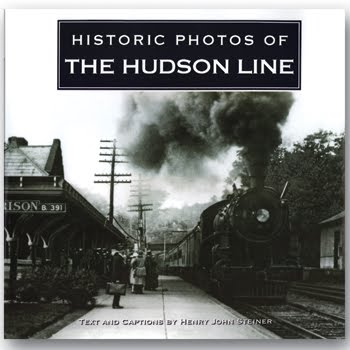
Books: Historic Photos of The Hudson Line

Henry John Steiner’s new book, Historic Photos of The Hudson Line showcases more than 200 striking black-and-white images that take you on a journey up the Hudson River between the years 1850 and 1970 when the New York Central and Hudson River Railroad came to dominate transportation along this important American travel corridor. In the process the colonial-era river towns and landings were transformed in commercial, manufacturing, and political centers in their own rights.

Stiener, a local author and the municipal historian of Sleepy Hollow, captures the events from parades to politics, celebrations to sporting events, steamboats to airplanes &#8211 the people and places that contributed to the growth of this historic region. He uses fact-filled captions and chapter introductions to highlight the large format photographs culled from the Library of Congress, the New York Public Library, and the New York State Archives.

The book is published by Turner Publishing.

Note: Books noticed on this site have been provided by the publishers. Purchases made through this Amazon link help support this site.