Bennington Battle Monument Opens for 2010

Vermont’s tallest building is opening for business again, as the Bennington Battle Monument begins its season on Saturday, April 17. Built to commemorate the August 16th, 1777 Battle of Bennington – which actually took place in nearby Walloomsac, New York – this Vermont State Historic Site opened to the public in 1891, some four years after construction began in 1887, at a cost of $112,000.

The monument, a 306-foot stone obelisk, was constructed on the site of a Continental military storehouse that was the objective of the British attack. With his army short of ammunition, food and arms, British General John Burgoyne decided to attack the town of Bennington and capture the storehouse and its supplies, sending about 800 men into battle against what he thought was a militia force about half that size.

Instead, they ran into about 1,500 New Hampshire militiamen under General John Stark, who attacked after reportedly telling his troops, “There are the Redcoats- they will be ours or tonight Molly Stark sleeps a widow.”

After defeating the main British force, which also included Loyalist troops, Native Americans, and Hessian mercenaries, Stark found himself under attack by a force of roughly 500 British reinforcements sent to aid the original raiders.

But he rallied his men, and the timely arrival of Colonel Seth Warner and his 500 Green Mountain Boys turned the tide as the combined American force counterattacked and drove the British from the field.

Events for the season includes the Climb of Your Life fundraising stair-climbing race sponsored by the American Lung Association on June 5th- the annual reading of the Declaration of Independence on the Fourth of July- and Bennington Battle Day on August 14 and 15, which will feature an encampment, cannons, ceremonies and re-enactors on site.

On September 24th British Actor Howard Burnham will perform Banastre Tarleton: A dramatic encounter with the Revolutionary War’s ultimate villain.

The monument and gift shop, located in Old Bennington, will be open from 9:00 a.m. until 5:00 p.m. daily through October 31 and are fully accessible. Admission to the Monument is $2.00 for adults, $1.00 for children (ages 6 thru 14), and children 5 and under are free as are scheduled school groups. Tickets can be purchased in the gift shop, where a fine selection of quality merchandise relating to the battle and the monument, along with gifts, maple products, books and more is offered.

Further information is available online at www.historicvermont.org or by calling (802) 447-0550.

Archaeologist to Discuss Historic Huguenot St. Finds

Professor Joseph Diamond, head of the summer Archeological Field School sponsored by the State University of New York at New Paltz, will be the featured speaker at Historic Huguenot Street’s Second Saturday talk on Saturday, April 10th.

The Archeological Field School, which is administered by the Department of Anthropology, has been based at Historic Huguenot Street in New Paltz for the past several summers. Students working under the direction of Professor Diamond conduct archaeological digs on the six-acre site where a small group of French-speaking Huguenots founded New Paltz in 1678.

The project is an excellent example of “town-gown” collaboration. Students receive credit for their participation in the field school and Historic Huguenot Street gains valuable and new information about the community’s earliest years.

Work conducted most recently on the lawn opposite the DuBois Fort Visitor Center is revealing an interesting variety of European and Native American artifacts along with what may the foundation of at least one early home and a protective stockade fence. Nothing of these two features remains above ground. “While we are fortunate to have some very early documents in our archives,” says Eric Roth, executive director of Historic Huguenot Street, “These alone do not explain what this settlement looked like in the years before the stone houses were built. Professor Diamond’s work has dramatically expanded our understanding of these years and of Native American presence before the Huguenots arrived.”

The talk will be held on Saturday, April 10th at 7pm at Deyo Hall, located at 6 Broadhead Avenue between North Chestnut and Huguenot Streets in downtown New Paltz. Because street work on Broadhead Avenue may be underway during this time, those attending are advised to enter on North Front Street and following the signs to Deyo Hall. More information or directions can be found by visiting www.huguenotstreet.org or by calling (845) 255-1889

Photo: Pit Showing Possible Stockade Fence Post Holes (Courtesy HHS).

Update on NYC National Archives Move

Here is an update from Roger Joslyn a Fellow of the American Society of Genealogists, regarding the recent news about the National Archives – Northeast Region, Manhattan Branch. You’ll recall that I ran Joslyn’s first letter of concern that the NYC National Archives was under threat on February 17th. I ran more news of the Archives move on March 15th. Here is the latest from Joslyn:

Hello, again

Thank you for the many responses to my letter concerning the possibility of losing our National Archives–Northeast Region as an important research facility. The response was overwhelming and I regret I could not answer all the many e-mails. I understand my letter was circulated pretty far and wide and some persons wrote me from other countries. Many of you conveyed good thoughts about the issue, telling of similar experiences, and several wrote to offer, “What can I do?”

My apologies if I missed sending first my letter to a few people who are receiving this one, and if so, please let me know and I shall send the earlier one if you want to see it.

The main purpose of my first letter was to let you know what I knew and had heard about the planned move of NARA’s New York regional facility. At the time of my first letter, NARA had put nothing out to the pubic about the intended move, about any reduction in space and on-site research materials, and so forth. As I then wrote, some of the plans were told to Stuart Stahl by NARA’s Diane LeBlanc for him to pass the word. So, “officially,” that is the best information there was at the time, but one might also still consider any of those details to be “rumor” at that point.

Since the first letter, NARA has responded, and I have been told or led to believe that a positive result of my letter was that it put things in action sooner than later. I have had telephone conversations with Diane LeBlanc and other NARA personnel about the move of the New York regional facility and I refer you (below) to NARA’s official word about the move and also to some NARA-prepared FAQs. As you will see, some of information is different and/or a little more detailed than what had been said and circulated earlier.

http://www.archives.gov/northeast/nyc/move-notice.html

http://www.archives.gov/northeast/nyc/move-faq.html

Also since sending my first letter, I have been able to visit what will be NARA-NYC’s new home in the Customs House in lower Manhattan. There is no question the building is a lovely place and, when the space is renovated, will provide pleasing accommodations for researchers, staff, and programs. NARA’s Public Programs Specialists Dorothy Doughty is quite excited about the possibilities for the latter, not only for large and small presentations and workshops, but also because there is room for (for example) genealogical/historical fairs and so forth, using space NARA will share with other agencies in the building. (And without a lockup in the building as there is at 201 Varick Street, the security staff in the Customs House is more welcoming to visitors.)

While there is no question the new location will be a nicer home for NARA-NYC for the above reasons, the amount of storage space for textual records and microfilm will be greatly reduced.

I would like to add from my conversations with Diane LeBlanc some additional points that are of interest and/or concern to us as researchers.

Ms. LeBlanc said that NARA-NYC is “going through a process” in preparation for the move, which will likely take place eighteen to twenty-four months from now. She sees the Customs House as having “enormous potential” for NARA. One example is that being near the Circle Line terminal for Ellis and Liberty Island visits, there is increased possibility to attract tourists to the Customs House and thus to NARA.

According to Ms. LeBlanc, NARA-NYC currently has about 40,000 cubic feet of textual records at Varick Street, but with limited space in the Customs House, only about 5300 cubit feet of records can be housed there. (The 5000 square feet reported earlier as being the total of the new space was a misunderstanding about room for the textual records- NARA will actually have about 20,000 total square feet that includes public and office space, storage room, and so forth.)

Apparently, NARA looked at a number of possible new locations and chose the Customs House as the best of the bunch. The main argument for settling for the much-reduced storage space is that patron usage is down. What cannot fit in the new space will go to a new storage facility in Philadelphia. Ms. LeBlanc says the off-site material will have the “same access” by shuttle to New York City that is now provided for other off-site materials. The frequency of the shuttle service is still under discussion.

Similarly, because of less storage space, NARA will also not be able to take all its current microfilm collection to the Customs House. Ms. LeBlanc says there is room for only about twenty percent of the film. What becomes of the other eighty percent of the microfilm has not been determined, but Ms. LeBlanc said there may be some possibilities for keeping it in New York City, if some other repository can take it. She thought New York Public Library’s microfilm collection nearly duplicated that at NARA-NYC. I told her this is not the case.

In order to determine what textual records and microfilm will likely be moved to the Customs House, NARA staff and volunteers will be “assessing” customer usage—what material, textual and microform, gets the most on-site use. (A large amount of NARA-NYC’s collection, mostly voluminous court records, is already stored off-site in Lee Summit, Missouri.) I reminded Ms. LeBlanc that much of the more-used microfilm is self-serve, that patrons take and replace microfilms themselves. This limits what staff and volunteers may be able to determine about usage. They are more aware of the usage of specific microfilms they must retrieve for patrons from the back “stacks.”

Ms. LeBlanc clarified that certification of copies of records at NARA-NYC will still be possible. Certifications needed from microfilm that will no longer be at NARA-NYC can be requested to be done at NARA-Pittsfield, or the microfilm can be brought in from Pittsfield to be certified at NARA-NYC.

She also said that over time, what textual records are actually kept on-site in the new facility could change, based on patron usage. For example, if there was increased call for ships’ original passenger lists, they might be brought in from off-site storage and less-requested material sent off site.

Two other things need clarification. First, volunteers will continue to be needed and they, in addition to helping patrons, will be involved with projects. There will be designated space for projects in the new facility, with textual records brought in from off-site for such projects as needed.

Second, the expansion at NARA-Waltham mentioned in my first letter is for public programming space. Some of this new space was formerly used to store microfilm, a large amount of which was given to the library in Plano, Texas, because, as Ms. LeBlanc explained, “no one else wanted it.”

I wrote my first letter in reaction to the response a colleague received who suggested to NARA that some of the more frequent patrons might be consulted for input about the upcoming mov
e, records use, and so forth. The person was told that no one was going to tell NARA what to do. NARA staff has told me that, following former Archivist John Carlin’s attempt to move large amounts of material out of the regional facilities, that NARA has became more sensitive to public wants, needs, and so forth. So the response to my colleague was out of line and certainly was not good business. We expect better from an agency that has long been one of our primary repositories for the research we do.

Ms. LeBlanc agreed. In acknowledging that my first letter got NARA’s attention, she stated, “We will do this better than we did in the past.” The move to the Customs House seems set, and while my opinion is that user involvement before that decision would have been helpful and should have been sought, NARA-NYC is holding two public meetings about the move (see the announcement). I hope those of you who are interested in the move and have concerns and questions will attend. It is not clear if whatever is voiced at these meetings will change any of NARA’s plans at this point, but those of us who are concerned should go and speak up.

Here are just two of the many concerns about which some of you have written to me.

“It’s all online.” And many of us doubt it ever will be. But even with all that is available on the Internet, we have all experienced problems that take us back to the original sources, or at least back to the microfilm, for a variety of reasons, including legibility, printing, missed material, even speed. Can we be content with loosing easy access to what we now have so readily available?

Out of sight, out of mind, or never in mind at all. Ms. LeBlanc agreed that this is one area where NARA can use a lot of improvement. Many patrons have no idea what else there is beyond the Federal censuses, passenger lists, and a few other microfilmed records. With less microfilm in the public space for users to actually see some examples of what resources there are, there need to be ways of letting researchers know about the wealth of other records that might help them—microfilm and textual.

If NARA is willing to let its users work with them to do better and not just be informed of what others have decided, is that not a positive thing?

Roger Joslyn

P.S. I realize that most people who learn “what we do” usually react with, “That’s very interesting!” or “My aunt was the family historian,” and so forth. But we also frequently encounter those who cannot fathom such an interest in the past. In these instances, I am always reminded of what is carved on the National Archives building in Washington, D.C., as you all know so well: “The Past is Prologue.”

This was brought home the other night as Leslie and I viewed (from Netflix) Masterpiece Theatre’s Shooting the Past, about a photo archives doomed to the trash and the staff’s struggle to save it. We were deeply moved and saw parallels with what has happened and will likely continue to happen in our field. For those of you who have not seen this wonderful BBC drama, I strongly recommend it. In the meantime, you can read a little bit about it at

http://en.wikipedia.org/wiki/Shooting_the_Past

and in this New York Times review

http://www.nytimes.com/1999/11/21/tv/spotlight-an-imperiled-muse-weaves-her-spell.html?pagewanted=1

Highland Adventures of William Thompson Howell

Friends of the State Historic Sites of the Hudson Highlands’ Annual Meeting features presentation on “The Highland Adventures of William Thompson Howell”

The Friends of the State Historic Sites of the Hudson Highlands (FSHSHH) will gather for their Annual Meeting at the Temple Building at New Windsor Cantonment on Saturday, April 17th at 2pm. Following the brief meeting, this year’s program will include a presentation on “The Highland Adventures of William Thompson Howell.”

FSHSHH, a group of local supporters, meet year-round to benefit the activities of three Revolutionary War historic sites: New Windsor Cantonment, Knox’s Headquarters, and Washington’s Headquarters. FSHSHH works to supplement the educational, public event, and collections needs, and to increase public awareness of each sites’ historical significance. This year’s presentation on “The Highland Adventures of William Thompson Howell,” highlights the author, naturalist, photographer, outdoorsman and preservationist.

New Windsor Cantonment State Historic Site is where the Continental Army under General George Washington spent the last winter and spring of the Revolutionary War. In October 1782, General Washington moved his northern army to New Windsor to establish winter quarters. Some 7,500 soldiers and 500 women and children civilian refugees encamped here. By late December 1782, they had erected nearly 600 log huts into a &#8220cantonment,&#8221 a military enclave.

Nearby, John Ellison’s Georgian-style house in Vails Gate served at the military headquarters of Major General Henry Knox, Commander of the American artillery in 1780-81, and then as headquarters for General Horatio Gates, commandant of the New Windsor Cantonment in 1782-83. And in Newburgh, during those critical last months of the war, General Washington made some of his most important contributions to shaping the American republic at his headquarters in the Jonathon Hasbrouck House, the first publically owned historic site in the nation.

In addition to the special programs and activities, the National Purple Heart Hall of Honor and the New Windsor Cantonment Visitor Center are open. These buildings feature the history of the New Windsor Cantonment- Behind Every Great Man: The Continental Army in Winter, 1782-83, Revolutionary War artifacts, the exhibit The Last Argument of Kings, Revolutionary War Artillery and the story of the Purple Heart. A picnic grove is available and there is plenty of free parking. The site is open to the public Saturday April 17 from 10:00 AM to 5:00 PM. Also be sure to visit Washington’s Headquarters in Newburgh, a short drive from the New Windsor Cantonment.

New Windsor Cantonment State Historic Site is part of the Palisades Interstate Park Commission. The Palisades Interstate Park Commission administers 27 park, parkways and historic sites for the Office of Parks, Recreation and Historic Preservation in New York as well as the Palisades Interstate Park and parkway in New Jersey. For more information about New York State parks and historic sites, please visit our website at www.nysparks.com and follow the links for historic sites.

Free Baseball E-Book from Univ of Chicago Press

In celebration of baseball’s Opening Day the University of Chicago Press, is offering a free e-book, Nice Guys Finish Last, the baseball classic by Leo Durocher.

Durocher started with the 1928 Yankees, but hit so poorly that Babe Ruth nicknamed him “the All-American Out.” Soon he hit his stride: traded to St. Louis, he found his headlong play and never-say-die attitude a perfect fit with the rambunctious and renowned “Gashouse Gang.”

In 1939, Durocher he became player-manager of the Brooklyn Dodgers—and transformed the underachieving Bums into contenders. Then he managed the New York Giants, sharing the glory of one of the enduring moments of baseball history, Bobby Thomson’s 1951 “shot heard ’round the world.” And finally Durocher learned how it felt to be on the other side of such an unforgettable moment, as his 1969 Cubs, after holding first place for 105 days, blew a seemingly insurmountable 8-1/2-game lead to the Miracle Mets.

To get your free copy of the Nice Guys Finish Last e-book, go here.

Guide to the Schroon River at the Adk Museum

The Schroon River today is not well known. Parts such as Schroon Lake, &#8220a wide spot in the river,&#8221 have been tourist destinations for years. Yet how many campers on the shore realize that Adirondack river driving began on the little river in 1813? Thousands of logs once floated down the Schroon to the Hudson River and mills beyond.

On Sunday, April 11, 2010, Mike Prescott, a New York State Licensed Guide, will offer a program entitled &#8220Armchair Paddlers’ Guide to the Schroon River&#8221 at the Adirondack Museum at Blue Mountain Lake, N.Y. The presentation is the last of Cabin Fever Sunday series for the season.

The Schroon River is more than 60 miles in length, part of the Hudson River Watershed that flows south to the Atlantic Ocean passing within five miles of Lake George, part of the Lake Champlain Watershed flowing north towards the St. Lawrence River.

There are sections of the river for all recreational enthusiasts. Fisherman can enjoy the deep water fishing of Schroon Lake, while the faster waters of Tumblehead Falls challenge fly fisherman. Paddlers can drift along the lazy current of the upper Schroon and whitewater kayakers can play in the class III and IV rapids. Boaters can enjoy the 14-mile length of Schroon Lake. Hikers and wilderness adventurers are able to explore the mountains, lakes, and ponds of the Hoffman Notch, Dix Mountain, and the Pharaoh Lake Wilderness areas as well as the Hammond Pond Wild Forest area.

The history of human interaction with the Schroon River is rich with stories of logging, industry, tourism, and community development.

&#8220The Armchair Paddlers’ Guide to the Schroon River&#8221 will be illustrated with vintage photos and postcards, as well as contemporary photography that shows what a paddler today would experience along the river.

Mike Prescott is a retired secondary school principal and NYS Licensed Guide. He spent three summers working with the Adirondack Cooperative Loon Program and has logged many hours observing and photographing loons. He spent thirty-four years working with young people, first as a history teacher and then as a secondary school principal. He has always found nature to be healing and rejuvenating. Mike’s specializes in learning the
history of the lakes, rivers, and streams of the Adirondacks.

The program will be held in the Auditorium, and will begin promptly at 1:30 p.m. Cabin Fever Sunday programs are offered at no charge to museum members. The fee for non-members is $5.00. There is no charge for children of elementary school age or younger. Refreshments will be served. For additional information, please call the Education Department at (518) 352-7311, ext. 128 or visit the museum’s web site at
www.adirondackmuseum.org.

Photo: Schroon River at Thurman, ca. 1900. Collection of the Adirondack Museum.

Fenimore Art Museum Opens For Season

The Fenimore Art Museum, in Cooperstown, reopened for the 2010 season with four new exhibitions on Thursday, April 1. These diverse exhibitions include examples of 19th-century fashion, folk art, photography, and contemporary landscape painting.

Starting this year, admission for children 12 and under is free. This price change will allow more families the opportunity to experience the Museum, its acclaimed exhibitions, and its unique educational programs. Adult admission (13-64) is $12.00 and senior admission (65 and up) is $10.50. NYSHA members, active military, and retired career military are always free.

Exhibition highlights include:

Empire Waists, Bustles and Lace: A Century of New York Fashion
(April 1, 2010 – December 31, 2010)

Empire Waists, Bustles and Lace is an exciting exhibition of the Museum’s collection of historic dresses. When viewed in conjunction with the John Singer Sargent exhibition (opening May 29), the show enables visitors to see and experience a broader historical context of men’s and women’s fashion. Even though upstate New York was considered the edge of the western frontier in the 19th century, residents of the area kept up with New York City and the world in terms of fashion. The exhibition includes the oldest known example of a dress with a label, stunning examples of Empire, Romantic and Civil War era dresses and turn-of-the-20th century items. Additionally, visitors will be able to peek at what was worn underneath the dresses which were vital to giving them their distinctive shapes. This exhibition is funded in part by The Coby Foundation.

In Our Time: The World as Seen by Magnum Photographers
(April 1, 2010 – September 6, 2010)

In Our Time was organized to celebrate 50 years of photography at Magnum Photos Inc. and the 150th anniversary of the invention of photography.

This exhibition of 150 black-and-white photographs is from a comprehensive survey of Magnum Photos, Inc., which is considered to be one of the world’s most renowned photographic agencies. These images are a result of the extraordinary vision of the many talented photographers who have been associated with Magnum since its founding in 1947.

The broad events captured in these Magnum photographs include the D-Day landing in Normandy, France (1944)- prisoners of war returning home to Vienna, Austria (1947)- Ghandi’s funeral in India (1948)- James Dean in Times Square (1955)- Castro delivering a speech in Havanna (1959)- Martin Luther King receiving the Nobel Peace Prize (1963)- Jacqueline and Robert Kennedy at Arlington (1963)- a Shriner’s parade in Boston (1974)- women supporters of Ayatollah Khomeni in Iran (1979)- and a crack den in New York City (1988).

In Our Time: The World as Seen by Magnum Photographers is toured by George Eastman House International Museum of Photography and Film.

Watermark: Michele Harvey & Glimmerglass
(April 1, 2010 – December 31, 2010)

Michele Harvey spends most of the year in her summer studio in upstate New York. Among her various formats, Harvey’s signature triptych formats often include quiet roads or paths framing a central scene that provides one with the sense of simultaneously entering and leaving her misted landscapes. The union of the darker colors of the trees and the distinct light of the vaporous sky create a calming rhythm that draws the viewer into a mysterious world where time appears to stand still.

Harvey is enchanted by the environs of Cooperstown and the opportunity to create works based here. &#8220The lake, its history, the views&#8230- all conspired to take me off the beaten path. I felt the lure of Glimmerglass as it must have felt to James Fenimore Cooper. For the first time I became a tourist, humbled by the scenery.&#8221

Watermark: Michele Harvey & Glimmerglass represents a melding of the two- adding her own style to the venerable history of landscape art already created here.

Virtual Folk: A Blog Readers’ Choice
(April 1, 2010 – December 31, 2010)

Virtual Folk: A Blog Readers’ Choice is an exhibition of exceptional folk art objects from the Fenimore Art Museum’s vast collection, chosen by the readers of our folk art blog &#8211 American Folk Art @ Cooperstown.

Bits of Home
(April 1, 2010 &#8211 December 31, 2010)

Visitors to the Fenimore Art Museum have long enjoyed the extraordinary collections of fine art, folk art, and American Indian art held by the New York State Historical Association. Less well known are the thousands of historical artifacts in the collections storage areas. Bits of Home acquaints visitors with these historical collections by featuring a selection of more than 30 artifacts from NYSHA and The Farmers’ Museum’s extensive collections of domestic life in nineteenth-century New York.

Opening Later in the Season…

John Singer Sargent: Portraits in Praise of Women
(May 29, 2010 &#8211 December 31, 2010)

The Fenimore Art Museum presents the first major exhibition on the topic of portraits of women by the well-known American artist John Singer Sargent (1856-1925). The exhibition explores Sargent’s range of styles and depth of characterization in his portraits of society women, as well as his fascination with exotic working-class women of Venice and Capri. The paintings and drawings provide an intimate glimpse into the lives of these women of the late 19th and early 20th centuries. Included will be drawings of Madame Gautreau, the mysterious subject of Sargent’s famous portrait Madame X.

Picturing Women: American Art from the Permanent Collections
(July 18, 2009 &#8211 December 31, 2009)

Ongoing Exhibitions…

Eugene and Clare Thaw Collection of American Indian Art
Eugene and Clare Thaw Gallery

The Coopers of Cooperstown
Cooper Room

Genre Paintings from the Permanent Collection
Paneled Room

American Memory: Recalling the Past in Folk Art
Main Gallery

From April 1 through May 10, the museum will be open Tuesday through Sunday, from 10 am to 4 pm, closed on Mondays. Summer hours begin on May 11 and continue through October 11. During the summer season, the museum is open seven days a week from 10 am to 5 pm. Please visit their website for more information – www.fenimoreartmuseum.org.

Kids: Secret Subway Joins History, Politics, Technology

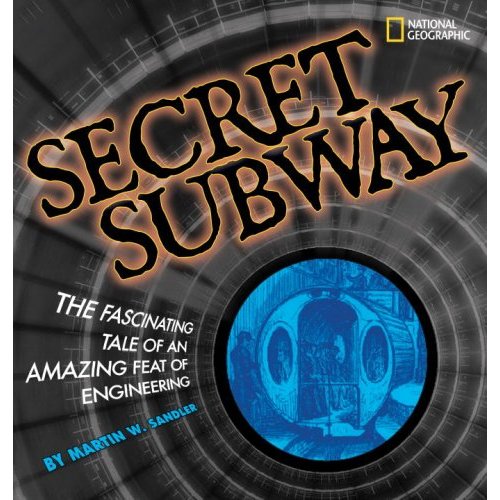
A nice children’s book (for older kids) on a little known two-block long subway that remains buried like a time capsule under the streets of New York City recently arrived on my desk. Published by National Geographic Children’s Books, Martin W. Sandler’s Secret Subway: The Fascinating Tale of an Amazing Feat of Engineering, takes on the incredible story of the visionary engineer who built New York City’s first subway only to have his dreams crushed by the greed and political power of Boss Tweed and Tammany Hall.

The story came to light in 1912, when workers digging a new subway line unearthed a intact time capsule of New York City’s underground past &#8211 and fully preserved subway station built in the 1860&#8242-s. The builder was Alfred Beach, the editor of Scientific American, who was appalled by the city’s traffic situation (even then!) and set out to build an innovative air-powered underground train powered by a fifty-ton fan dubbed &#8220The Western Tornado&#8221. The New York Time’s called the project &#8220the most novel, If not the most successful, enterprise that New York has seen for many a day.&#8221

Sandler, the author of more than 50 books, winner of seven Emmys, and who has been twice nominated for a Pulitzer, is a remarkable story-teller who is not afraid to give younger readers a full account of the financial, political and personal wheeling and dealings of Beach, the Panic of 1873, the development of New York City’s subways, and even the demise and death of Boss Tweed. Here’s a little sample:

&#8220In 1912 workmen, digging an extension of the Broadway line, suddenly hit upon a solidly built steel and brick wall. Breaking through the wall, they found themselves inside Alfred Beach’s pneumatic tunnel. What was even more amazing was the incredible condition the tunnel and Beach’s elegant waiting station were still in. Beach’s subway car still sat on the tracks, although most of the parts made of wood had rotted away. The magnificent waiting room fountain still stood tall. Father down the tunnel, the workmen found the hydraulic shield with which Beach had revolutionized the art of digging tunnels.&#8221

Since it was before historic preservation was an important cultural phenomenon, the station, the car, and the other remnants were all simply buried &#8211 where they remain to this day. Sandler’s Secret Subway keeps it alive for young readers, along with the issues surrounding politics, economics, and technology in second half of the 19th century.

New York Council for the Humanities Funding Risk

Four your information, I’m reprinting here a letter from the New York Council for the Humanities Executive Director Sara Ogger, regarding the threat to the Council’s funding:

The NY Council for the Humanities stands to lose a significant portion of its state funds, unless the Assembly and Senate rise to the occasion and demand restoration. With the budget resolution currently underway, there is not a moment to lose. We are counting on you to urge your legislators to restore these vital funds!

To tell your legislators how important the public humanities are to you and explain what your community stands to lose if funds are not restored, please click here: Write Your Legislators.

We’ve provided sample letters that will be sent to your State Assemblymember and Senator. You may customize the letters by telling your own story about the Council’s grants and programs &#8211 or just hit send! Each letter sent strengthens our case for restoration of much-needed state funds for FY2011 &#8212- funds that will help us to enrich communities like yours with reading and discussion series, lectures, exhibits, and more.

Thank you for taking a moment to send letters to your legislators. Your support could not come at more crucial point.

Sincerely,

Sara Ogger, Ph.D.
Executive Director