Wildersteins Contemporary Outdoor Sculpture Exhibit

Wilderstein Historic Site will host a second exhibition of contemporary outdoor sculptures by emerging Hudson Valley artists beginning June 3. A preview party will be held on Saturday, June2, from 5 to 7 pm.

Participating artists include: Jan Abt, Benjamin Ayers, John Belardo, Andy Fennell, Sarah Haviland, Richard Heinrich, Jeremy Holmes, Steve Keltner, Malcolm MacDougall, J. Pindyck Miller and Craig Usher.

Wilderstein is a historic house museum in Rhinebeck, New York. The estate, with its exquisite Queen Anne mansion and Calvert Vaux designed landscape, is widely regarded as the Hudson Valley’s most important example of Victorian architecture. The last person to reside at Wilderstein was Margaret (Daisy) Suckley, whose relationship with Franklin Delano Roosevelt has been well-chronicled and is the subject of much interest. Gift shop, hiking trails, and spectacular Hudson River views.

The exhibition will be open daily between 9 am and 4 pm through the end of October. Sponsored by Central Hudson Gas & Electric Corp.

Tickets for the preview party are $25 and reservations are encouraged. RSVP to 845.876.4818 or [email protected]

New Fort Ticonderoga Exhibit Features Weapons Collections

Fort Ticonderoga has unveiled its newest exhibit, Bullets & Blades: The Weapons of America’s Colonial Wars and Revolution. The exhibit highlights over 150 of the museum’s most important weapons and is a comprehensive and expanded reinterpretation of its world renowned historic arms collection.

Divided into seven sections and including a wide variety of muskets, pistols, swords and powder horns (some of which are one of only two or three of their types known), the exhibit explores the weapons used in America from the early 1600s through the end of the American Revolution. The exhibit is included in Fort Ticonderoga’s general admission price and will be on display throughout the 2012 season.

“This is the first major new weapons exhibit the museum has undertaken in over half a century. The creation of this exhibit is an important step in a process to improve Fort Ticonderoga’s exhibits and make them more engaging and informative for the public,” said Chris Fox, Fort Ticonderoga Curator of Collections.

Bullets & Blades: The Weapons of America’s Colonial Wars and Revolution features important, never before seen, pieces from the Grafton H. and Barbara W. Cook Collection of historic weapons donated to Fort Ticonderoga in 2009. Highlights in the collection include numerous rare and important examples of British cavalry swords and pistols and the massive basket-hilted swords carried by Scottish Highland troops.

Additional important highlights from the Cook Collection include an extremely rare British military pistol used during the reign of England’s King James II and a fine example of the important Ferguson patent breech loading rifle whose technological innovations resulted in the British army’s first breech loading firearm adopted in 1776. The oldest weapons in the exhibit were donated by Mr. and Mrs. Cook including a rare early 17th century matchlock musket similar to the type used by Samuel de Champlain during his brief engagement with the Iroquois Indians on the Ticonderoga peninsula in 1609.

For more details visit www.fortticonderoga.org or call 518-585-2821.

Peter Feinman: On Regional Agendas

I recently received an invitation to attend a meeting of the Hudson Valley Smart Growth Alliance on behalf of Center for Research, Regional Education and Outreach (CRREO) and The Advocacy Coalition of the Hudson Valley to address the question: Is there a HUDSON VALLEY Regional Agenda? (The meeting will be held on Friday, June 15, 2012 from 8:00 AM to 2:00 PM at the Student Union Building of the State University of New York at New Paltz) [Link]. Read more

North Star Underground RR Museum Opens for Season

New York’s newest Underground Railroad museum kicked off its second season last week and will present a series of presentations this year entitled &#8220Hot Spots of Anti-Slavery Activity in the North Country,&#8221 supported in part by a grant from the Arts Council of the Northern Adirondacks.

This Saturday and Sunday, June 2 and 3, there will be tours of Underground Railroad sites in Peru and Keeseville at 9:30, both led by Don Papson.  There is a $10 fee- call 834-5180 to pre-register. Also, historic re-enactor Barbara Wass will portray Catherine Keese, the committed Peru abolitionist at 10 a.m. on Saturday and 1:30 on Sunday.  Those events are free.


On June 2, during Museum Day festivities, the Museum will present, &#8220The War Before the War,&#8221 about the radical abolition movement that responded to the Fugitive Slave Law and other pro-slavery leanings by the federal government leading up to the Civil War.

Jane Williamson, director of the Rokeby Farm museum in Vermont, will illuminate the organizing efforts that mushroomed in Vermont and Northern New York.

The North Star Museum first opened in May 2010, and drew over 4,000 visitors to the restored stone house overlooking Ausable Chasm, just a few miles from Lake Champlain. Education programs are offered for school children, both at the museum and in schools, and the museum shop boasts an extensive collection of books on slavery, abolition, the underground railroad and related topics. For further information, visit: www.northcountryundergroundrailroad.com.

Johnson Hall Opens for 2012 Season

Johnson Hall, the 18th century baronial estate of Sir William Johnson and his family, has opened its doors for the 2012 season. Through Sunday, October 14th, the State Historic Site will offer guided tours on Wednesdays through Saturdays from 10am to 5pm, and on Sundays from 1pm to 5pm.

Tours will generally begin on the half-hour, with the final tour of the day beginning at 4pm. Pre-registered group tours and Site special events may alter this tour schedule. The historic house will also be open on Memorial Day, Independence Day and Labor Day.
Johnson Hall was the 1763 Georgian estate of Irish-born Sir William Johnson and Mohawk Indian Molly Brant and their family. Sir William (1715 &#8211 1774) was the single largest landowner and most influential individual in the colonial Mohawk Valley. His success in dealing with the Six Nations had a lasting impact on their relationship with the English, and largely influenced England’s victory in the Anglo-French struggle for control of colonial North America. The main house and flanking stonehouses, originally surrounded by a 700 acre farm, now interpret the Johnson family through guided tours of the period room settings, educational programs and special events.

Admission fees are $4.00 for adults and $3.00 for senior citizens and students. Children 12 years of age and younger are admitted free when accompanied by an adult. Groups of 10 people or more, as well as school groups, must register in advance. Group fees are $3.00 per person, while the school fee is $1.00 per person (regular school year only). Special fees for Site special events may apply.

The 2012 Site calendar of events will be announced shortly, highlighted by the annual Market Fair on July 14th and 15th , which will feature an 18th century cricket demonstration, live performances, vendors, encampment, an open house and much more.

The Friends of Johnson Hall, a not-for-profit support group, will host the Johnson Jog 5K Run/Walk on Saturday, May 19th. More information on this major fundraiser, which will support the education and preservation programs at Johnson Hall, visit www.friendsofjohnsonhall.org or call (518) 762-4459.

For more information on Johnson Hall State Historic Site, visit www.nysparks.com or Facebook, or call (518) 762 – 8712.

Ulster County: The Many Lives of Selah Tuthills Gristmill

In 1788, the same year as France was moving closer towards revolution and the United States Constitution was being ratified, a young man made his way to the area that would one day bear his name. His name was Selah Tuthill. He founded what would become known as the Tuthilltown Gristmill in Gardiner, New York. Once the mill started churning out stone ground flour, it would do so continuously for over two hundred years until its second life as a restaurant and distillery. Read more

New Website Features Northern Franklin County History

A comprehensive new website on the oral and digital history of Malone and other towns of northern Franklin County, New York, has been launched. The new site brings to life the history of this area from 1870 to 1940.

The website includes the material from a previous website dedicated to the history of the Franklin County logging community of Reynoldston, 1870-1970, located in the Town of Brandon.
You can listen to over 140 hours of tapes of people talking about all aspects of life in the late 19th and early 20th century in Northern New York. It includes hundreds of historical pictures, maps documents and thousands of pages of interview transcripts of more than 40 individuals. The tapes were collected from 1969- 1970. Historical features and background articles on the history of the area are included on the site.

The interviews were with a wide range of people who helped to settle and build the area: farmers, loggers, businessmen, politicians, woolen mill workers, sawmill operators, teachers, housewives, blacksmiths, and prominent members of the Malone community. They deal with religious and personal beliefs, home remedies, schooling, bootlegging, farming, growing hops, and many other topics. The interviews are autobiographical and includes comprehensive details of home life and work.

Photo: Interior of the Blacksmith Shop, Reynoldston, Franklin County,  NY.

Holstein History, Milk Bottles and Milking Machines

The Gerrit Smith Estate National Historic Landmark will hold its third annual Holstein Heritage event at 2 p.m. on Sunday, June 3, the third day of Dairy Month, at the Smithfield Community Center, 5255 Pleasant Valley Road in Peterboro.

Milton C. Sernett PhD will present Peterboro: Cradle of the Holstein Breed! Sernett’s interest in the history behind the New York State Holstein Association monument on Oxbow Road just north of Peterboro gave impetus to this annual event recognizing the important role that Peterboro played in the agricultural industry.

In his illustrated talk Sernett will use his research to relate the history of Gerrit Smith Miller’s importation to Peterboro of the first registered Holstein-Fresian herd in America. Sernett published the book Cradle of the Breed: Gerrit Smith Miller and the Kriemhild Herd, for the first Holstein Heritage event, and followed that publication with another in 2011 Say Cheese! The Story of the Era When New York State Cheese was King. Both books will be available at the program, at the Peterboro Mercantile, and are online at mercantile.gerritsmith.org

Returning directly from the National Association of Milk Bottle Collectors (NAMBC), Peter Bleiberg will share information on milk bottles and their collection. Bleiberg, a resident of New Hartford and the next editor of The Milk Route, the official newsletter of the NAMBC, has been collecting milk bottles for twenty-four years. He focuses his collection on the variety of pictures and slogans that began to appear on painted milk bottles in the mid-1930’s.

To promote the use of their milk and other dairy products, dairies used images of cows, barns, babies, families, ice cream, butter, nursery rhymes, war-related scenes, and many other subjects on the backs of the colorful bottles. Peter’s presentation, entitled Marketing of Milk in the 1940s, includes pictures of hundreds of bottles and traces the advertising themes on the bottles that sat in our refrigerators and on our kitchen tables every morning.

Mike Gleason will return to the annual event with his antique milking machines and, hopefully, with copies of his book on milking machines that is in publication at this time.

The public is encouraged to attend this heritage session which broadens understanding of the rich history of Gerrit Smith and his family. The Gerrit Smith Estate National Historic Landmark at 5304 Oxbow Road in Peterboro has been designated by both the state and national park services as a site on the Underground Railroad.

 Exhibits on freedom seekers and abolitionists are in the three buildings on the estate that are open to the public. The site is open in 2012 on weekends from 1 -5 pm through September 23, for special events, and by appointment. Admission is $3 and free for students. For more information: 315-280-8828, [email protected] or www.gerritsmith.org.

Illustration: A Holstein from an 1898 print.

Finger Lakes Museum Hires Development Director

The Finger Lakes Museum has announced the appointment of Richard Lane as Development Director. Richard brings over 20 years of senior level experience in the non-profit sector to the Museum, which will open its Discovery Campus, in Branchport in 2013 and plans to open its exhibit-based museum facility and aquarium in 2014-2015 at Keuka State Park.

While serving four nationally-recognized organizations, Richard has worked on capital campaigns, including construction projects, ranging from $12 million to $18 million. He has extensive experience in community outreach and advocacy, working diligently with non-profit boards to accomplish those projects.

Executive Director Don Naetzker stated, “We are very pleased and excited to have Richard on our team. We are impressed with his capabilities and look forward to working with him.”

Upon accepting the offer, Lane said “Having vacationed on the Finger Lakes since 2001 at my in-laws, and having been married at Norton Chapel, Keuka College, I have grown to love this very special region with all it has to offer. I am especially attracted to the Museum’s focus on protecting and sustaining the natural beauty and resources of the Finger Lakes, while promoting a green economy. I am truly excited about working with Board and staff to realize the Finger Lakes Museum, which will greatly benefit the region.”

Contact Richard by email at [email protected] or by phone at 315-418-0536 to set up a time to meet with him to discuss giving opportunities, questions about future donations, or to get to know one another over a cup of coffee.

In April, The Finger Lakes Museum launched its annual campaign titled “Preserving your Passions”. By the end of December, the Museum hopes to raise $450,000. Contributions are being accepted to help the Museum make their first annual giving campaign a success so they can continue supplying the Finger Lakes community and its visitors with educational programming focused on the preservation and stewardship of this beautiful Finger Lakes region. Donations can be made online or by mail to: The Finger Lakes Museum, PO Box 96, Keuka Park, NY, 14478.

The Finger Lakes Museum is proposed as the premier natural and cultural resource dedicated to the enjoyment, education and stewardship of the Finger Lakes Region – and to fresh water conservation. The Museum is chartered by the NYS Education Department and incorporated as a not-for-profit, tax-exempt organization.

For more information or to make contact, visit www.fingerlakesmuseum.org

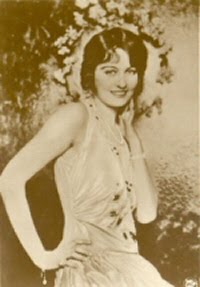
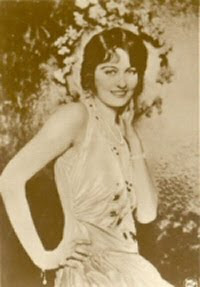
Doris Kenyon: Famed 1920s Adirondack Actress

Ausable Forks was once the favored respite of one of America’s most famed and beloved actresses of her time. During the prime of her career in the 1920s, to escape constant media scrutiny, this lady returned often to the Adirondacks, a quiet, peaceful place filled with the memories of childhood.

Doris Kenyon was born on September 5, 1897, the daughter of James and Margaret Kenyon. James, once a protege of Henry Wadsworth Longfellow, was a person of some renown in his own right, achieving widespread fame and praise for his skills as a poet. Many of his works were featured in Harpers, the Atlantic, and other reputable magazines.
After writing two books, James remained in the literary world and became a publisher. His position would someday help open doors for his talented daughter.

The family lived for a time in Chaumont, New York, northwest of Watertown, and then moved to Syracuse, where Doris was born. Her brother, Raymond, nineteen years older than Doris, was a dentist and oral surgeon in both Philadelphia and Syracuse. Health issues and a deep love of hunting and fishing prompted his move to the Adirondacks in pursuit of a less strenuous life.

Ray Kenyon chose Ausable Forks as his new home, immersing himself in local life, business, and politics. He served in several key positions, including many years as chairman of the Essex County Republican Party, and several more as state assemblyman. Due to his great skill as a dentist and his affable nature, Raymond became a fixture in the community.

Young Doris was a frequent visitor and guest at her brother’s home—so frequent, in fact, that she has sometimes been claimed as an Ausable Forks native. She spent many summers at Fern Lake and was well known in the village, particularly for her singing ability.

When Doris was in her teens, her father became head of the publishing department of the National Encyclopedia of Biography. It was a position of prominence and power, earning James close ties with luminaries from many venues, including show business.

By this time, Doris had sung with different choirs and had developed a reputation for the quality of her voice. At a meeting of the Authors Club, which she attended with her father, Doris was invited to sing, delivering a very impressive performance.

Among the attendees was the renowned Victor Herbert, who had been a superb cellist in Europe, having played in the orchestra of Johann Strauss. In America, he worked at the Metropolitan Opera and became a famed composer and conductor. Like many other stars, Victor maintained a home in Lake Placid.

Her performance before the Authors Club wowed Herbert, and though Doris was only sixteen years old, he decided to cast her in the stage musical Princess Pat. The show opened on Broadway in the Cort Theatre, and Doris’ stage debut as the character Coralee Bliss was a big success. The movie industry soon showed an interest in her (apparently for her acting skills and not for her lovely voice. The silent film era wouldn’t give way to talkies for another 14 years.)

Doris couldn’t resist the opportunity. She left a promising stage career to appear as Effie MacKenzie in The Rack (Milton Sills was the leading star), which was released in December 1915. That performance earned her the lead role in Pawn of Fate, released in February 1916. Within a month, Worldwide Film Corporation signed Doris to an exclusive three-year contract at $50,000 a year ($1 million per year in today’s dollars) … and she was still a teenager!

Despite her youth, Doris displayed maturity with her newfound wealth, donating to projects like the Children’s Home in Plattsburgh. She supported the troops during World War I, subscribing to $50,000 worth of Liberty Bonds, the highest amount of any actress in show business.

Under her new contract, Doris played the leading role in many movies. In 1917, after making A Hidden Hand for Plathe Films, she formed her own company, De Luxe Pictures. The crew stayed at the Lake Placid Club while filming its first project, The Story of Seven Stars.

As life became more hectic, Doris returned frequently to her childhood roots in Ausable Forks, spending time with Raymond. She and her brother shared an affinity for fox hunting, a very popular pastime in those days. Raymond’s camp on Silver Lake was one of Doris’ favorite places, and there she hosted luminaries from show business and other industries.

Next week, the conclusion: Doris reaches the stratosphere of fame, but tragedy strikes as well.

Photo: A Doris Kenyon collectible tobacco card.

The Doris Kenyon story is one of 51 original North Country history pieces appearing in Adirondack Gold: 50+ New & True Stories You’re Sure to Love (352 pp.), a recent release by author Lawrence Gooley, owner of Bloated Toe Publishing.