This Weeks New York History Web Highlights

Each Friday afternoon New York History compiles for our readers the previous week’s top weblinks about New York’s state and local history. You can find all our weekly round-ups here.

Subscribe! More than 2,800 people get New York History each day via E-Mail, RSS, or Twitter or Facebook updates.

Henry Knox Lecture at Fort Ticonderoga

Fort Ticonderoga’s new “Fort Fever Series” concludes for the season on Sunday, April 22, at 2 pm., with “Henry Knox: Beyond the Noble Train of Artillery” presented by Director of Education Rich Strum. The cost is $10 per person and will be collected at the door- free for members of the Friends of Fort Ticonderoga.

Best known at Fort Ticonderoga for his Herculean feat in transporting 59 pieces of artillery from Ticonderoga to Cambridge during the winter of 1775-76, Knox went on to become one of George Washington’s most trusted officers.

Learn about Knox’s early life, when he was forced to begin work at the age of nine to help support his family. A bookseller in Boston in the years leading up to the Revolution, Knox conversed with customers who would fall on opposing sides in the coming war.

After a distinguished military career, Knox continued to help shape the young country, serving as Secretary at War through most of the 1780s. He remained in that position during the first year’s of Washington’s presidency, before retiring to Maine.

The program takes place in the Deborah Clarke Mars Education Center. Doors open at 1:30 pm for the program.

In the coming months, the Fort Fever Series will be replaced by the Fort Ticonderoga Author Series, which returns for the third year. The first program in this series will be on Sunday, June 3, with Eliot Cohen, author of “Conquered into Liberty.” The Fort Fever Series is one of several new education initiatives in 2012. You can learn more about upcoming education programs at Fort Ticonderoga by visiting the Fort’s website and selecting the “Explore and Learn” button.

Photo: Fort Ticonderoga Artillery (provided).

Saunderskill: One of the Oldest Farms in America

Those readers who follow my writing realize quickly that I have a special affinity for the Hasbrouck House in Newburgh more commonly known as Washington’s Headquarters, State Historic Site. Many of those visiting the site do not realize that a part of that site’s history can be traced back to Western Ulster County, New York where Jonathan Hasbrouck’s mother Elsie Schoonmaker was born and raised. Read more

NY Public Librarys 1940 Census Tool Online

There is a new online tool developed by the New York Public Library to help people find their New York City relatives in the 1940 census, which was released April 2.

NARA released the census online for the first time, but transcribing and indexing the data is a slow process,that could take as long as six to eight months.

The Library’s online tool connects people to 1940 New York City phonebooks, which they digitized for the first time, where you can look anyone up by last name to find their address. Once you have the address, just enter it into a search field and up pops the census enumeration district number. Clicking the number takes you to the National Archives’website, where you can find the correct section of the census.

It’s a great research tool, but it’s also meant to grow into something more. When you find an address, the tool pins it to both a 1940 map and a contemporary map, so you can see how the area has changed (buildings torn down, freeways put up, etc). You’re then invited to leave a note attached to the pin – memories, info about who lived there, what the neighborhood was like, questions – and so forth. As people use the site, we’ll build a cultural map of New York in 1940 that will assist both professional historians and laypeople alike. Users have already found New Yorkers including Mayor John Lindsay, Jackie Kennedy, and Jane Jacobs.

Check out the Library’s new tool right here.

Free Access to National Parks During Park Week

The National Park Service and the National Park Foundation, the official charity of America’s national parks, are inviting people everywhere to enjoy, explore, learn, share, and give back to America’s nearly 400 national parks during National Park Week 2012.

Celebrating the theme, “Picture Yourself in a National Park,” National Park Week will run from Saturday, April 21 through Sunday, April 29. Throughout the country, visitors can enjoy the beauty and wonder of 84 million acres of the world’s most spectacular scenery, historic places and cultural treasures for free.

National parks will mark the annual celebration with special events and activities including Volunteer Day on April 21, Earth Day on April 22, and Junior Ranger Day on April 28. From ranger-led hikes and kayak trips to camping and exploring, park visitors can plan their National Park Week online. Discover information about events, special activities for visitors of all ages, how to share your park adventure with other travelers, and how to support the parks.

“America’s national parks have something for everyone,” said National Park Service Director Jonathan B. Jarvis. “Take a break and experience something new, enjoy some fresh air, get some exercise, and see where history happened. And, since admission is free to all 397 parks, all week long, National Park Week is a great time to get up, get out, and explore a park.”

More than 20,000 National Park Service employees care for America’s 397 national parks and work with communities across the nation to help preserve local history and create close-to-home recreational opportunities. Learn more at www.nps.gov.

Woody Guthrie Centennial: Guthrie Archivist Interview

Music legend and songwriting luminary Woody Guthrie was born on July 14, 1912, and this year marks his centennial birthday. To celebrate, the Grammy Museum, the Guthrie family, Woody Guthrie Publications and the Woody Guthrie Archives have planned an international program of events, including tours, concerts, festivals, and conferences.

Ryan Anthony Donaldson of the Archivists Round Table of Metropolitan New York (ART) recently had the chance to ask Tiffany Colannino a few questions about the Woody Guthrie Centennial Celebration. Tiffany is the Archivist with the Woody Guthrie Archives, currently located in Mount Kisco, New York, as well as the newly appointed ART Advocacy Chair.

ART: How did the centennial partnership between the GRAMMY Museum, Guthrie Family/Woody Guthrie Publications, and Woody Guthrie Archives come about?

TC: The centennial partnership between the GRAMMY Museum and the Woody Guthrie Archives has deep roots. For starters, we are both non-profit organizations committed to the history of American music. The Archives’ mission is to perpetuate Woody Guthrie’s life and legacy through the proactive preservation of his Archival material, whereas the GRAMMY Museum’s mission is to explore and celebrate the enduring legacies of all forms of music. Although these missions differ, with the Archives’ focus on preservation and research, and the GRAMMY Museum on public programs and activities, our two organizations can work together to use these archival documents to bring Guthrie’s life to a broad audience.

But it’s more than just our missions that link us together: Robert Santelli, Executive Director of the GRAMMY Museum, is actually a former researcher at the Woody Guthrie Archives. Since 1990, Santelli has researched in the Archives in support of several Woody Guthrie book projects, including his 2012 work This Land Is Your Land: Woody Guthrie and the Journey of the American Folk Song. He has maintained an active working relationship with Nora Guthrie – President of Woody Guthrie Publications, Inc and Director of the Woody Guthrie Archives – for over 20 years.

In a recent press release, Nora Guthrie comments on this partnership, remarking: &#8220Because of its deep enthusiasm for Woody’s creative legacy as well as the underlying influence he’s had on so many musicians and songwriters in all genres of American music, the GRAMMY Museum is the obvious choice to help us celebrate the legacy that he created.&#8221

The centennial celebrations will include concerts, conferences, and exhibits across the United States, Canada, and Europe. We’ve launched www.Woody100.com as a one-stop-shop for all of our North American events, and www.Woody100.de for our European events. In addition to the events we are planning with the GRAMMY Museum, these sites also list the Grassroots events that Guthrie fans and supporters are planning across the world, including lecture series, concerts, hootenannies, and exhibits. In addition, there are many new releases – books, films, and musical albums – including many based solely on material from the Woody Guthrie Archives, set to launch in 2012 to help celebrate Guthrie’s centennial, and perpetuate his legacy.

ART: In terms of centennial celebrations for Woody in the New York area, there will be a concert at Brooklyn College as well as a conference at Penn State University in September. What topics relating to Woody Guthrie would you like to see explored at the conference?

TC: That’s a tough question, because there are so many facets of Woody Guthrie’s life yet to be explored! However, the great thing about the academic conferences being planned for this year is that rather than focus solely on a specific aspect of Guthrie’s life, each conference will use Guthrie as the starting point to open a discussion on a broader, contemporary theme. The theme for each conference will be selected by the host institution, allowing them to decide on a topic that is of direct relevance to their local community.

The 2012 Woody Guthrie Centennial Celebrations will include four large academic conferences: Tulsa, Los Angeles, Penn State, and Brooklyn.

The Tulsa conference, Different Shades of Red: Woody Guthrie and the Oklahoma Experience at 100, used Guthrie as a stepping stone to discuss Oklahoma politics. At the University of Southern California conference, Woody Guthrie’s Los Angeles: A Centenary Celebration, we’ll talk about Los Angeles in the late 1930s, where Guthrie worked for several local radio stations and wrote for various newspapers after fleeing the Dust Bowl. Woody At 100: Woody’s Legacy to Working Men & Women, the Penn State conference in September, will use Guthrie to focus on the labor movement and unions, while the theme for the Brooklyn conference, also in September, is yet to be announced.

ART: It has been announced that the research collection of the Woody Guthrie Archives will be relocating from Mount Kisco, NY, to Woody’s home state of Oklahoma in 2013. How is the planning coming along for it?

TC: In 2013, the Woody Guthrie Archives will relocate from Mount Kisco, New York to a permanent home with the George Kaiser Family Foundation in Tulsa, Oklahoma. As a native Oklahoman, this move will truly bring Guthrie’s life full circle!

The Archives will be located in a repurposed warehouse – the Tulsa Paper Company – along with other arts oriented organizations, and I have had the opportunity to walk through the building site several times. Work is already underway, and it is exciting to see the Archives’ new home come to life! I have had meetings with the building architects to review design plans and requirements, discussing the archival needs to be taken into consideration during the design phase. This relocation to Tulsa will ensure continued researcher access to the material in the collection, and the long-term preservation of over 10,000 pages of documents held in the Woody Guthrie Archives.

More information on Woody Guthrie centennial events is available online.

Stella Bailey Honored with Woman of History Award

On Saturday, March 31st, Washington’s Headquarters State Historic Site honored Stella Bailey, the 2012 Martha Washington Woman of History Award during their annual program “The General’s Lady.” Bailey was selected for her dedicated service in preserving Hudson Valley history over fifty years. The ceremony was held in the Ritz Theatre lobby located on Broadway in Newburgh, NY.

Elyse B. Goldberg, Historic Site Manager, said in her welcoming address and conferring of the award, that though time did not permit her to list all the organizations and positions that Ms. Bailey has held over the years to be mentioned, Stella is at present the Executive Director and Financial Officer of the Fort Montgomery Battle Site Association, President of the Town of Highlands Historical Society, and the Highland Falls Town/Village Historian.

Tom Meyering, President of the 5th New York Regiment, James K. Burr, Adjutant, 5th New York Regiment, and Joseph D’Onofrio, Mayor of Highland Falls each independently nominated her for the honor and made remarks to commend Bailey for her commitment and dedication in preserving Hudson River Valley history.

Family and friends of Ms. Bailey were in the audience along with some previous recipients of the Woman of History Award. They included author/historian Patricia Favata, City of Newburgh Historian Mary McTamaney, City of Newburgh Records Management Director Elizabeth McKean, and community activist Mara Farrell.

Dressed in their Revolutionary War military attire, members of the 5th New York Regiment led the audience cheer at the completion of the award presentation and Bailey’s acceptance speech.

The event was sponsored by the Palisades Parks Conservancy and the Friends of the State Historic Sites of the Hudson Highlands.

Photo: 2012 Winner Stella Bailey, third from left surrounded by past winners Mary McTamaney, Elizabeth McKean, and Mara Farrell along with Historic Site Manager Elyse Goldberg (provided).

Great, Strange and Rarely Seen: Objects from the Vault

The Albany Institute of History & Art has unlocked its vault to present some of the little-known objects in the new exhibition Great, Strange and Rarely Seen: Objects from the Vault opening Saturday, April 14, 2012. A special exhibition opening reception will be hosted on April 12.

The exhibition reveals the cosmopolitan breadth of the Institute’s holdings with stunning Chinese lacquer, intricately carved Japanese netsuke, and 18th-century English porcelain statuettes. Other collections, like patent models and human hair jewelry, demonstrate the ingenious and quirky sides of human creativity. Also to be included are panoramic photographs, unusual clocks, a chronology of mirrors, women’s bonnets and hats, British and American fortepianos, and riches from the Library.

Individuals are invited to celebrate the opening of the exhibition with a special reception on Thursday, April 12 from 5-7 PM at the Albany Institute. Guests will enjoy a preview of Great, Strange and Rarely Seen followed by wine and light hors d’oeuvres. This event is free of charge.

Great, Strange and Rarely Seen is on display in the Main Floor Galleries of the Albany Institute of History & Art, located at 125 Washington Avenue, Albany. This exhibition has been generously funded by the Buchman Foundation and Elle Shushan, and will be on view through August 26, 2012.

Introduction to Schenectady Genealogy Resources

The Schenectady County Historical Society will offer a workshop entitled &#8220Introduction to Genealogy Resources in the Grems-Doolittle Library&#8221 on Saturday, April 28, 2012, from 2 p.m. to 4:00 p.m. at the Historical Society, 32 Washington Avenue, Schenectady.

Participants will explore the resources available for genealogical research in the Grems-Doolittle Library and learn to develop strategies for best utilizing the library’s collections in researching Schenectady-area ancestors from the 17th through the 20th century. The workshop will also include time to conduct research in the library.

Registration is required- limit of 16 participants per workshop. The cost is $5.00- free for Schenectady County Historical Society members.

For more information, or to register, contact Melissa Tacke, Librarian/Archivist at the Schenectady County Historical Society, by phone at 518-374-0263, option 3, or by email at [email protected]. The Schenectady County Historical Society is wheelchair accessible, with off-street parking behind the building and overflow parking next door at the YWCA.

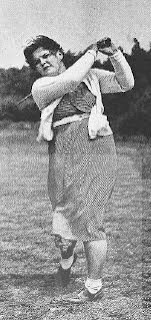
Marjorie Harrison: North Country Golf Legend

Seventy-five years ago, the Adirondacks were abuzz about a precocious athletic phenom, a plucky teenager who exhibited incredible abilities on the golf course. The best players across the region were impressed by this remarkable child who could compete with anyone on the toughest courses. In a man’s world, this youngster—a girl—could challenge the best of them.

Marjorie Harrison, daughter of Neil and Eva, was born in 1918 in the town of North Elba. Her dad earned a living as a golf-club maker, eventually moving to Ausable Forks to assume the position of club professional at the Indole Course.

Having first wielded a club at the age of three, young Marjorie began developing her golfing skills on the local links. In a shocking glimpse of future possibilities, she won the women’s cup at Indole in 1928 when she was just ten years old.

In 1932, the loss of her mom, Eva, to pneumonia, tested Margie’s inner strength, but that was something the young girl never lacked. With few team sporting possibilities available to girls, she excelled at horseback riding, skating, skiing, shooting, and, of course, golf, which are largely solo pursuits requiring heavy doses of self-reliance.

Neil soon began to eye the amateur golf tour as a challenge for his highly skilled daughter. In sports, the term amateur revealed nothing in regards to talent—it only meant that a competitor was unpaid, and thus pure (unsullied by the world of professional athletics).

At that time, there was no golf tour for women professionals. Nearly all the best players competed for cups, trophies, prestige, and for the sake of competition. Turning pro was rare. Only a few of the top women players were signed to represent major sporting goods companies. Once money was accepted, they forfeited all eligibility to compete in amateur events. Men lived in a different world, but for women, a professional golf tour was more than a decade away.

In August, 1933, Marjorie Harrison played in the state event at Bluff Point just south of Plattsburgh, where an international field offered stellar competition. She fairly burst onto the New York golfing scene, battling to the semifinal round, where a seasoned opponent awaited.

Incredibly, Margie went on to lead her semifinal match by one hole going to the 18th (nearly all tournaments featured head-to-head match play). There, she faltered, three-putting the final green to lose her advantage. But with steely resolve, Margie parred the single playoff hole for the win, sending her to the finals.

In the championship round she faced Mrs. Sylvia Voss, an outstanding golfer who promptly won the first three holes, putting Margie far behind. Bringing her power game to the fore, Harrison tied the match by the 14th and led by one at the 17th, but lost the last hole to finish in a tie. Just like in the semifinals, a playoff was necessary.

And, just like in the semifinals, Marjorie holed a par putt to win on the first playoff hole. She was barely 15 years old and had conquered some of the best golfers in an international tourney.

From Boston to Dallas to the West Coast, newspapers touted her great accomplishment. The New York Times wrote, “Swinging a wicked driver and with iron shots of unusual precision … Marjorie Harrison of Au Sable Forks won her first major golf tourney today.” She was also featured in The American Golfer magazine for the Bluff Point win.

In 1934, Marjorie, 16, made it once again to the finals at Bluff Point, where she was set to face Dorothy Campbell Hurd, a golfing legend. Hurd, 51, owned 749 victories, 11 national amateur titles, and once held the American, British, and Canadian titles at one time.

They played even through 16 holes, but Hurd pulled out the win on the final two greens. A gracious opponent and future member of the World Golf Hall of Fame, Hurd was clearly impressed, saying, “With a little more experience, no woman golfer will be in the same class with Miss Harrison. She is a future champion that bears watching by the leading golfers.”

Hurd was right—there was much more to come, including several wins over the next few years. Margie finished near the top in virtually every tournament she entered. Some were very gutsy performances featuring remarkable comebacks, but most were head-to-head battles where mistakes seemed to have no effect on her. She was one tough competitor, always playing with grace, humility, and great determination.

In 1935, Marge finished second in the New York State Championships, and then reached the semifinals each of the next three years. Another major breakthrough came in July, 1937, when she shot a 37 on the final 18 holes at Rutland, Vermont (near her dad’s home area of Castleton) to win the Vermont state title. She was just a few months past her 19th birthday.

At Brattleboro in 1938, Marjorie successfully defended her Vermont title with a birdie on the 15th hole to clinch the win. Other highlights that year included shattering the course record at Bluff Point- winning at Lake Placid- and teaming up with the legendary Gene Sarazen in a remarkable comeback to win a benefit tourney.

For years, Marjorie was at the top of New York’s competitive golfing scene, which attracted some of the best players in the country. Despite the high level of play, it was considered an upset NOT to see her name in the semifinals of any tournament she entered. Whether in Quebec, Syracuse, the Berkshires, Briarcliff, or anywhere else she competed, the North Country’s ambassador of golf was respected and admired for her sportsmanship and fine play.

Many club titles were won and course records set by Marjorie, including at Bluff Point, Lake Placid, Albany, and Troy. She wowed the crowd at Sulphur Springs, West Virginia, battling fiercely to finish second in the Mason-Dixon tournament. Some golf writers pointed out that unlike athletes from warm-weather areas, Miss Harrison achieved great success despite playing only a few months of the year, and while attending high school and different colleges.

Though still a youngster, she returned to Ausable Forks in 1940 for a career review at a testimonial dinner—and for good reason. A few days earlier, at the age of 22, Marjorie had overwhelmed all comers and captured the New York State Women’s Golf Championship.

She maintained her winning ways, but during the World War II years, sports were sharply curtailed across the country to conserve fuel for the troops. Opportunities were meager, but Margie picked up two wins in 1944, followed by a stellar performance that led her once again to the finals of the New York State Championship Tournament.

Her talented opponent in the finals, Ruth Torgersen, was a very familiar combatant from many past matches. Torgersen, in fact, would go on to win a record seven NYS championships and be named New York’s Golfer of the Century.

On this day the two stars battled for 32 holes, at which point Marjorie held a three-hole lead. But on the 33rd, a stroke of bad luck left her ball balanced atop a bunker. Deemed an unplayable lie, it cost her the hole as Torgerson was quick to take advantage and cut the deficit to two.

Undaunted, Margie looked down the fairway of the 346-yard 16th hole and blasted a 200-yard drive. She nearly holed her second shot from 146 yards out, and then tapped in an easy putt for her second New York State title.

In that same year, the Women’s Professional Golf Association was formed, to be replaced six years later by the LPGA. Had she been born years later, there’s a good chance the girl from the Adirondacks would have won a good deal of prize money. For Marjorie Harrison, though, life took a different path.

After completing college, she had begun a career as a physical education teacher. In June, 1946, while still competing and winning, she married Bart O’Brien, himself a star golfer at Indole, the Ausable Forks course managed by her father, Neil.

For a while she competed as Marjorie Harrison O’Brien, but when Bart took a job teaching in the Oneida school system, they moved there and began raising a family. Semi-retired, Marge played occasionally in tournaments, but by 1954 she was busy raising three children, teaching, and becoming a very active participant in the community.

She began giving adult golf lessons, and children’s lessons soon followed. Bart became school principal, and together he and Marjorie maintained a high profile as community leaders. Honors were bestowed on both of them for their work in the school system, and in 1970 she was chosen as an honorary life member of the Oneida school district PTA.

In 1973, Marjorie was named Outstanding Citizen by the Oneida Rotary, and Bart was cited several times for his work on behalf of the organization. Through it all, they maintained close ties annually with family in the Ausable Forks area, where her dad, Neil, still held the position of golf pro at Indole through the mid-1960s.

Marjorie Harrison O’Brien passed away in 1999, and Bart died in 2004—two natives the North Country can truly be proud of.

Photo: Young Marjorie Harrison, golfer extraordinaire.

Lawrence Gooley has authored ten books and dozens of articles on the North Country’s past. He and his partner, Jill McKee, founded Bloated Toe Enterprises in 2004. Expanding their services in 2008, they have produced 20 titles to date, and are now offering web design. For information on book publishing, visit Bloated Toe Publishing.