This Weeks Top New York History News

  • Cliopatria History Blog Ends Publication
  • Fight Erupts Over World War One Memorial
  • Modern Day &#8216-Battle of Princeton’
  • Montauk Lighthouse A National Historic Landmark
  • Former MWPAI President Milton Dies
  • Publishers Warned On Ebook Prices
  • Plattsburgh Leases Property to Museum
  • 33 Students Arrested at Education Rally
  • Chris Shaw to Lead Adirondack Folk School
  • USS Slater Made National Landmark
  • Each Friday morning New York History compiles for our readers the previous week’s top stories about New York’s state and local history. You can find all our weekly news round-ups here.

    Subscribe! More than 2,600 people get New York History each day via E-mail, RSS, or Twitter or Facebook updates.

    This Weeks New York History Web Highlights

    Each Friday afternoon New York History compiles for our readers the previous week’s top weblinks about New York’s state and local history. You can find all our weekly round-ups here.

    Subscribe! More than 2,600 people get New York History each day via E-Mail, RSS, or Twitter or Facebook updates.

    Knox HQ: Newburgh Addresses Crisis Event Sunday

    Written at the Ellison House in early March 1783, the two letters that came to be known as the Newburgh Addresses stirred passions within the Army. The author called for the officers of the Continental Army to threaten a march on Philadelphia and use military force to compel Congress to redress their longstanding grievances. Had the conspirators been able to make good on this threat the United States, considered the beacon of freedom and democracy for the world, might have developed quite differently.

    Whether this threat was real or just an elaborate bluff, the implications of the letter shocked George Washington. Throughout its long troubled history the Continental Army had been kept together by its officers despite dreadful conditions, bitter defeats, and soldier mutinies. If the officer corps turned against the country, who could prevent the military from dictating to its civilian masters?

    Washington countered the first letter by expressing his “disapprobation of such disorderly proceedings” and directed that the officers meet in the Temple Building on March 15th to hear the latest report of the Committee of the Army to Congress. In the second letter dated March 12th, the author argued that Washington by not banning further meetings actually supported their tough rhetoric. They could not have been more wrong.

    Unexpectedly and certainly not welcomed by the conspirators, General Washington appeared at the meeting and he addressed the esteemed gathering. The Commander-in-Chief poured out his heart to the officers but so deep was their resentment that most of them were still unmoved. In a fit of desperation he reached into his coat pocket and pulled out a letter from Congressman Joseph Jones, one of the Army’s staunchest supporters. He struggled to read it to them because his eyesight was failing. His speech, in his own hand, was in large letters but the Jones letter was written in smaller script making it very difficult to read. He finally set the letter down and pulled from a pocket his new spectacles. Just a few at headquarters had ever seen him wearing them. This was his first use of them in public. Washington put on his spectacles and in a self-effacing manner said:

    &#8220Gentlemen, you will permit me to put on my spectacles, for I have not only grown gray but almost blind in the service of my country.&#8221

    Gone for that poignant moment was the iconic great captain on horseback and in his place was revealed a fellow sufferer, aged beyond his years. This humble admission of human frailty unleashed a tidal wave of emotion. Some openly wept. Others felt the burn as the feelings of shame increased the flow of blood to their faces. Overcome by this compassionate response, Washington quickly gathered his papers and left as unceremoniously as he arrived.

    Experience a dramatic reading of the events culminating with the conspiracy to force Congress to redress longstanding army grievances this Sunday March 11, 2012 at 2 PM at Knox’s Headquarters State Historic Site. Call (845) 561-1765 ext. 22 for more information or to make reservations.

    Photo: The 1754 John Ellison house, Knox’s Headquarters, viewed from the 18th century bridge over Silver Stream (provided).

    Sean Kelleher: Toasts as Cultural History

    Today’s traditions is to raise a glass and offer a toast to celebrate a wedding and a new year. In the 17th through the early 19th century, public toasting was very common and many of these toasts are documented in old newspapers. “Toasts were efforts to draw all present into an agreeable fellowship, whether they wanted to be drawn in or not. At the best. the practice knitted together people from different classes into a comity of good cheer,” explains historian Peter Thompson in And a Bottle of Rum: A History of the New World in Ten Cocktails.

    It was typical during the American War of Independence that 13 toasts were drunk, one for each State, however, the toast below number 18. These toasts were offered on July 5, 1775 by General David Wooster and the officers of the Connecticut forces, who were dining at Mr. Samuel Frances in the Fields with the members of the New York Military Club in New York City. The accounts in Rivington’s New York Gazetteer describe “the day was spent in the utmost harmony every thing conspiring to please being all of one mind and one heart. The following loyal toasts were drank:

    1. The king better counselors to him

    2. The hon Continental Congress

    3. General Washington and the army under his command

    4. The several provincial congresses and committees in the confederated colonies

    5. A speedy union on constitutional principles between Great Britain and America

    6. Conquest and laurels to all those heroes who draw their swords in support of freedom

    7. Confusion and disappointment to the friends of despotism and the enemies of America

    8. May the disgrace of the rebels against the constitution be as conspicuous as that of the rebels against the house of Hanover

    9. All those worthies in both Houses of Parliament who stood forth advocates of America

    10. The Lord Mayor and worthy citizens of London

    11. The glorious memory of King William

    12. The immortal memory of Hampden Sydney and every patriot who fell in defence of liberty

    13. May the enemies of America be turned into saltpetre and go off in hot blasts

    14. May Great Britain see her error before America ceases in affection

    15. May America ever be the dread and scourge of tyrants

    16. The daughters of America in the arms of their brave defenders only

    17. Death and jack boots before dishonor and wooden shoes

    18. The glorious nineteenth of April when the brave Americans convinced General Gage and the friends of tyranny that they dare fight and conquer also

    There are a couple of notable items from these toasts. The toasts were drunk the same day as the Continental Congress passed the Olive Branch Petition. The Olive Branch Petition was the last effort of the Continental Congress to avoid war with Great Britain in 1775. Some delegates to the Continental Congress wanted to break with England at this time, but they yielded to the majority who weren’t as radical. Those who were more moderate wanted to explain their position clearly to King George, in hopes that he had been misinformed about their intentions. They made it clear that they were loyal subjects to Great Britain and they wanted to remain so as long as their grievances were addressed. The King refused to even receive their petition. This set the stage for the American Declaration of Independence a year later.

    General David Wooster was an American general who served in the French and Indian War and in the American War of Independence (AWI). He died of wounds sustained during the Battle of Ridgefield, Connecticut on May 2, 1777. Cities, schools, and public places were named after him. He has been called &#8220a largely forgotten hero of the Revolution.&#8221 A masonic history of Wooster is:

    “DAVID WOOSTER was born near Stratford, Conn., March 2nd, 1710-11. After graduation from Yale in 1738, he served as a Lieutenant of the Connecticut Colony sloop “Defense” cruising between Cape Hatteras, Virginia, and Cape Cod, Mass., protecting fishermen and traders against the depredations of Spanish raiders and privateers in “the War of Jenkin’s Ear”. In May 1742 he was promoted to the command of the “Defense”. In the Louisbourg expedition he served as a Captain, commanding a company in the Connecticut contingent, becoming senior Captain at the end of the siege. He was one of an escort of twenty who accompanied the prisoners to France, being assigned to the flag-ship “Launceston” which transported the officers and their families, leaving on July 4th, 1745, in a convoy of eleven ships. This ship proceeded to London where he and his brother officers were feted and honoured in recognition of the great achievement of the colonial troops in the capture of Louisbourg. He was also appointed in December 1745 a Captain in Pepperrell’s new Regiment. It would seem probable that while in London (September to November 9, 1745) he was made a Freemason. On his return to Connecticut he was employed on recruiting service in that State and in December 1745 married a daughter of the President of Yale, Mary Clap, then 15 years of age, his own age being thirty-five. Wooster was on duty with his Regiment at Louisbourg from April 1747 to February 1749 and on the cession of that city back to France in 1748, he returned to New Haven in July 1749. On August 12th, 1750, the Grand Lodge at Boston “At Ye Petition of sundry Brothers (including Whiting) at Newhaven in Connecticut” the charter for the present-day Hiram Lodge, No. 1 was granted, naming David Wooster as first Master. Among his associates were Nathan Whiting and Joseph Goldthwaite, brother officers at the first siege of Louisbourg, at Louisbourg during the period 1747 to 1749. In 1755 he was made a Colonel in the Provincial Army and served in the Campaign of 1755-63 against the French including Quebec in 1759. He took a leading part in the Revolutionary War, and succeeded to the command of Montgomery’s Army at Quebec, after the death of the latter. He was later appointed Major-General in the Connecticut militia and fell mortally wounded while leading an attack at Ridgefield, near Norwalk. A memorial bearing the Square and Compasses stands over the spot where he fell April 27, 1777, while harrying the rear guard of the British troops that had raided Danbury and New Haven. He died May 2, 1777.”

    An irony is that General Wooster was an acquaintance of the African-American poet Phillis Wheatley. Phillis Wheatley shared with his widow, Mary (Clap) Wooster, on 15 July 1778, an elegy poem on the death of General David Wooster. This poem is known for its lines concerning slavery in the hero’s prayer at the end: &#8220But how, presumptuous shall we hope to find/ Divine acceptance with th’ Almighty mind &#8212- / While yet (O deed ungenerous!) they disgrace/ And hold in bondage Afric’s blameless race&#8230-&#8221 A contrast to the 18 toasts which do not mention slavery, but do reference “Conquest and laurels to all those heroes who draw their swords in support of freedom”.

    Toasts are truly a wonderful area of research. They provide an opportunity to see what our forefathers valued. Toasts are how a community tried to draw in a community in fellowship and celebration.

    Illustration: A Birmingham toast, as given on the 14th of July by the&#8211revolution society from Library of Congress Prints and Photographs Division

    Sean Kelleher is the Historian for the Town of Saratoga and Village of Victory in the Upper Hudson Valley.

    The Battle on Snowshoes Event at Fort Ticonderoga

    A living history event at Fort Ticonderoga highlighting Major Robert Rogers and the Battle of Snowshoes will be held on Saturday, March 10 from 10 am – 4 pm. Visitors will be able to encounter the French Garrison in the middle of winter inside Fort Ticonderoga and tour through opposing pickets of British rangers and French soldiers adapted to frontier, winter warfare. At 1 pm on Saturday, visitors will experience the hectic tree to tree fighting in a recreated battle during which the rangers make a stand against superior numbers, only to retreat through the deep woods.

    Visitors will be invited to tour Fort Ticonderoga as it appeared in the winter of 1758, meet the French and Indians who overwhelmed Roger’s experienced woodsmen, and see how native and French soldiers survived the deep winter at this remote military post. More adventurous visitors can take a hike led by a historic interpreter through the opposed pickets of soldiers in the deep woods. In these tours visitors can see how rangers kept a vigilant watch for subtle signs that might reveal their ferocious enemy.

    “The Battle on Snowshoes event recreates the savage fight between Robert Roger’s rangers, and a mixed French force of regular soldiers, milice, and allied native warriors on March 13, 1758,” said Stuart Lilie, Director of Interpretation at Fort Ticonderoga. “This event is designed to be a rich experience for both participants and visitors alike.”

    Re-enactors portraying French soldiers and native allies will live inside the period furnished barracks rooms of Fort Ticonderoga. They will recreate the winter garrison for Fort Carillon, as it was known until 1759. Just as in the March of 1758 these re-enactors will sortie out from the Fort to meet and overwhelm Roger’s men.

    Major Robert Rogers force of both volunteers from the 27th foot, and his own rangers headed out on an extended scout from Fort Edward along Lake George, following an attack on a similar patrol from Captain Israel Putnam’s Connecticut rangers. Hiking on snowshoes due to the three feet of snow, the tracks of Roger’s force were spotted on its march up the west side of Lake George. Near the north end of Lake George, Major Rogers, advanced scouts spotted their French counterparts. Rogers and his Rangers took up positions in a ravine, setting his force in ambuscade to await whatever French patrol would come to meet him.

    The French patrol that met Roger’s men proved far larger than he imagined, and in this Battle on Snowshoes, the rangers’ ambush was itself surrounded and overwhelmed. In deep woods on deep snow, the rangers were forced to retreat with heavy casualties as the French regulars, malice, and natives pressed home their attack. Despite stands along the way, this retreat quickly became chaotic as rangers, Roger’s included, ran for their lives from superior numbers of French.

    Illustration from Gary S Zaboly&#8216-s &#8220A True Ranger: The Life and Many Wars of Major Robert Rogers&#8221 (Garden City Park, NY: Royal Blockhouse, 2004).

    Q & A: Tessa Fallon of the Human Rights Web Archive

    In February the New York Archivists Round Table was spotlighting the Human Rights Web Archive (HRWA), a joint initiative of Columbia University Libraries and Information Services and its Center for Human Rights Documentation and Research. As stated on the project’s site on the Internet Archive, the HRWA is &#8220an effort to preserve and ensure access to freely available human rights resources created mainly by non-governmental organizations, national human rights institutions, and individuals.&#8221

    A major and invaluable undertaking, the HRWA is indicative of the recognition by major research institutions of the importance of the practice of web archiving, or capturing and preserving websites and other web-only materials for future research. Earlier in the month the Round Table had the opportunity to conduct a brief interview with Tessa Fallon, Web Collection Curator for the HRWA. Many thanks to Tessa for her insightful replies, which highlight some of the complex issues at work in the HRWA and also touch upon future directions for the project:

    Q: What are your primary responsibilities as Web Collection Curator?

    A: My primary responsibilities revolve around the maintenance and development of our web archive collections. This includes (but is not limited to): selecting new sites, requesting permission from site owners, sending cataloging requests to our catalogers, testing sites for technical suitability, and managing crawls of our selected sites. In addition to the HRWA (managed jointly between myself and co-curator Alex Thurman), I also manage the new Burke New York City Religions and the Rare Book and Manuscript Library web archives (both collections are in stages of development). Alex manages the Avery Architectural Library web archive, which includes sites related to historic preservation and architecture in New York City, and the University Archives collection.

    Q: One of the main criteria for website inclusion in the HRWA is a perceived risk of disappearance. How do you determine that a website is at risk of disappearing?

    A: This is a perennially tricky question, and we are continually refining our perception of what &#8220at risk&#8221 means for a website. Some might argue that given the ephemerality of the web, all websites are at risk. For the HRWA, there are some criteria that are clearly defined: organizations that are at risk of persecution from hostile governments or other groups, organizations that have limited or threatened access to the internet, and sites that are static, presumably abandoned (no longer updated&#8211in some cases, for years). In our experiences, sites may also disappear and reappear without notice, which makes at-risk difficult to gauge.

    Q: Can you briefly explain the process of how a website is captured for inclusion in the archive?

    A: The (very) abbreviated version of How Web Crawling Works: Sites are captured using a tool called a web crawler. A crawler can capture web content by crawling from link to link on a given site. So, if I sent a crawler to capture this blog, the crawler starting, &#8220nyhistoryblog.com&#8221 would capture all of the content on nyhistoryblog.com at that moment in time. The crawler creates a file (called a WARC file) that is then used by a program like the Wayback Machine to show the archived site (content captured by the crawler).

    Q: The HRWA website states that the project team is currently pursuing other means of making the archive available in addition to the project page on the Internet Archive. What additional means are you considering?

    A: As part of the grant, we are attempting to develop a portal that would allow us to provide a local index and interface for our archived web sites. This is not yet available to the public. Portal development is spearheaded by Stephen Davis, Director of Library Digital Programs Division, programmer David Arjaniks, and web designers Erik Ryerson and Eric O’Hanlon.

    If you’d like to learn more about the HRWA, check out the highly-informative FAQ section of the project site!

    Adirondack Civilian Conservation Corps Event

    The Adirondack Museum will offer its fifth event in the 2012 Cabin Fever Sunday series, the &#8220Adirondack Civilian Conservation Corps: History, Memories and Legacy of the CCC,&#8221 in North Creek, (Warren County) on Sunday, March 11, 2012.

    The Civilian Conservation Corps (CCC) was a public works program that operated from 1933 to 1942 as part of Franklin D. Roosevelt’s New Deal. In the Adirondacks, enrollees built trails, roads, campsites and dams, they stocked fish, built and maintained fire towers, observers’ cabins and telephone lines, fought fires, and planted millions of trees. Learn about camp life and Adirondack projects with author Marty Podskock.

    Marty Podskoch, a retired reading teacher, is the author of three other books: Fire Towers of the Catskills: Their History and Lore (2000)- Adirondack Fire Towers: Their History and Lore, the Southern Districts (2003)- Adirondack Fire Towers: Their History and Lore, the Northern Districts (2005). While gathering stories of the forest rangers and fire tower observers, he became fascinated with other aspects of the Adirondacks such as the logging and mining industries, the individualistic men who guided sportsmen, the hotels they stayed in, the animals, railroads, etc. Marty and his wife, Lynn, live in Colchester, CT where they are close to their family and two granddaughters, Kira and Lydia. He enjoys hiking in the nearby Salmon River Forest and is doing research on the CCC camps of the Adirondacks and Connecticut. For more information, visit http://www.cccstories.com/index.html.

    This program will be held at the Tannery Pond Community Center, North Creek, N.Y., and will begin at 1:30 p.m. Free to members and children- $5 for non-members. For additional information, please call (518) 352-7311, ext. 128 or visit www.adirondackmuseum.org.

    International War of 1812 Bicentennial Quilt Show Set

    The Great Lakes Seaway Trail National Scenic Byway War of 1812 Bicentennial Quilt Show on March 17 and 18, 2012. The event includes an exhibit of 1812 period-true quilts newly-made made by individuals, quilting guilds, historical societies, and reenactors from 18 US states and from Canada. Three historic sites and living history interpreters and quilters in period dress will lend an historic ambiance to the event.

    The former Union Hotel, a three-story limestone structure built in 1817-18 and now the Great Lakes Seaway Trail Discovery Center- the Sackett Mansion built in 1801- and the Samuel F. Hooker House Arts Center, c.1808, will open 10am to 5pm each day with displays of “cot-to-coffin-sized” quilts.


    Lynette Lundy-Beck is a project manager with the Great Lakes Seaway Trail, the not-for-profit organization promoting tourism opportunities along the 518 miles of St. Lawrence River and Great Lakes shoreline in New York and Pennsylvania.

    The show guidelines for size, fabrics – linsey-woolsey, silk, and fancy cottons, etc., colors, quilt patterns, and embellishments such as broderie perse (Persian embroidery) were developed by Seaway Trail in concert with American quilt historian Barbara Brackman of Lawrence, Kansas.

    1812 and English Regency period living history interpreters lending atmosphere in the exhibit buildings and on the village streets will include “President James Madison,” and members of Forsyth’s Rifles with the Fort La Presentation Association of Ogdensburg, NY- MacKay’s Militia from Genesee Country Village and Museum, Mumford, NY- and the Sackets Harbor Battlefield Alliance.

    Quilters have been invited to also attend in period dress. 1812 period reenactor Ted Schofield will exhibit his early 19th century reproduction sewing implements. The event’s youngest quiltmaker is a 12-year-old girl from Himrod, NY.

    The living history ladies of Upper Canada Village researched and designed a pictorial quilt with embroidery and applique depicting soldiers, Natives, moose, and a sailing ship bordered by a traditional Irish Chain pattern.

    DeAnne Rosen of Lawrence, Kansas, has dedicated her quilt to her two great-great-great grandfathers and two great-great-great uncles who fought in the war. Her floral work is based on quilts she saw in the Victoria and Albert Museum in London, England.

    A special memorial exhibit of quilts will pay tribute to the late Seaway Trail President and CEO Teresa Mitchell, who developed the concept for the Seaway Trail scenic byway and for quilting as a cultural heritage travel theme along that byway.

    The event also features quilting demonstrations and vendors. The $5 show admission benefits the Seaway Trail Foundation. The show is co-sponsored by Orleans County Tourism and the 22-mile Country Barn Quilt Trail loop off the Great Lakes Seaway Trail to barns painted with quilt block patterns.

    For more information, call 315-646-1000 x203 or visit the Seaway Trail website.

    Charles Jennette: Called Too Old to Marry

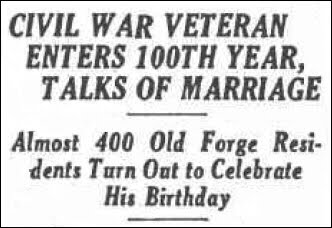
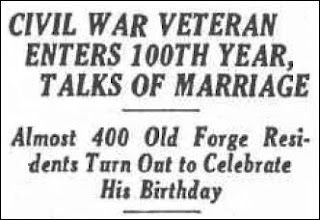
    In 1936, at a birthday party in the Adirondacks, the honoree claimed he would be married within two years. He passed away six years later, but during that span, he received more than 100 letters and 9 personal visits from female suitors- became engaged- was dumped the day before the wedding- was the guest of honor at several dinners, birthday parties, and parades- regularly mowed his lawn with a scythe- joined a ski club- and received the Purple Heart for war injuries.

    Nothing particularly unusual?unless, of course, at that party in 1936, the birthday boy was turning 99 years old. Review those events from that perspective, and now you’ve got something.

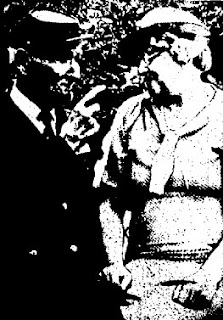
    Meet Charles Jennette, for a time the most famous man in the Adirondacks. His greatest fame came in his 100th year, when he became engaged to Ella Blanch Manning, a New York City woman who had attended his 99th birthday party several weeks earlier. Days before the wedding, an Albany headline read “100 Called Too Old to Marry- Man Will Take 3d Wife at 99.”

    But after a visit with her daughters, and just 24 hours before the wedding, Ella changed her mind. Already a media sensation (and despite being left high and dry), Charles continued with his post-wedding plans of a boat ride and dinner, remaining hopeful of marriage in the near future. After many interviews, he was only too happy to return to an otherwise quiet, humble life.

    Jennette was born in Maine in 1837. The family moved to Canada when he was five, and returned to the US when the Civil War began. At Malone, Charles enlisted for three years with Company A, 95th NY Volunteers, but served only nine months. His time was cut short in 1865 when he was wounded in the Battle of Hatcher’s Run (also known as Dabney’s Mills) in Virginia. He was still in the hospital when the war ended.

    In 1866, he married Emily Proulx in Ottawa, a union that would endure for 57 years. When the Spanish-American War broke out in 1898, Charles tried to enlist at the age of 61, but was refused. He lived much of his life in the St. Regis Falls area as a lumberman, toiling in partnership for many years with his son, John.

    They ended the business relationship in December 1915 when Charles was 78. In the following year, he built a cottage at Old Forge. In 1921, the 84-year-old was one of only six attendees at the final meeting of the Durkee Post GAR in St. Regis Falls. GAR represents Grand Army of the Republic, the title given to Union forces in the Civil War. Because few veterans remained, the local group was discontinued.

    His wife (Emily) died in the mid-1920s. Charles began spending summers in Old Forge and winters in Ilion (near Herkimer). He also made regular visits to family in Tupper Lake. In 1935, he married for a second time (in Montreal), but his new bride died just two months later.
    He was generally known as a remarkable old-timer, but fame arrived in 1936 when, at his 98th birthday party, Charles announced he expected to wed again before he reached 100 (because, he said, “over 100 is too old”). Several hundred people attended the festivities.

    After addressing more than a hundred female suitors (ages 42 to 72), he made plans to marry Ella Manning. Instead, at 99, he became America’s most famous groom to be jilted at the altar.

    After that, it seemed anything he did was remarkable, and at such an advanced age, it certainly was. In 1937 (age 100) he rode in a Memorial Day parade as guest of honor. Shortly after his 101st birthday, he attended the Gettysburg Annual GAR Convention, 72 years after his combat days had ended.

    In 1940, on his 103rd birthday, he used a scythe to mow the lawn, and otherwise continued his daily ritual—trekking nearly two miles to retrieve the mail, and taking time to read the newspapers (and he didn’t need glasses!). He made maple syrup every spring and tended a garden each summer.

    In August 1940, at Oneida Square in Utica, Charles was honored in a ceremony at the Soldiers’ Monument, which was built in 1891 to memorialize the Utica men who “risked their lives to save the Union.” Seventy-five years after suffering wounds in battle, Charles Jennette became a member of the Military Order of the Purple Heart (which had been formed during WW I).

    At age 104, perhaps still holding a marriage possibility in the back of his mind, Charles became the first male allowed to join the Old Forge Sno-Flakes, an all-girls’ ski club. He soon expressed regret at not having taken up skiing “when I was young, say 70 or so.”

    In mid-1942, in support of the WW II effort, a photo of Charles purchasing war bonds was widely distributed among newspapers. He continued to attend American Legion rallies and make other appearances. Finally, in December of that year, he passed away at the age of 105.

    Photos: At age 99, Charles Jennette with his fiance, Ella Manning- one of many headlines generated by Jennette’s story.

    Lawrence Gooley has authored ten books and dozens of articles on the North Country’s past. He and his partner, Jill McKee, founded Bloated Toe Enterprises in 2004. Expanding their services in 2008, they have produced 19 titles to date, and are now offering web design. For information on book publishing, visit Bloated Toe Publishing.

    Finger Lakes Museum Opens New Satellite Office

    The Finger Lakes Museum has a new satellite office space at 81 Browns Race in the High Falls historic district of Rochester. The Museum signed a co-location agreement with the Philipson Group, a creative communications and marketing firm. According to a statement issued to the press, the main purpose of the new office space is development. Current and potential supporters and consultants of the Museum from the surrounding Rochester area are expected to have the place to visit one on one with Museum staff and keep abreast of their progress. Plans for the Museum will be on display and collateral material will be available inside, museum officials said.

    To schedule a time to meet with the Museum staff at their new location, call 315-595-2200 or email as follows:

    Executive Director, Don Naetzker [email protected]

    Interim Development Director, John Adamski [email protected]

    Communications/Programs Director, Natalie Payne [email protected]

    Photo: The Finger Lakes Museum employees, Executive Director Don Naetzker and Communications/Programs Director Natalie Payne, stand outside of their new satellite location in High Falls, Rochester.