Online Genealogy Standards Organization Formed

The Family History Information Standards Organisation (FHISO) is a newly-formed international organization created to develop standards for the digital representation and sharing of family history and genealogical information. The standards are hoped to solve today’s interoperability issues independently of technology platforms, genealogy products or services. They are expected to provide opportunities for innovation and address robust user requirements such as search, capture and research administration.

In the fall of 2010, a group of technologists and users formed the “Build a BetterGEDCOM Project” to improve data exchange standards and to facilitate sharing between researchers. This grassroots effort has grown into an open forum for the exchange of ideas, and a substantial body of work has been produced. In order to realize the project goals, a more structured, organized environment was needed. It is hoped that FHISO will provide this environment.

The FHISO process is expected to identify practices and trends that require standardization and provide a transparent, collaborative environment that promotes innovation and consensus-building for the development of open standards. Following publication, the organization is expected to provide education and other support to encourage standards adoption and use. The FHISO standards will be publicly available at zero or minimal cost on a non-discriminatory basis according to an recently released FHISO statement. Anyone will be able to implement the standards for any purpose without royalty or license fees, the statement said.

FHISO membership is available to all who participate in the global family history and genealogical community. &#8220The success of FHISO depends on the voluntary participation of its members representing all the global stakeholder groups,&#8221 the group said in its statement to the press. &#8220In the standards-setting process, there is no substitute for the active involvement of vendors, developers, technologists, users and family history or genealogy organisations.&#8221

FHISO can be found on the web, on twitter @fhisorg, on Facebook and Google+.

St. Peters Church in Albany the Focus of Events

The Albany Institute of History & Art will be presenting the first of a three lecture series “300 Years, One Congregation”, about St. Peter’s Church on State Street on Sunday, February 12 at 2 PM. In this first lecture “In One City of Two Cultures, Ministering to Three Nations” the history, purpose, and influence of St. Peter’s Church in Albany will be explored by a panel of experts, including the Reverend Paul Hartt, Rector, Ms. E. Connie Powell, Church Archivist and Mr. Chris Grill, Mentor at Empire State College. This event is FREE with museum admission.

The lecture series is in conjunction with the upcoming exhibition “St. Peter’s Church in Albany”, opening at the Albany Institute on March 3 and running through April 29, 2012. The exhibition draws from the collections of St. Peter’s Church and the Albany Institute and includes the rarely seen 1712 Queen Anne Communion Service, land grants, portraits, furniture, drawings, prints, maps, and photographs to highlight the history of the church and its role in the historical events that shaped Albany and the Upper Hudson Valley.

The other two lectures included in the series are:

Three Buildings, Four Distinguished Architects

SUNDAY, MARCH 4 | 2 PM
John G. Waite, FAIA, and Doug Bucher of John G. Waite Associates, Architects, PLLC will present a lecture on the architectural and artistic history and legacy of St. Peter’s Church. FREE with museum admission.

One Faith: The Stained Glass Windows at St. Peter’s Church

SUNDAY, MARCH 25 | 2 PM
Mr. Anthony Anadio will present an illustrated lecture of the stories told by the thousands of pieces of stained glass created by some of the world’s finest artisans that are part of St. Peter’s Church. The lecture will be followed by a tour of St. Peter’s to see the actual windows. FREE with museum admission.

RELATED EXHIBITION:
ST. PETER’S CHURCH IN ALBANY

MARCH 3–APRIL 29, 2012

The distinguished history of St. Peter’s Church in Albany, New York begins in 1708 when England’s Queen Anne sent missionaries to establish friendly relations with the Iroquois. A gambrel-roofed masonry edifice with a bell tower was completed in 1715. Located on State Street, just below present day Chapel Street, it was the first Anglican Church built north of New York City and west of the Hudson River. In 1802 Albany architect Phillip Hooker designed a new Federal Style church near the same location, which Richard Upjohn of New York City, well-known for his Gothic Revival Style replaced in 1860. His son, Richard M. Upjohn added the impressive bell tower in 1876. The richly decorated interiors include work by leading artists designers including windows designed by the English artist Edward C. Burne-Jones and fabricated by the William Morris Company of London in 1880- the chancel windows made by Clayton and Bell of London in 1885- and the rose window over the State Street entrance made by the Tiffany Company in 1892. The exhibition, drawn from the collections of St. Peter’s Church and the Albany Institute, include the rarely seen 1712 Queen Anne Communion Service, land grants, portraits, furniture, drawings, prints, maps, and photographs arranged to highlight the history of the church and its role in the historical events that shaped Albany and the upper Hudson Valley.

Illustration: St. Peter’s Church circa 1850 by James Eights (1797-1882), watercolor.

Drums Along the Mohawk Outdoor Drama Planned

Kyle Jenks, producer of Drums Along the Mohawk Outdoor Drama is a native of Albany, NY. His outdoor drama will pay homage to iconic American author Walter D. Edmonds, noted for his historically accurate novels, including the popular Drums Along the Mohawk (1936). This American classic was made into a highly successful Technicolor feature film in 1939. Directed by John Ford, it starred Hollywood legends Henry Fonda and Claudette Colbert. Edmonds was born in 1903 in Boonville (in Oneida County, NY) and died in 1998.

The world premiere of Drums Along the Mohawk Outdoor Drama coincides with the British Brigade and Continental Line’s national Revolutionary War encampment at Gelston Castle Estate. Located at 350 Galina Lane, Mohawk, NY the estate will be home to an estimated 1,000 Revolutionary War reenactors. The theme of the weekend long festivities will be to honor the 235th anniversary of the Battle of Oriskany.

One hallmark feature of a great outdoor drama is the unique way in which the story and the site are inextricably intertwined. Historic Gelston Castle Estate is located at the epicenter of a hotbed of America’s Revolutionary War activity.

After moving to Ohio, Mr. Jenks found a concentration of outdoor historical dramas there. Once he attended a performance of Tecumseh!, in Chillicothe, OH, his vision to produce his own outdoor drama instantly materialized. According to the prestigious Institute for Outdoor Drama, outdoor dramas have the potential to make a significanhttp://www.blogger.com/img/blank.gift impact on the local economy. Besides creating a way to increase total economic dollars to the Mohawk Valley, Mr. Jenks envisions the project to be an exciting way to connect the local citizenry with a feeling of ownership to this classic American story.

For more information about the drama, contact Kyle Jenks at 216 509 7502 or www.AmericanHeritageLivingHistoryProductions. Visit www.oriskany235th.org to learn more about the National reenactment weekend. Jenks is also offering an associated six day bicycle tour that visits the historic sites included in the plotline of the drama (See www.AmericanHeritageBicycleTours.com). Food, period sutlers (merchants), vendors and entertainers will also be present during the weekend.

Preserving Civil War Graves in New York State

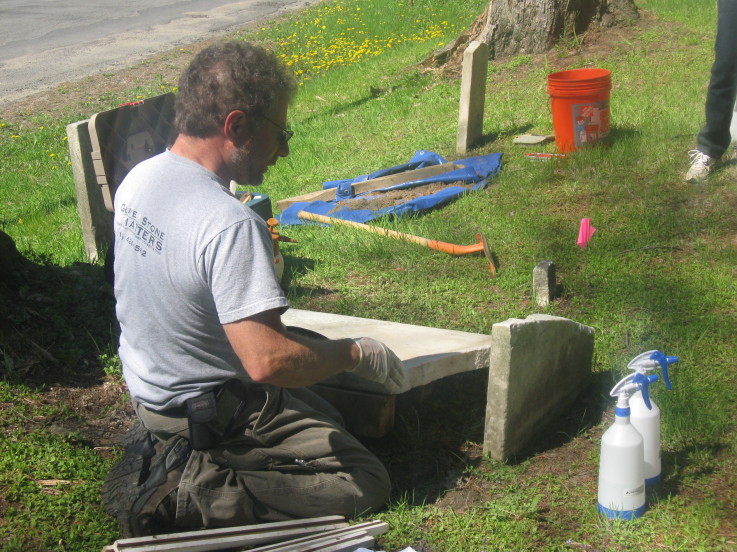
Last year, the nation celebrated the 150th anniversary of the start of the Civil War. This momentous occasion, in which over 600,000 individuals lost their lives, profoundly affected New York State as well as the still young nation. New York State not only contributed the most of the northern states, but also paid dearly with the loss of over 50,000 soldiers according to the New York State Military Museum. Read more

New York Celebrates Black History Month

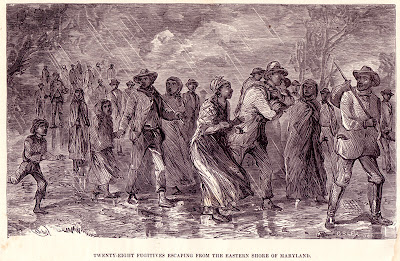
In the 19th century, New York State was home to some of the most powerful abolitionists. Because of its proximity to Canada, New York became an important destination and temporary home for many African Americans fleeing slavery in the South. Today you can visit the former homes of prominent abolitionists such as Gerrit Smith and Harriet Tubman and follow the trail of the Underground Railroad, the network of secret routes and safe houses used by slaves to escape to the free states and Canada.

February is Black History Month and I LOVE NEW YORK is highlighting a remarkable period in history, the people who risked their lives to furtively abolish slavery, the sites you can visit to learn about them and the remarkable achievements that shaped our African-American heritage.

Here are just some of New York State’s many Underground Railroad sites:

Howland Stone Store Museum – Finger Lakes
The Howland family was very involved in abolition, women’s rights and world peace movements. This 1837 Cobblestone Store in the town of Aurora was an important station on the Underground Railroad. The museum preserves local, state and national history, where you’ll discover the stories of local sites involved in the Underground Railroad. The store is a vital part of the community and an eloquent reminder of the history of causes supported by the Howland family.

Harriet Tubman House – Finger Lakes
Harriet Tubman is the face of abolition. Known as the “Moses” of her people, Tubman embodied the true American ideal and spirit. A patriot, a war hero and instrumental in directing the Underground Railroad, she had the gift of touching everyone around her, earning praise and accolades from members of the U.S. Government and Queen Victoria of England. This historic site in Auburn, a tribute to the difference one person can make by caring for so many people, also includes the Home of the Aged, where she cared for the elderly during the last 50 years of her life. Her gravesite is nearby. The site includes the Home of the Aged where she cared for the elderly for the last 50 years of her life. Her gravesite is nearby.

Murphy Orchards – Greater Niagara
Stepping away from the classic colonial museum of the 1800s, Murphy Orchards, in the hamlet of Burt, offers an authentic example of the variety of stations that comprised the Underground Railroad. Charles and Libby McClew built the farmhouse, outbuildings, and barn that are all still used today and are believed to have been a part of the Underground Railroad from 1850 to 1861. The concealed chambers beneath the barn lend credibility and proof that this landmark served as an escape route for freedom-seeking slaves.

Fenton History Center &#8211 Chautauqua-Allegheny
Jamestown, New York is rich in Underground Railroad history and abolitionist activity. The Fenton History Center, located at the former mansion of Governor Rueben E. Fenton, is a community resource center for people of all ages to learn about the history of slavery and our nation. Governor Fenton was a close political associate of President Lincoln and an avid supporter of the abolition of slavery.

Old Fort House Museum &#8211 Capital-Saratoga
This landmark museum in Fort Edward was originally used as a fort during the French and Indian War. In 1829, a free and well-educated black man, Solomon Northup, along with his bride Ann Hampton, moved into the estate before Solomon was kidnapped and sold to slavery. Following his freedom and return home, he wrote a book entitled “Twelve Years A Slave”, considered to be as insightful on slavery and the north as the renowned “Uncle Tom’s Cabin”.

LinkPhilipsburg Manor &#8211 Hudson Valley
In Sleepy Hollow visit one of the largest and best documented slave sites in the North, Philipsburg Manor. A thriving farming, milling and trading center that relied on a community of enslaved African Americans to operate the complex, the Philipsburg Manor community contributed a great deal to the Hudson Valley’s historical development. Take part in 18th century hands-on activities, discover the riveting story of enslavement in the Colonial North, and explore the food systems, textile production techniques and medicinal practices of Philipsburg Manor’s inhabitants.

John Brown Farm – Adirondacks
The assault of the U.S. Arsenal at Harper’s Ferry in 1859 was the brainchild of abolitionist John Brown, who planned to use captured arms in an extensive campaign to liberate slaves. Following his capture and hanging for his leadership in planning this attack, Brown was laid to rest at his farm in North Elba, near Lake Placid. Today, visitors to the site can participate in guided tours, re-enactments and other activities.

The Gerrit Smith Estate – Central New York
Gerrit Smith is considered by contemporary scholars to be one of the most powerful abolitionists in the United States. He supported the work of abolitionists such as Frederick Douglass and John Brown. Located in Peterboro, just minutes away from the National Abolition Hall of Fame and Museum, this valuable historic site provides tours, programs and a film presentation as well as special events and exhibits regarding the Underground Railroad.

National Abolition Hall of Fame and Museum – Central New York
The National Abolition Hall of Fame and Museum in Peterboro honors anti-slavery abolitionists, including their work to end slavery and the legacy of that struggle, and strives to complete the second and ongoing abolition – the moral conviction to end racism.

These are just some of the many landmarks throughout New York State that played a vital role in the slaves’ flight to freedom. This Black History Month pay tribute to the deeds and memory of the fascinating individuals who helped make freedom a reality for so many.

Take an Underground Railroad Tour
If you can’t decide which landmark to visit, consider taking a statewide tour of New York’s Underground Railroad heritage. In conjunction with I LOVE NEW YORK, tour operator Arena Travel is offering an Underground Railroad tour, May 5-17, 2012, to domestic and international travelers.

The Arena Travel Underground Railroad and Slavery in New York Tour tells the complete story of the African Americans’ struggle for freedom. From the gateway to freedom across the Niagara River into Canada, to early slavery in New York State, the figures and stories are all here to explore. Performances by Akwabaa, a performing arts and tour group in Rochester, tell the vivid story of the life of Frederick Douglass sheltering slaves in his home while he spoke out against the institution of slavery. Other stops on this Buffalo to New York City adventure include the homes of Harriet Tubman and Gerrit Smith, and Philipsburg Manor. Learn more about this exciting travel opportunity at www.arenat
ravel.com
.

Americas First African American Woman Judge

A long overdue biography of the nation’s first African American woman judge elevates Jane Matilda Bolin to her rightful place in American history as an activist, integrationist, jurist, and outspoken public figure in the political and professional milieu of New York City before the onset of the modern Civil Rights movement. Jacqueline A. McLeod’s, Daughter of the Empire State: The Life of Judge Jane Bolin is published by the University of Illinois Press (2011).

Bolin was appointed to New York City’s domestic relations court in 1939 for the first of four ten-year terms. When she retired in 1978, her career had extended well beyond the courtroom. Drawing on archival materials as well as a meeting with Bolin in 2002, historian Jacqueline A. McLeod reveals how Bolin parlayed her judicial position to impact significant reforms of the legal and social service system in New York.

Beginning with Bolin’s childhood and educational experiences at Wellesley and Yale, Daughter of the Empire State chronicles Bolin’s relatively quick rise through the ranks of a profession that routinely excluded both women and African Americans. Deftly situating Bolin’s experiences within the history of black women lawyers and the historical context of high-achieving black New Englanders, McLeod offers a multi-layered analysis of black women’s professionalization in a segregated America.

Linking Bolin’s activist leanings and integrationist zeal to her involvement in the NAACP, McLeod analyzes Bolin’s involvement at the local level as well as her tenure on the organization’s national board of directors. An outspoken critic of the discriminatory practices of New York City’s probation department and juvenile placement facilities, Bolin also co-founded, with Eleanor Roosevelt, the Wiltwyck School for boys in upstate New York and campaigned to transform the Domestic Relations Court with her judicial colleagues. McLeod’s careful and highly readable account of these accomplishments inscribes Bolin onto the roster of important social reformers and early civil rights trailblazers.

Author Jacqueline A. McLeod is an associate professor of history and African & African American studies at Metropolitan State College of Denver and co-editor of Crossing Boundaries: Comparative History of Blacks in Diaspora.

Note: Books noticed on this site have been provided by the publishers. Purchases made through this Amazon link help support this site.

The Grinnell at 100: Celebrating Community, History

In 2010 and 2011, residents of the Grinnell, a land-marked cooperative apartment house at 800 Riverside Drive in Manhattan’s Audubon Park Historic District, celebrated their building’s centennial with a year of activities including the launch of a centennial website, logo and photography competitions, and a birthday celebration for the neighborhood. Grinnell residents have now produced a book commemorating that centennial year, The Grinnell at 100: Celebrating Community, History.

Through a historical essay, numerous personal histories, biographical sketches, and 150 photographs and illustrations, the 94-page, full-color book traces a half-acre triangular block in northern New York City from primordial forest to a 21st-century co-operative apartment house.

Constructed between June 10, 1910 and July 29, 1911, the Grinnell sits on a triangular plot of land in Washington Heights where the family of George Blake Grinnell once pastured a few cows when the surrounding area was known as Audubon Park. “The Park,” a bucolic suburb that grew out of John James Audubon’s farm Minnie’s Land, remained suburban into the 20th Century, but became prime property for real estate development when the subway opened at 157th Street in November 1904. Six years later, when the extended Riverside Drive opened, its path crossing Audubon Park, the Grinnell heirs, led by eldest son George Bird Grinnell, sold their property. Developers quickly snapped it up and between 1909 and 1911 erected a group of Beaux Arts apartment houses. Noting the effects of rapid transit, newspaper commentators dubbed the two-year period Audubon Park’s “rapid transformation.”

Edited by Matthew Spady and designed by Jacqueline Thaw, featuring photographs by Charles Baum and Mo Strom, and contributions from more than 30 Grinnell residents, The Grinnell at 100 is a must-have edition for anyone with an interest in the history of New York City, Washington Heights, or the Audubon Park Historic District – and of course the book will interest Grinnell residents, friends, and admirers, past and present.

The Grinnell at 100: Celebrating Community, History, and an Architectural Gem, available at Lulu.com. For information about discounts on purchases of multiple copies, contact [email protected].

Note: Books noticed on this site have been provided by the publishers.

RC Oster Historic Architecture Exhibit Opening

An opening reception will be held for &#8220Drawing on our Past: Ink Darwings of New York State’s Historic Architecture,&#8221 an exhibition of drawings by David &#8216-RC’ Oster at View, formerly the Old Forge Arts Center, tomorrow, Saturday, February 4 from 5 ­to 7 pm. His works will be displayed from February 4 ­ March 3 concurrently with &#8220Adirondack View Finders&#8221 a photography exhibition that showcases top Adirondack Photographers including Nathan Farb, Nancie Battaglia, Mark Bowie, and Carl Heilman.

RC Oster is a self-taught artist who specializes in free-hand ink drawings of regional landmarks and Adirondack scenes. He is particularly well known for his drawings of historic buildings. RC sees these landmarks as &#8220proud reminders of where we as a society have been.&#8221 He carefully captures fine details of these buildings from sharp angles that show off the architecture of the building. He seeks to bring further awareness to these buildings
through capturing their fine details.

Stone sculpture by Matt Horner will be on display with both the photography and the ink drawings. Exhibition admission is $10/$5 members and groups of 6+/Children under 12
free. View is a multi-arts center located at 3273 State Rt. 28 in Old Forge, NY. To learn more about View programming visit www.ViewArts.org or call 315-369-6411.

This Weeks Top New York History News

  • Report: Building Reuse Has Environmental Value
  • Republican Blocks 9/11 Museum Funds
  • Gurley Brown Gives Columbia, Stanford $30 M
  • Folklorist’s Global Jukebox Goes Digital
  • Folsoms Write Book About FDR
  • 3M Black Records Free in Feb
  • February Perspectives on History Online
  • Fort Ticonderoga’s Visitation Flat in ’11
  • E-book Readership Rises Dramatically
  • Each Friday morning New York History compiles for our readers the previous week’s top stories about New York’s state and local history. You can find all our weekly news round-ups here.

    Subscribe! More than 2,300 people get New York History each day via E-mail, RSS, or Twitter or Facebook updates.

    This Weeks New York History Web Highlights

    Each Friday afternoon New York History compiles for our readers the previous week’s top weblinks about New York’s state and local history. You can find all our weekly round-ups here.

    Subscribe! More than 2,300 people get New York History each day via E-Mail, RSS, or Twitter or Facebook updates.