Fort Ticonderoga to Recreate 1759 British Capture

Re-enactors portraying French and British soldiers of the Seven Year’s War, also known as the French and Indian War, will converge upon Fort Ticonderoga this Saturday and Sunday, June 25 and 26 to recreate the tumultuous and chaotic events by which General Amherst’s British army captured the vital Fort. Visitors will experience the life of British soldiers and besieged French soldiers recreated around them, with all the sights and sounds they would have encountered at Fort Ticonderoga in the summer of 1759.

The modern recreation of this clash for empire will feature a variety of demonstrations and events. Highlights of the weekend include: a battle each day featuring re-enactors recreating events of the siege as reported in the diary of a private in Willard’s Regiment of Massachusetts Provincials, who was part of the British force attacking the Fort- artillery and musket demonstrations- a talk by author Russ Bellico on his book, Empires in the Mountains– 18th-century music performed on period instruments by musician Robert Mouland- a rousing game of 18th-century cricket- and historic merchants to give visitors an immersive experience in the inevitable victory for the British forces. In addition to these special events, visitors to Fort Ticonderoga on June 25 and 26 can also enjoy the museum’s extensive collection of artifacts and militaria and the King’s Garden- admission to this reenactment weekend is included in the price of general admission to the Fort.

During the Seven Year’s War the great rivalry between France and Britain played out in their American colonies. The summer of 1759 saw General Amherst, commander and chief of all British forces in North America, moving to take the French Fort Carillon (Ticonderoga) from the rear guard of soldiers posted there. Amherst moved his massive force of 11,000 to siege lines previously held by the French outside the Fort. The tiny French contingent of 400 pounded the British line with artillery for four days, in a futile attempt to stave off the inevitable. Finally, with their defeat in sight, the French spiked the cannons in the Fort, rendering them useless, and lit a fuse in the powder magazine, which exploded with destructive force. The French force retreated by boat to Fort St. Frederic in the north, also known as Crown Point. Out of the rubble of the old Fort Carillon rose the new Fort Ticonderoga as the British forces immediately moved in to begin reconstructing the fortifications.

Photo: Fort Ticonderoga’s Historic Interpreters Portray Massachusetts Provincial Soldiers in 1759. Courtesy Fort Ticonderoga.

Kids History Adventures at John Jay Homestead

This summer your kids can become pioneering wilderness explorers with Lewis and Clark, patriotic soldiers during the War of 1812, and investigative naturalists and archeologists during John Jay Homestead’s History Adventure Days, a themed summer camp weeks at John Jay Homestead, organized as three weekly sessions.

Kids entering grades 2-7 can sign up for one session or all three. This year’s themes are “Exploring the Unknown: Lewis & Clark and the Corp of Discovery” (July 25-29), “Broad Stripes and Bright Stars: The War of 1812” (August 1-5), and “Seeing is Believing: Uncovering the Cabinet of Curiosity” (August 8-12).

Each session runs Monday – Friday from 9:00 a.m. – 3:00 p.m. The cost is $250.00 per week. A 10% discount is given to members of Friends of John Jay Homestead. Daily rates are available. More information about the program can be found online or by calling (914) 232-5651 x101. Be sure to register your child soon- spaces are limited and fill up quickly.

John Jay Homestead State Historic Site is located at 400 Route 22 in Katonah, Westchester County, NY. It is one of six state historic sites and 16 parks administered by the New York State Office of Parks, Recreation and Historic Preservation – Taconic Region.

Broolyn Museum Programming, Hours Changes

Open every Thursday evening until 10 p.m. since last October, the Brooklyn Museum will enhance its Thursdays @ 7 programming this fall to better meet the needs of visitors who work during the day.

However, effective July 1, the Brooklyn Museum will no longer remain open until 10 p.m. every Friday. This change is a result of the challenging economic climate confronting many public institutions throughout New York City and the country.

In a press statement issued last week, Museum Director Arnold L. Lehman said, &#8220Although the difficult economy made it impossible to serve our visitors two evenings each week, based on our good experience with the history of First Saturdays, we believe that by focusing our resources on Thursday nights, we can more effectively serve our audience by presenting an increasingly dynamic and engaging schedule of programs each Thursday.&#8221

The Museum will continue to be open every Thursday evening at 7 p.m. with a series of special programs including interviews, performance, film, and tours. The lineup for July and August is as follows:

July 7
Music: Winard Harper, one of the most celebrated drummers in jazz, performs with his sextet. Presented in conjunction with WBGO Jazz 88.3FM and Heart of Brooklyn as part of Jazz: Brooklyn’s Beat.

Moonlight Tour: &#8220Nude, Naked, or Undressed? Eroticism in American Art&#8221

July 14
Moonlight Tour: &#8220Behind the Scenes with Split Second: Indian Paintings.&#8221
Curator Joan Cummins and Director of Technology Shelley Bernstein discuss the curatorial experiment that resulted in Split Second. Space is limited, and reservations are required. RSVP to [email protected].

July 21
Moonlight Tour: &#8220Visitor’s Choice&#8221

July 28
Moonlight Tour: &#8220Fantasy, Fashion, and Reality in American Art&#8221

Film: POV Short Cuts (2011, 60 min.). A collection of documentary films on subjects ranging from bird watching and Tiffany lamps to Sunday school teachers and family relationships. Appropriate for all audiences.

August 4
Moonlight Tour: &#8220Vishnu: Hinduism’s Blue-Skinned Savior with Curator Joan Cummins&#8221

August 11
Moonlight Tour: &#8220The Dinner Party by Judy Chicago&#8221

August 25
Film: Yogawoman (Kate Clere and Saraswati Clere, 2011, 90 min.). Documentary about how women are changing the face of yoga.

Brooklyn Museum Sanford Biggers Exhibit Planned

&#8220Sanford Biggers: Sweet Funk-An Introspective&#8221 challenges and reinterprets symbols and legacies that inform contemporary America in a focused selection of eight installations and five additional artworks created by the New York-based artist. On view September 23, 2011, through January 8, 2012, this will be Biggers’ first museum presentation in New York, and it will mark the Brooklyn debut of his Blossom (2007), a large-scale multimedia installation.

Sanford Biggers employs a variety of media, and his work incorporates references to a range of artistic and cultural traditions. The focal point of the Brooklyn Museum exhibition, Blossom (2007), is composed of a large tree that grows through, and uproots, a grand piano. At various intervals, the keys move as the piano plays the artist’s arrangement of &#8220Strange Fruit,&#8221 a song first recorded in 1939 by the blues singer Billie Holiday.

In Biggers’ work, the tree suggests multiple, divergent ideas and references, some of them horrifying, such as lynchings and other race crimes that the 1930s song movingly protested. But other references are positive, such as Buddha’s finding enlightenment while sitting under the bodhi tree. Addressing the historical and cultural landscape, Blossom, which was recently acquired by the Brooklyn Museum, also references the ideologically tinged landscapes by artists such as Alfred Bierstadt and Frederic Church.

Blossom will occupy the center of the Museum’s fifth-floor Rotunda (the Iris and B. Gerald Cantor Gallery), where it will be presented along with eight other, thematically related installations. One of Biggers’ earliest videos, Bittersweet the Fruit (2002) introduces the imagery of tree, piano, and black male subject. Cheshire (2008), a sculptural installation, alludes to the disembodied smile of the cat in Alice in Wonderland as well as to the caricatured wide grin associated with blackface minstrelsy. The video installation Cheshire (2007) presents a sequence of professionally attired African American men who each attempt to climb a large tree. The installation Kalimba II (2002), named after an African percussion instrument, incorporates a piano that has been cut in two by a wall- a bench invites the visitor to sit down and play half of the keyboard, initiating a dialogue/duet with an unseen visitor on the other side of the wall.

Another related installation is a large glass disc, titled Lotus (2007) that refers to the Buddhist symbol but also to the slave trade: etched in glass, the filigree pattern contained in each petal of the lotus flower is made up of diagrams of the placement of human bodies in the cargo hold of an eighteenth-century slave ship. The remaining installations include Shuffle (2009), a video installation that explores the shifting identities of the main protagonist- Calenda (Big Ass Bang) (2004), a dance diagram affixed to the floor and walls that evokes both a cosmic explosion and codified dance forms- and Passage (2009), an altered portrait bust of Martin Luther King Jr. that casts a large shadow, a silhouette of Barack Obama, on the wall.

Sanford Biggers has been creating installations and performances for more than fifteen years. He now works and lives in New York City. Originally from Los Angeles, he attended Morehouse College in Atlanta, earning his B.A., and then the School of the Art Institute of Chicago, completing his M.F.A. He was the recipient of a Creative Time Global Residency grant, which took him to Brazil in 2009. Biggers joined the faculty of Columbia University in January 2010. He was also part of the affiliate faculty at the Virginia Commonwealth University and spent a year as a visiting scholar and resident artist at Harvard University.

Sanford Biggers: Sweet Funk-An Introspective is organized by Eugenie Tsai, John and Barbara Vogelstein Curator of Contemporary Art at the Brooklyn Museum. The exhibition will be accompanied by an illustrated catalogue with an introduction by Eugenie Tsai and an essay by the critic Gregory Volk. The Museum is coordinating this exhibition with the Sculpture Center, in Long Island City, Queens, which will host a concurrent exhibition of new work by Biggers.

Illustration: Sanford Biggers (America, b. 1970). Blossom, 2007. Steel, Zoopoxy, silk leaves, wood, piano w/MIDI system. Courtesy of the artist and Michael Klein Art.

A Stoddard Adirondack Waterfalls Photo Exhibit

A new exhibit featuring twenty original Seneca Ray Stoddard photographs of waterfalls in the Adirondacks is now on view at the Chapman Historical Museum. Included are popular falls located on the Hudson, Raquette and Ausable Rivers, as well as lesser known falls in remote locations in the central Adirondacks — places that today still are accessible only by foot. Examples are Roaring Brook Falls on Giant, Buttermilk Falls on the Raquette, Surprise Falls on Gill Brook near Lower Ausable, and Silver Cascade in Elizabethtown. The photos will be on display until July 3rd.

In 1864, when Seneca Ray Stoddard relocated to Glens Falls from Troy, NY, he first worked as a sign painter, but soon took up landscape photography. Several times Stoddard made treks through the Adirondacks to photograph the sights that drew tourists to the region. Abundant waterways and the steep terrain made for many scenic cascades and falls, which became popular destinations for travelers. For the next 50 years he sold his images of these falls to tourists visiting the region.

The Chapman Historical Museum is located at 348 Glen Street, Glens Falls, NY. Public Hours are Tuesday – Saturday, 10 am to 4 pm, and Sunday, noon to 4 pm. For more information call (518) 793-2826.

Photo: Silver Cascade, Barton Brook, Elizabethtown, ca. 1880.

Champlain Maritime Museum Native American Encampment

The Lake Champlain Maritime Museum will be hosting a Native American Encampment Weekend this weekend, June 25 & 26, that is expected to give visitors a Native American perspective on life – past, present, and future – in the Champlain Valley and across Vermont.

Members of the Elnu and Missisquoi Abenaki tribes, the Nulhegan Band of the Coosuk and Koasek Traditional Band of the Koas Abenaki Nation will gather will gather at Lake Champlain Maritime Museum for the annual celebration of the region’s Native American Heritage.

As in other years, tribal members dressed in garments like those worn by their ancestors over the centuries will demonstrate singing, drumming, basket making, quillwork and bead decoration, food preparation, and other life skills. This year official recognition by the State of Vermont was granted to the Elnu and Nulhegan on April 22, and other applications are pending. “A new dawn has risen,” said Nulhegan Chief Don Stevens. Video footage of the April 22 Recognition Day declaration and celebration will be screened during the LCMM event.

The Native people at the encampment are experts in living indigenous arts and traditions, which they expect to share, rather than sell. They have researched, reconstructed, or apprenticed to learn long-forgotten techniques and now are able to create outstanding beadwork, quillwork, basketry, pottery, woodworking and other items for personal use or commissioned pieces.

Cherished family stories and photographs provide the basis for a presentation by Koasek Chief Nancy Millette Doucet, who has recreated the clothing worn by an ancestor in the nineteenth century. The Koasek have also established a program to help preserve Abenaki as a living language. “I have been amazed by the richness and depth of the new cultural and historical information generated by the Vermont Indigenous bands in their research for applications for Vermont State Recognition,” says Frederick M. Wiseman, Ph. D., Director of the Wobanakik Heritage Center in Swanton. “This is a potential new stage in Vermont culture and history – for Native people to work on their own history and culture and then present the results.”

The weekend includes hands-on activities for children, a demonstration of the ancient art of twining textiles, wampum readings, singing, drumming, dancing, and documentary video about the region’s Native American heritage created by student Lina Longtoe.

Lake Champlain Maritime Museum is located on the shore of Lake Champlain, seven scenic miles from historic Vergennes, Vermont at 4472 Basin Harbor Road, across from the Basin Harbor Club. The museum is open daily from 10 a.m. to 5 p.m. through October 16, 2011. All event activities are included with museum admission, LCMM Members, School Family Pass Members, and children 5 and under get in free. For information call (802) 475-2022 or visit www.lcmm.org.

Photo: Chief Roger Longtoe and Vera Longtoe present a “Calling-in” Song.

Shakespeare Co Launches Preservation Effort

Adirondack Shakespeare Company (ADK Shakes) is returning to the Adirondack region for its second full Summer Festival Season. The company plans to follow last summer’s presentations of As You Like It, Romeo and Juliet and Macbeth with an all-new expanded season featuring ADK Shakes’ daring and adrenaline-fueled RAW performance style which strips the Bard down to the bare bones.

This year, the company will present A Midsummer Night’s Dream and The Merchant of Venice, along with The Complete Works of William Shakespeare (abridged) by Adam Long, Daniel Singer and Jess Winfield and Theseus and the Minotaur, an original children’s production by Sean Adams.

In addition to their full season, ADK Shakes has taken on a new challenge. The company is determined to revitalize the outdoor amphitheater at Scaroon Manor Day-Use Facility (formerly Taylor’s Point). This historic landmark was once a vibrant destination for locals as well as tourists looking to take in professional theatre amidst the beauty of the Adirondack Mountains. ADK Shakes’ Artistic Board has made it their mission to get the outdoor amphitheater on New York’s list of historic sites.

“One of the reasons we are looking to establish a Shakespeare company in the Adirondacks is to save this amazing outdoor amphitheater,” says Artistic Director Tara Bradway. The company’s plans to raise awareness during the course of the season include public presentations and petitions in the Adirondack region.

The Adirondack region tour of The Complete Works will begin July 4th, while the Mainstage Season opens July 21st and will run through August 7th. Performances of the children’s show Theseus and the Minotaur are set to run from July 27th through August 6th. Performances will take place primarily at the Boathouse Theater in Schroon Lake Village, as well as the Little Theater on the Farm in Fort Edward and LARAC Gallery in Glen Falls. Weather permitting, the final weekend of performances will be held at the outdoor amphitheater at Scaroon Manor.

This event is made possible, in part, with public funds from the New York State Council on the Arts Decentralization Program, administered locally by the Lower Adirondack Regional Arts Council. For more information, a full performance schedule and to purchase tickets, visit www.adkshakes.org. Email inquiries may be sent to [email protected].

Illustration: Postcard of the historic Sacroon Manor outdoor amphitheater, Schroon Lake, NY.

Lower East Side History Project Walking Tours

The Lower East Side History Project (LESHP), a non-profit organization dedicated to research, education and preservation, has announced its Summer 2011 walking tour schedule.

LESHP walking tours have been called a “Must do&#8230-” by Frommers Guide (2009) and was ranked “Top Five in New York City” by Time Out New York (2010). New York Newsday announced, “Nothing will get you closer to the real thing&#8230-” (2010) and NBC declared “You will be amazed&#8230-” (2010).

LESHP’s stable of licensed tour guides are multigenerational, native New Yorkers with well over a century of personal insight. They are veteran educators, professional authors, movie consultants, researchers active in neighborhood politics, arts and culture. The organization is partnered with museums and cultural institutions in the City of New York and has unique access to images, documents and information.

The full schedule is below, but you can find out more online or call 347-465-7767.

LESHP Summer 2011 public walking tour schedule:

Alphabet City Walking Tour

Once the godforsaken broken heart of the ghetto, the most densely populated square mile on the face of the earth, built over an industrial wasteland, then abandoned to a wild mix of marginal artists, angry anarchists, gangs, dealers, excons and thieves, against a backdrop of urban blight, tenements burned to rubble and danger on every corner out of which grew jazz and the beat generation, graffiti art and punk rock, the squatters movement, the garden movement and radical underground cinema: there’s more to Alphabet City than meets the eye, stories that could happen only in metropolis’ darkest corner.

When: Every Saturday at 11:00am
Reservations: Not Required
Fee: $20 General Admission
Meet: Entrance to Tompkins Square Park, St. Marks and Avenue A
Subway: L train to 1st avenue or 6 train to Astor Place

Bowery Walking Tour
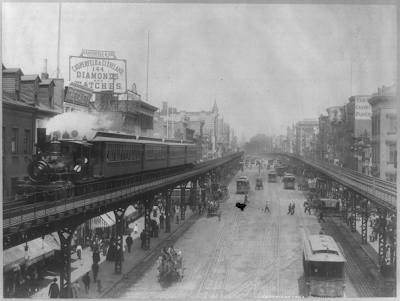
The Bowery is not just the oldest and most architecturally diverse thoroughfares in NYC, it is one of most historically significant streets in the country. Beyond the myths, legends and gritty reputation, the Bowery offers an absolute treasure trove of NYC and American history.

Once an important Native American trail, the Bowery has undergone many changes in its modern history. From elegant opera houses to rowdy working-class theaters- from America’s vice district controlled by gangs and crooked politicians to a haven for the homeless and downtrodden as &#8220skid row&#8221 during the great depression- and from factories and warehouses to pioneering artist colonies. Today the Bowery has become a popular hotel, restaurant and nightclub district, but buried beneath the five-star offerings is a repository of social, economic, political, immigrant, labor, underground, criminal, deviant, marginal, counter-cultural, literary, musical, dramatic and artistic history.

When: Every Sunday at 11:00am
Reservations: Not Required
Fee: $20 General Admission
Meet: Astor Place Cube, E.8th St and 4th Ave
Subway: 6 train to &#8220Astor Place&#8221

Chinatown/Five Points Walking Tour
New York’s legendary slum, a story of Irish, Italians, Africans, Germans, Jews and Chinese, their struggles, their cultures- gangs of New York to the tongs of Chinatown &#8212- with underground passageways still in use on winding Blood Alley where countless gang members were murdered in half a century of turf warfare &#8212- to the single oldest relic of western civilization on the island of Manhattan. It’s 19th century New York: bigotry and rivalry, ribaldry and racism, oppression, defiance, perseverance, progress and reform.

When: Every Sunday at 2:00pm
Reservations: Not Required
Fee: $20 General Admission
Meet: SE corner of Centre & Worth Streets
Subway: J to Chambers St or 4, 5, 6 to Brooklyn Bridge/City Hall

East Village Walking Tour
This is a crash course in East Village/Lower East Side history. From the farmlands of the 1600s and the wealthy estates of the 1700s, to immigration, tenements, the &#8220melting pot&#8221 and how the East Village became a haven for artists and counter culturalists in the twentieth century (and everything in between). Also learn about how recent commercial development and gentrification is the changing landscape of the East Village and surrounding neighborhoods.

When: Every Saturday & Wednesday at 12:00pm
Reservations: Not Required
Fee: $20 General Admission
Meet: In front of Bowery Poetry Club, 308 Bowery
Subway: F train to &#82202nd Avenue/Lower East Side&#8221

Jewish Mob Walking Tour
Trace the steps of pre-Prohibition era gangsters like Monk Eastman, Max “Kid Twist” Zweifach, “Big” Jack Zelig and Benjamin “Dopey” Fein – pivotal figures in the organizing of crime in New York City- paving the way for men like Arnold Rothstein, Meyer Lansky and &#8220Bugsy&#8221 Siegel. Learn about the Jewish immigrant experience on the Lower East Side and the conditions that led to organized gangsterism- visit the sites of gang headquarters, shootouts and assassinations, and learn how the Jewish Mob expanded out of the slums and into a contemporary organized crime syndicate.

When: Every Sunday at 12:00pm
Reservations: Required, RSVP: 347-465-7767 or online.
Fee: $20 General Admission
Meet: Outside of Landmark Sunshine Cinema, 143 E. Houston
Subway: F to &#82202nd Ave/Lower East Side&#8221

Lower East Side Walking Tour
This one-of-a-kind tour of the LES highlights all aspects of our neighborhood’s rich diversity by providing an introduction to the many distinct populations &#8212- Native-American, African, Irish, Italian, Jewish, Chinese, Hispanic, and others &#8212- which influenced the character of the Lower East Side over the last thousand years.

When: Every Friday at 12:00pm
Reservations: Not Required
Fee: $20 General Admission
Meet: Outside of New Museum of Contemporary Art, 235 Bowery
Subway: F to &#82202nd Ave/Lower East Side&#8221

Mafia Walking Tour
This popular and exciting weekly tour explores the Sicilian/Italian immigrant experience and examines the roots of the Mafia in America: From the original Sicilian Black Handers and Neapolitan Camorra to the forming of the Mafia Commission in 1931 &#8212- this tour visits the early homes, headquarters, hangouts of such criminal heavyweights as &#8220Lucky&#8221 Luciano, Al Capone, Giuseppe Morello, Joe &#8220The Boss&#8221 Masseria, Vito Genovese, and many more.

When: Every Saturday at 2:00pm
Reservations: Not Required
Fee: $20 General Admission
Meet: Outside of New Museum of Contemporary Art, 235 Bowery
Subway: F to &#82202nd Ave/Lower East Side&#8221

Radical Spirits Bar Crawl
Whether you like a warm pub, a dive bar or an innovative cocktail lounge, the East Village has a history and a present to satisfy your fermented dreams. In fact, there are more liquor licenses (old and new) issued in this zip code than any other in New York. Explore why that’s a good thing and why that’s a bad thing in this bar crawl focusing on the East Village’s legacy of artists, writers, musicians, radicals and other indulgers. In short, an evening walk of the New York of Lou Reed, W.H. Auden, Charlie Parker, Jack Kerouac, Keith Haring, and Abbie Hoffman&#8230-with refreshments

When: Every Tuesday at 6:15pm
Reservations: Not Required (21 and over only, with ID)
Fee: $35, includes three drinks
Meet: Outside St. Marks Bookshop, 31
3rd Ave at E. 9th St
Subway: 6 train to &#8220Astor Place&#8221

Photo: The Bowery.

History of NY Hydroelectric Power Event Wednesday

This Wednesday, June 22 at 7 pm, National Park Service Historian Duncan Hay will speak at the Chapman Historical Museum in Glens Falls, Warren County, on The History of Hydroelectric Power in Northeastern New York. The lecture is the third in a series funded by a grant from the New York Council for the Humanities and presented in conjunction with the museum’s summer exhibit, Harnessing the Hudson. The program is free and open to the public.

The speaker, Duncan Hay, works for the National Park Service as an historian and hydroelectric licensing specialist in the Rivers, Trails, and Conservation Assistance Program. He advises license applicants and the Federal Energy Regulatory Commission regarding protection of historic and archeological properties and outdoor recreation at hydroelectric projects.

Duncan also works as a cultural resources and museum specialist on planning teams for proposed new units and heritage areas of the National Park Service. Previously he worked for the Museum of American Textile History, and the New York State Museum as curator of industrial history. Duncan earned a Ph.D. from the University of Delaware’s Hagley Program in the History of Industrial America.

The author of Hydroelectric Development in the United States, 1880-1940, Mr. Hay will speak about the significance of Spier Falls dam and other early hydroelectric generators in the region. He also will address the rapid growth and consolidation of the industry during the first three decades of the 20th Century, leading ultimately to the formation of Niagara Mohawk.

The Chapman Historical Museum is located at 348 Glen Street, Glens Falls, NY. The exhibit Harnessing the Hudson will be on display through September 25th. Public hours are Tuesday – Saturday, 10 am to 4 pm , and Sunday, noon to 4 pm. For more information call (518) 793-2826 or go to www.chapmanmuseum.org.

Historic Saranac Lake Unveiling Photo Exhibit

On June 22, 2011, Historic Saranac Lake will unveil a new John Black Room Exhibit, “The Little City in the Adirondacks: Historic Photographs of Saranac Lake.” Created in collaboration with the Adirondack Room of the Saranac Lake Free Library, the exhibit features almost fifty framed historic photographs of Saranac Lake residents and buildings during the early part of the twentieth century.

The exhibit portrays a vibrant little city with a prospering and diverse economy. Saranac Lake grew quickly in the early 1900s to accommodate thousands of health seekers that came to the village seeking the fresh air cure for tuberculosis, made famous by Dr. Edward Livingston Trudeau. The exhibit features the unique architecture of the village as well as photos of local residents at play and at work.

The photographs represent only small portion of the rich photo collection of the Adirondack Room of the Saranac Lake Free Library. Library curator, Michele Tucker graciously loaned the photos to Historic Saranac Lake, and a team of dedicated volunteers has worked to install the exhibit. Many of the photos were originally printed and framed by the late Barbara Parnass, who was one of the founding Board Members of Historic Saranac Lake in 1980.

The photograph exhibit replaces an earlier exhibit on World War I in Saranac Lake. The exhibit will be on display for twelve months. Plans are underway for a new, comprehensive exhibit on Saranac Lake history to be installed in the John Black Room in 2012.

The Saranac Laboratory Museum opens June 22. The public is invited to visit the new photo exhibit and the laboratory museum space during regular hours through October 7, Wednesday through Friday from 10:00 to 2:00, or any time by appointment. Admission is $5 per person, members and children free of charge.

Photo courtesy of the Adirondack Room, Saranac Lake Free Library.