Humanities Council: Action Needed on Humanities Funding!

Note: What follows is an open letter by Sara Ogger, Executive Director of the New York Council for the Humanities.

Dear Friend of the Humanities,

Congress will be voting on [today] on a proposed $22.5 million cut to the National Endowment for the Humanities, which will directly affect the New York Council for the Humanities, starting with cuts to the current year of funding.

This cut is not minor, or a drop in the bucket. The loss of state funding and the economic downturn have already impacted the availability of our programs in every region of New York State. On the flipside, though, the savings from eliminating the cultural endowments would be tiny—about 1/21,000th of the overall U.S. budget, or the cost of two postage stamps per citizen.

If this seems unnecessarily destructive to you, please say so now! The House will debate these cuts this coming Monday and Tuesday, February 14th-15th.

And while you are telling your story to Congress, please do tell it to Albany as well! The entire Council team will be in the Capitol and Legislative Office Building for Humanities Advocacy Day next week. Loss of this support this year was a 25% blow to our budget. So take an extra minute to ask Albany to restore its funding—also extremely modest in the scheme of things—to the humanities in New York State.

Click on this link ASAP to register your support for the Council and the National Endowment for the Humanities.

Thank you for your help. It will, I hope, yield dividends for our communities.

Sincerely,

Sara Ogger
Executive Director

More New Netherland Documents Now Online

Out of print for many years and inaccessible to researchers, the first volume of the Register of the Provincial Secretary of New Netherland is now available on the web courtesy of the New Netherland Research Center. This archive, originally comprising 49 books, contained copies of correspondence, land conveyances, court proceedings, resolutions of council,regulations, contracts, leases,and more. The Provincial Secretary was responsible for recording the proceedings of the High Council and maintaining these archives for future reference.

In the 19th century, E. B. O’Callaghan decided that the Dutch records could be organized more logically. His “improvement” was to tear the books apart and rearrange the documents according to genre. The original 49 books became 23 volumes, each containing a specific type of document.

The first volume in his scheme,Register of the Provincial Secretary 1638-41, consists of wills, inventories of estates, depositions, and other documents. O’Callaghan produced translations of the three volumes of “Registers” and the first volume of “Council Minutes.”

Some years later another translator, A. J. F. van Laer, judged O’Callaghan’s work to be unreliable and undertook a new translation. By 1911 he had completed a translation of the first volume- this and the original records were lying on his desk when a disastrous fire broke out in the State Library. Van Laer’s work was destroyed, together with the Dutch originals.

Although all the Dutch records suffered varying degrees of damage, only this volume, volume one of the colonial Dutch records, was completely destroyed. All that remains of its Dutch original is a transcription of documents 95-143, which Van Laer happened to have at his house.

To continue his projected new translation, Van Laer had to use the surviving O’Callaghan translation. However, as the Dutch originals were still fresh in his mind, he was able to correct O’Callaghan’s translation in extensive footnotes. Van Laer eventually also translated the next three volumes (“Registers” for 1642-47 and 1648-57,and “Council Minutes” for 1638-49) as arranged by O’Callaghan.

These were not published until 1973, several years after his death in 1955. Minor changes only have been made to the text and to Van Laer’s notes, and corrections are incorporated according to Van Laer’s notations.

Offensive language or situations have been put back in the text, as have several pages that had inadvertently been left out. Future volumes in this series will consist of a scan of the original document, a transcription of the Dutch, and a translation with annotations. To browse or download volume one of the register, go to:
http://www.nnp.org/nnrc/Documents/vanLaer/index.html.

John Brown Lives! Exposing Slavery in Our Chocolate

On Monday, 14 February, John Brown Lives!’ Dreaming of Timbuctoo Exhibition will be on display in The Well of the Legislative Office Building in Albany. The exhibition will be unveiled at 11:00 a.m. with Valentine’s Day Fair Trade chocolates and guest speakers, including Assemblyman Steven Englebright, Assemblywoman Teresa Sayward, and Senators Kevin Parker and Betty Little.

While the exhibition brings to light a long-forgotten chapter of New York State freedom history, speakers will also draw connections across continents from the Sahara to the Adirondacks, discuss the importance public funding for state historic sites, and provide an update on the current campaign to end child/slave labor and trafficking in the chocolate industry.

Fifteen years before the Civil War, leading black and white abolitionists in New York State rolled out an ambitious voting rights strategy to break the juggernaut in Albany that kept Black New Yorkers disenfranchised. Part agrarian dream, it also resulted in radical reformer Gerrit Smith deeding 120,000 acres of Adirondack land to 3,000 free black men from all across the state. While few families moved to their plots, Smith’s &#8220scheme of justice and benevolence&#8221 is what attracted John Brown to move there with his family. The homestead is where Brown chose to be buried after his raid on the federal arsenal at Harpers Ferry in 1859 to strike a blow against slavery. Tens of thousands of visitors come to the John Brown State Historic Site outside of Lake Placid every year to visit the gravesite of Brown and several of his fellow Raiders.

Dreaming of Timbuctoo is the first serious and thorough treatment of the backstory behind John Brown’s attraction to the Adirondacks. The exhibition premiered at the Adirondack Museum in 2001 and then toured campuses, libraries, historical societies, and museums around the state, including the State Museum in Albany, and was seen by well over 100,000 people. With Assemblyman Englebright and Senators Kevin Parker and Betty Little as sponsors, the exhibition will be on display in The Well for the public to view through Thursday 17 February.

Invited speakers at the press event in The Well on Valentine’s Day, Monday 14 February, at 11:00 a.m. include:

– Assemblyman Steven Englebright and Assemblywoman Teresa Sayward-
– Senators Kevin Parker and Betty Little-
– Martha Swan, Director, John Brown Lives!
– Brian O’Shaughnessy, Executive Director, New York Labor-Religion Coalition who will make the link to current work to end child/slave labor and trafficking in cocoa industry-
– Jane McNamara, Director of Grants & Special Programs, New York Council for the Humanities
– Dr. Hadley-Kruzcak-Aaron, SUNY Potsdam professor and archeologist who is conducting a dig on one of the Timbuctoo plots in Essex County-
– Andrew Stewart, a college freshman from Albany who was part of Hadley’s team on a dig in 2009-
– Brother Yusef Wasi, an Albany educator and mentor of Andrew and other teens involved in the dig-
– Ibrahim ag Mohamed, Director of Scarab School, Timbuktu, Mali (whose greetings from Mali will be read on his behalf)
– Amy Godine, exhibition curator, who will lead a walk-thru of the exhibition.

Fair Trade chocolate will be handed out and people will have the opportunity to send a Valentine’s Day post card asking the Hersheys Chocolate Company to certify that David West, CEO of Hersheys Company.

Dreaming of Timbuctoo is a joint project of the freedom education project John Brown Lives! and the Essex County Historical Society. Major funding for the exhibition and a slate of educational and cultural program was provided by the New York State Council for the Arts, the New York Council for the Humanities, private foundations, and numerous individual donors.

For more information: Martha Swan, Director, John Brown Lives!, 518-962-4758 or 518-582-2586

This Weeks Top New York History News

Each Friday morning New York History compiles for our readers the previous week’s top stories about New York’s state and local history. You can find all our weekly news round-ups here.

Subscribe! More than 550 people get New York History each day via E-Mail, RSS, or Twitter or Facebook updates.

K-12 Teachers Invited to Summer Residential Program

Niagara University is now accepting applications from K-12 teachers nationwide for a summer program entitled Crossroads of Empire: Cultural Contact and Imperial Rivalry at Old Fort Niagara. The week-long residential sessions, which take place July 11-15 and July 18-22, 2011 at Old Fort Niagara and Niagara University, have been made possible by funding obtained from the National Endowment for the Humanities (NEH).

Directed by Thomas A. Chambers, Ph.D., chair of Niagara University’s history department, the workshops are focused on the vital history that emanated from Old Fort Niagara, one of most significant and well-preserved 18th century historic sites in North America. Fort Niagara served as an important crossroads between the empires of Great Britain, France, the Haudenosaunee (the native people who inhabited what is now much of New York state and surrounding areas), and, later, the United States as they battled each other for control of the North American continent. The Fort threatened American territory during the Revolution, was occupied by both sides during the War of 1812, and then a peace treaty secured the Fort and region for the United States.

This workshop will immerse NEH Summer Scholars in the world of 18th century life, from both the Native American and European perspective. Participants will interact with historic interpreters, clamber about ramparts dating to the 1700s, handle beaver pelts and trade goods like fishhooks and beads, and perhaps even fire a musket. One unique feature will be an overnight stay at the French Castle, the three-story stone fortress and trading post perched above the crashing waves of Lake Ontario that dates back to 1726. By week’s end NEH Summer Scholars will understand the perspective of the Iroquois people who first inhabited this region, as well as the struggles of ordinary European soldiers who bled and died to control Fort Niagara.

Teachers of grades K-12 at schools in the United States or its territorial possessions, or Americans teaching in foreign schools where at least 50 percent of the students are American nationals, are eligible for this program.

Teachers selected to participate as NEH Summer Scholars will receive a stipend of $1,200 at the end of the residential workshop session. Stipends are intended to help cover travel expenses to and from the project location, books, and ordinary living expenses.

The deadline for applications is March 1, 2011.

For eligibility and application information, call 716.286.8091, e-mail [email protected] or visit neh.niagara.edu.

Niagara University is located 11 miles south of Old Fort Niagara.

This Weeks New York History Web Highlights

Each Friday afternoon New York History compiles for our readers a collection of the week’s top weblinks about New York’s state and local history. You can find all our weekly round-ups here.

Subscribe! More than 550 people get New York History each day via E-Mail, RSS, or Twitter or Facebook updates.

Recent Acquisitions Exhibits Opens Brooklyn Museum Space

The Brooklyn Museum will present the special exhibition Thinking Big: Recent Design Acquisitions from March 4 through May 29, 2011. The installation of forty-five twentieth- and twenty-first-century objects from the Museum’s permanent collection of decorative arts that have been acquired since 2000 will include a number of large-scale objects that will be exhibited for the first time.

Several important themes that have guided these acquisitions will be highlighted, including Brooklyn-designed objects- young designers- unusual materials and innovative methods of production- designs for children- and mid-twentieth century modernism.

The Brooklyn Museum has been actively acquiring twentieth- and twenty-first-century objects since the 1970s. Among the works featured in the exhibition are &#8220Cinderella&#8221 Table by Jeroen Verhoeven, 2005- Chest of Drawers, Model #45, &#8220You Can’t Lay Down Your Memories&#8221 by Tejo Remy, for Droog, 1991- &#8220Nirvana&#8221 Armchair by Wendell Castle, 2007- Spacelander Bicycle by Benjamin Bowden, 1946- and Womb Chair by Eero Saarinen, 1947-48. Objects by Charles Eames, Cindy Sherman, Konstantin Grcic, Francois Jourdain, and Harry Allen will also be included.

Thinking Big will be the first exhibition in a gallery that has been reclaimed from nonpublic space. The gallery is part of a renovation that is the first phase in a program that will redesign and transform much of the Museum’s first floor beyond the Rubin Pavilion and Lobby, which opened in 2004.

The exhibition is organized by Barry R. Harwood, Curator of Decorative Arts, Brooklyn Museum.

Illustration: Designer and Maker: Wendell Castle (American, born 1932). &#8220Nirvana&#8221 Armchair, 2007. Place made: Scottsville, New York, U.S.A. Fiberglass, 62 3/8 x 33 5/8 x 33 3/4 in. (158.4 x 85.4 x 85.7 cm). Gift of the artist, Brooklyn Museum.

Susan B. Anthony House Annual Birthday Luncheon

The Susan B. Anthony House celebrates Rochester pioneers, both past and present, at its annual birthday luncheon on Wednesday, February 16, 2011, with the theme “What Happens in Rochester Changes the World. Keynote speaker is Dr. Elaine Marshall Sorensen, author, educator, advocate, and historian, who is currently Director of the Center for Nursing Scholarship at Georgia Southern University. A popular presenter at national and international conferences, Dr. Marshall will inspire one and all with lesser-known but vital aspects of Susan B. Anthony’s life and work as well as insights into Rochester’s role in changing the world. The Presenting Sponsor for the event is Van Bortel Ford—Van Bortel Subaru.

Deborah Hughes, executive director of the Susan B. Anthony House, said, “Just when we think that most all history is known and there is nothing new from the past, we find exciting aspects of Susan B. Anthony’s life and work that have been missed or ignored. Dr. Marshall will share with us little known information about Susan B. Anthony’s impact on the modern profession of nursing and the role she played in creating standardized qualifications for the profession.”

Also featured at the event will be Janis F. Gleason, author of the new and comprehensive biography of Kate Gleason, an eminent Rochesterian, daughter of the founder of Gleason Works, friend of Susan B. Anthony, and pioneer for women in the field of engineering. The biography will be available for purchase at the luncheon and Ms. Gleason will autograph books after the luncheon at 1:30 p.m.

For more information, visit their webpage.

Albany Institute Benefit: Snow Scenes Lunch, Lecture

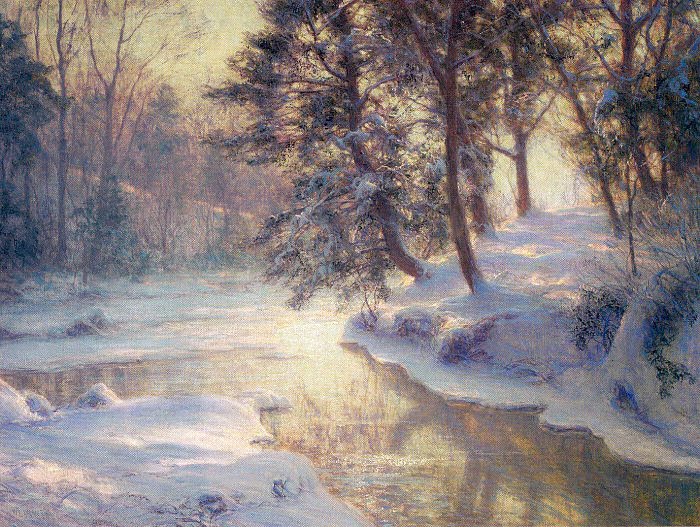
On Thursday, February 17, from noon to 2:00 pm, the public is invited to celebrate the work of one of Albany’s most prolific artists, Walter Launt Palmer, at “Snow Scenes,” a buffet lunch and lecture at the University Club, followed by a guided tour at the Albany Institute. Attendance at the fundraiser does not require membership in either organization.

Tammis Groft, the Albany Institute’s Deputy Director for Collections and Exhibitions, will discuss a collection of Palmer’s snow scenes on permanent exhibit in the dining room of the University Club (141 Washington Avenue at Dove Street, adjacent to the Institute), along with a selection of related material in the museum’s collection.

Participants will also get a close look at two recently acquired pieces of Chinese ceramics that Palmer depicted in his 1878 painting, Interior of the Learned House, 298 State Street, Albany. The ceramic pieces were donated in 2009 by Philip Kerr of Ann Arbor, Michigan. The painting itself will be on view at the Institute, along with a library table (designed by New York Architect Russell Sturgis), which is also featured in the painting. Frequently called “The Painter of the American Winter,” the Albany-born Walter Launt Palmer (1854–1932) produced more than 300 snow scenes from 1884 to 1932. In his 1910 essay, “On The Painting of Snow,” Palmer, who had embraced Impressionism, acknowledged his debt to John Ruskin and the Pre-Raphaelites for influencing his early work, especially the discovery that the shadows on snow are blue.

The cost for the luncheon and lecture is $35 and includes admission to the Albany Institute to see its other current exhibitions. Reservations are required and may be made by calling the University Club at (518) 463-1151. A portion of the proceeds from this event will benefit both the University Club Foundation and the Albany Institute.

Illustration:: The Shining Stream by Walter Launt Palmer (oil on canvas, date unknown).

Finger Lakes Museum Buys Local School

The Board of Trustees of the Finger Lakes Museum has voted to purchase the Branchport Elementary School from the Penn Yan Central School District for $200,000 and the deal was closed the same afternoon at the Yates County Clerk’s Office. The school has been vacant for several years due to school district consolidation.

Museum board president John Adamski said, “The original plan was for the Finger Lakes Visitors Association to purchase the school and lease it to the museum on a 5-year interim basis during the startup phase of the project, after which time the museum would move to its new quarters in Keuka Lake State Park. But we have since realized the long term potential of the building and grounds as a research and education center, directly affiliated with the museum. That’s 17,000 square feet that we don’t have to build in Keuka Lake State Park.” The two sites are about a mile apart.

The school was first proposed as a temporary museum headquarters by Keuka Lake site proponents during the search for a location to build the project in 2009. When Keuka Lake State Park—one of 19 sites then in contention—was chosen last April, the school was included in the deal.

Museum personnel occupied the building last summer and fall under an early occupancy agreement with the Town of Jerusalem while the FLVA pursued arrangements to purchase the property from the school district. The museum staff has moved to other quarters for the winter months to avoid heating the entire building for three staff members.

Adamski said, “At first we looked at the school as a temporary office and warehouse for artifacts and collections while the project was being designed and built. But after conducting program definition and market studies, we realized that we could have some initial museum exhibits and programming ready there as early as next summer.” Plans now call for making investments into the school property to upgrade the heating and septic systems and to make the building more energy efficient. Converting the gym into a theater and auditorium is also being considered.

Adamski said that recent partnership discussions with officials at Keuka College confirmed the potential of the school property to become a research and education center, administered by the museum, the college, and other academic partners. “All of these factors contributed to our change in plans”, he said.