NYSHA President Chairs Assoc for State, Local History

At the Association’s annual conference in Oklahoma City yesterday, NYS Historical Association (NYSHA) President and Chief Executive Officer, D. Stephen Elliott, began a two-year term as Chair of the American Association for State and Local History’s (AASLH) 20-member governing Council. Elliott was elected to the position last year by the Association’s membership.

Based in Nashville, Tennessee, AASLH is the country’s leading association for history organizations and those who staff them. It provides leadership and support for its 6300 institutional and individual members, including professional development and recognition, publishing and networking, and advocacy.

The Association has been a leader in helping history museums, historic house museums, historical agencies and societies, and archives think creatively and entrepreneurially about their roles in contemporary society and in their communities and about how to sustain their programs and services even as traditional funding sources also are under duress.

Elliott will continue to serve as President and CEO of NYSHA and The Farmers’ Museum, and as Vice President of the Museum Association of New York.

Terry Davis, AASLH President and CEO, noted that Elliott had previously served on the Association’s Council and other national history education boards. “Steve is highly respected in the field. His thoughtful approach to issues and tireless advocacy for collaboration among history, museum, and educational organizations are timely strengths.”

Jane Forbes Clark, Chairman of The Farmers’ Museum Board of Directors, also commended Elliott’s selection. “He is a solid leader who works extremely well with Boards of Directors, and he certainly knows well the operational challenges that museums and history organizations have been surmounting.”

Dr. Douglas E. Evelyn, Chairman of the NYSHA Board of Trustees, is himself a former Chair of AASLH. “Steve is a good pick for this important national position at this particularly challenging time. He has a wealth of varied professional experience, having served in the field for 38 years, from Williamsburg to Cooperstown, and is wholly committed to maximizing how these vital keepers of America’s diverse heritage serve well their broad constituencies.”

Elliott has been the President of the New York State Historical Association and The Farmers’ Museum since 2005. Previously he served for five years as Executive Director of the First Freedom Center, in Richmond, Virginia, a non-profit whose educational mission focuses on the development of religious freedom in America. He held numerous posts over 28 years with The Colonial Williamsburg Foundation, in Virginia, the world’s largest living history museum, including Vice President of Education and Museums- Vice President and Chief Administration Officer- Vice President of Planning, Information and Capital Project Management, and Quality Performance- and, Secretary of the Foundation. He has also served on the Board and as a member of the Executive Committee of National History Day- as a governing Council Member and Vice Chair of the American Association for State and Local History- a Board Liaison for the National Council for History Education- and held leadership positions with many public service and community organizations in the Williamsburg-Hampton Roads and Cooperstown areas. Elliott received his Bachelor’s degree cum laude from Cornell University- completed doctoral coursework in history at The College of William and Mary- was a Fellow to the 1972 Seminar for Historic Administration, and completed the 1990 Tuck Business School Executive Program at Dartmouth College.

Photo: NYSHA and The Farmers’ Museum President and Chief Executive Officer, D. Stephen Elliott

This Weeks New York History Web Highlights

Each Friday afternoon New York History compiles for our readers a collection of the week’s top weblinks about New York’s state and local history. You can find all our weekly round-ups here.

Subscribe!
More than 400 people get New York History each day via E-Mail, RSS, or Twitter or Facebook updates.

Local Museums Offer Free Admission Saturday

Saturday, September 25, 2010, museums around New York State will participate in the sixth annual Museum Day, presented by Smithsonian magazine.

A celebration of culture, learning, and the dissemination of knowledge, Smithsonian’s Museum Day reflects the spirit of the magazine, and emulates the free-admission policy of the Smithsonian Institution’s Washington, DC-based institutions. Doors will be open free of charge to Smithsonian readers and www.Smithsonian.com visitors at museums and cultural institutions nationwide.

Museum Day 2010 is poised to be the largest to date, outdoing last year’s record-breaking event. Over 300,000 museum-goers and 1,300 venues in all 50 states, the District of Columbia and Puerto Rico participated in Museum Day 2009. Last year, two million visitors logged on to www.smithsonian.com/museumday to learn more about the program.

Attendees must present the Museum Day Admission Card to gain free entry to participating institutions. Visit www.Smithsonian.com/museumdayto download your Museum Day Admission Card. Each card provides museum access for two people, and one admission card is permitted per household. Listings and links to participating museums’ and sponsors’ web sites can also be found at the site. The complete list of participating museums in new York State is located here.

Adirondack Museum to Host Fiber Fest

Talented artisans will make this year’s Adirondack Fabric and Fiber Arts Festival at the Adirondack Museum the premier needlework event of the season. The festival will be held on Saturday, September 25, 2010. Activities are planned from 10:00 a.m. to 4:00 p.m. All are included in the price of general museum admission.

The festival will include demonstrations of rug hooking, quilting, felting, spinning, and weaving, a regional quilt show, textile appraisals, an artisan marketplace, a &#8220knit-in&#8221 for a good warm cause, hands-on activities, and the museum’s beautiful exhibit, &#8220Common Threads: 150 Years of Adirondack Quilts and Comforters.&#8221

Demonstrations will be held from 10:00 a.m. until 4:00 p.m. at locations throughout the museum campus. Returning participants include the Serendipity Spinners, members of the community-based needlework group Northern Needles, the Adirondack Regional Textile Artist’s Association, as well as felter Sandi Cirillo and mixed-media quilter Louisa Austin Woodworth.

Liz Alpert Fay will make her first appearance at the festival, demonstrating the art of rug hooking. Fay studied at Philadelphia College of Art, and then participated in the Program in Artisanry at Boston University, where she received a BAA in Textile Design in 1981.

Fay created art quilts for seventeen years, exhibiting nationally and in Japan. Her work was exhibited in shows such as &#8220Quilt National&#8221 and at the American Craft Museum in New York City. In 1998 she became intrigued with the technique of traditional rug hooking. Since then she has created colorful hand hooked rugs of her own design. The rugs have been purchased for private collections, and many have been selected for juried shows and invitational museum exhibitions. In 2002, Fay’s rugs were featured in the October issue of Country Living magazine- in 2005 she was filmed in her studio and her rugs featured on HGTV (the Home and Garden Channel).

Thistle Hill Weavers, Cherry Valley, N.Y. will offer a weaving demonstration from 1:00 p.m. to 4:00 p.m. The company is a commercial weaving mill that produces reproduction historic textiles for museums, designers, private homeowners, and the film industry. Textiles created by Thistle Hill have appeared in more than thirty major motion pictures. The business was founded by Rabbit Goody, who is also the owner and current director. For more about Thistle Hill Weavers, visit www.rabbitgoody.com.

Museum visitors can learn more about personal antique and collectible fabrics with Ms. Goody who is a textile appraiser and historian. For a small donation to the Adirondack Museum, she will examine vintage textiles and evaluate them for historical importance and value. Appraisals will be held in Visitor Center from 9:30 a.m. until 12:00 noon.

The second annual &#8220Great Adirondack Quilt Show&#8221 will feature a display of nearly three-dozen quilts inspired by or used in the Adirondack Mountains.

A presentation, &#8220Knitting in the North Country: History and Folklore,&#8221 will be offered by Hallie Bond and Jill Breit at 1:00 and 3:00 p.m. in the museum’s Auditorium. Bond, a museum curator and novice knitter, will share her ongoing research about the place of spinning and knitting in local history including traditional techniques and the wearing of knitted garments. Breit, Executive Director of Traditional Arts in Upstate New York and a superb knitter, will discuss the vital and vibrant knitting scene in
the North Country today.

A special knit-in, &#8220Warm Up America!&#8221 will create afghans that will be donated to Hamilton County Community action, an organization that helps people help themselves and others. The knit-in will be held in the Visitor Center from 11:00 a.m. until 4:00 p.m. Participants will knit or crochet 7&#8243- by 9&#8243- rectangles that will be joined together to make cozy afghans.

A dozen regional artisans will sell handmade fabrics and fiber specialty items in a day-long marketplace as part of the Adirondack Fabric and Fiber Arts Festival.

The Adirondack Museum tells stories of the people &#8211 past and present &#8212- who have lived, worked, and played in the unique place that is the Adirondack Park. History is in our nature. The museum is supported in part by public funds from the New York State Council on the Arts, a State Agency. For information about all that the museum has to offer, call (518) 352-7311, or visit www.adirondackmuseum.org.

A Fort Edward French & Indian War Encampment

Two full days of free family entertainment and education are being offered at Rogers Island Visitors Center in Fort Edward this weekend, September 25 and 26. French and Indian War reenactors from across the Northeast will establish an authentic period encampment on Rogers Island along the Hudson River.

Visitors can see how the men prepared for battle, learn what the women did in the military camps, and browse through the sutlers’ tents and see the merchandise that was offered in the military camps. Enjoy the smells as meals are prepared over open camp fires and listen to stories of 18th century camp life. At the 2:00 PM military tactical each day you will hear the musket fire as troops are ambushed by the French beyond the fort and watch as the British and provincial soldiers, along with their Native American allies, hurry to their defense. With the dredging now completed around the Island four period bateau will be launched in the river and joining in the battle.

“The End of the Campaign Reenactment” is this Saturday and Sunday, September 25 and 26, from 10 a.m. to 4 p.m. at Rogers Island Visitors Center, Route 197 (just off Route 4) in the Village of Fort Edward. Free admission. For more information call 518-747-3693.

Saratoga Battlefield Announces Autumn Hours

Saratoga National Historical Park’s visitor center, located on Route 32 and 4 in Stillwater, remains open year-around from 9am to 5pm, but as day-light gets shorter the park’s scenic 10-mile tour road will close earlier as follows:

Through Sunday September 19, the road is open from 9am to 7pm

Monday September 20, the road will be open from 9am to 6pm

Monday October 4, the road will be open from 9am to 5pm.

The road remains open 9am to 5pm thru mid-to late November, depending on the weather.

With over 25 miles of tranquil roads, paths and trails, Saratoga Battlefield provides a great many opportunities to enjoy history, nature, recreation and special programs. Upcoming autumn events include:

233rd Anniversary Encampment on September 18 and 19

24th Regiment Encampment on October 9 and 10

Plein-Air Painting on October 9 (rain date October 10)

Candlelight Tour of Schuyler House on October 16

From May 1 to October 31 a seven-day entrance pass for the Battlefield is $5 for a vehicle, $3 for hiking or bicycling. An annual pass, good for the whole family, is only $10. Senior and access passes, plus passes to any of the nation’s 390 national parks are also available.

Come explore the National Park in your backyard! For more information, contact the Visitor Center by calling 518-664-9821 ext. 224, or check the Park website at www.nps.gov/sara

Glenn Curtiss Day at the Old Rhinebeck Aerodrome

The Hudson River Valley Institute (HRVI) at Marist College and the Glenn H. Curtiss Museum come to Old Rhinebeck Aerodrome in the Hudson River Valley National Heritage Area to pay tribute to Glenn Curtiss on Saturday, October 9. Old Rhinebeck Aerodrome Air Shows President, Hugh Schoelzel expressed appreciation for the choice of the Aerodrome as a fitting venue and explained the special air show: “Old Rhinebeck Aerodrome’s replica of the 1911 Curtiss “D” Pusher…very similar to Glenn Cutiss’ Albany Flyer… will be on display to greet guests entering the Aerodrome courtyard.

At 2 PM, the Pioneer and Barnstorming Air Show will feature the Curtiss “D” Pusher in a taxi demonstration of its unique flight controls, flying exhibitions of an original Curtiss JN-4 H Hisso Jenny built for the Great War in 1918 and a Curtiss Wright Junior CW-1 built by Curtiss as an economical flying machine for recreational pilots in 1931.” The museum and grounds open at 10 AM with four hangars full of antique airplanes and related artifacts to browse through- biplane rides will also be available.

Following the air show, the Hudson River Valley Institute is sponsoring a lecture by Trafford Doherty, Executive Director of The Glenn H. Curtiss Museum of Hammondsport, New York. There will also be a special static display and photo opportunities of the Curtiss airplanes.

Old Rhinebeck Air Shows, The Glenn H. Curtiss Museum, and the Hudson River Valley Institute have missions related to education and, with the Hudson River Valley National Heritage Area, all four are 501c3 non-profit organizations.

Photo: A &#8220Headed&#8221 Curtiss Model D (Curtiss photo 1196) Pusher later &#8220Headless&#8221 models incorporated elevators around the rudder in the tail (like most aircraft since). Courtesy Wikipedia.

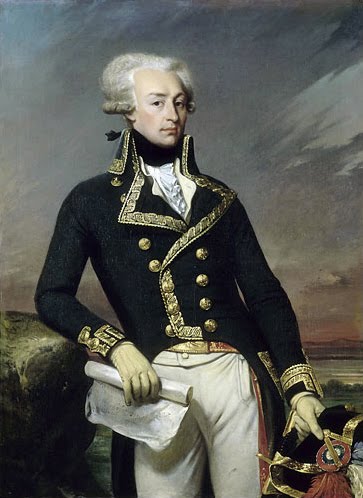
Actor Will Portray Marquis de Lafayette Saturday

The Marquis de Lafayette may not be a household name in America, but without him this country might not even exist. Even as a new documentary film traces Lafayette’s descent from one of the most famous men on the planet to relative historical obscurity, the Vermont Division for Historic Preservation offers visitors the chance to “meet” this extraordinary character.

On Saturday, September 25, at 1:00 p.m. at the Mount Independence State Historic Site British actor-playwright Howard Burnham will portray Lafayette in his one-man costumed program, “Liberty now has a new country!: The Marquis de Lafayette.”

“Lafayette’s story is a truly remarkable one, and Howard Burnham captures the spirit of this gallant Frenchman who came to America as a young man to fight for the cause of liberty during the Revolutionary War,” said Elsa Gilbertson, Regional Historic Site Administrator for the Vermont Division for Historic Preservation.

A new documentary, “Lafayette: The Lost Hero,” recently debuted on Vermont Public Television and other stations around the nation, telling the story of the aristocrat who led troops against the British- befriended Gen. George Washington and served with him at Valley Forge- and helped bring France into the war on the colonists’ side.

Burnham will portray Lafayette on his triumphal tour of America in 1824 and 1825, when President James Monroe invited him to visit in part to celebrate the nation’s 50th anniversary.

“At the time, Lafayette was wildly popular all over the country,” Gilbertson said. “He was welcomed as a hero- Fayetteville, North Carolina was named after him- and the United States Congress voted him a gift of $200,000 and a township in Florida.”

Lafayette will reflect on his long and eventful life and will transport the audience to Camden, South Carolina, where he laid the foundation stone for the monument to Baron de Kalb – with whom he came to America in 1777 – as well as eulogize the Baron.

General Lafayette’s aide de camp, Michel Capitaine du Chesnoy, created an important map of Mount Independence and Fort Ticonderoga, showing it after the Americans retreated in July 1777.

“Lafayette visited every state during his visit, and on June 30, 1825, he traveled south on Lake Champlain past Mount Independence on the steamboat Phoenix on his way to Whitehall, New York, at the end of his visit through Vermont,” Gilbertson said.

The program is sponsored by the Mount Independence Coalition and Vermont Division for Historic Preservation, and admission is $5.00 for adults and is free for children under 15. It also includes admission to the museum and all the trails.

Burnham has given six performances at Mount Independence in recent years, including interpretations of British figures Gen. John Burgoyne- Lord Charles Cornwallis- and Maj. Banastre Tarleton, as well as Americans like Gen. Horatio Gates and Thomas Paine.

The Mount Independence State Historic Site is one of the best-preserved Revolutionary War sites in America.

On July 5, 1777, faced with a British force more than twice his size that had occupied a position from which they could bombard him with impunity, General Arthur St. Clair withdrew from Mount Independence and nearby Fort Ticonderoga without firing a shot.

Though his actions helped preserve the army, Congress was outraged and censured St. Clair for the loss. He later argued that his conduct had been honorable- demanded review by a court martial- and was ultimately exonerated.

The site is located near the end of Mount Independence Road, six miles west of the intersections of Vermont Routes 22A and 73 near Orwell village- carefully follow the signs. Regular hours are 9:30 a.m. to 5:00 p.m. daily through October 12.

Call (802) 948-2000 for more information or visit: www.HistoricVermont.org/sites.

The Furniture of Historic Huguenot Street

Known throughout the region for its unique architecture and for the preservation of the early stone houses, Historic Huguenot Street also boasts an extraordinary collection of carefully preserved furniture and accessories spanning over a three-hundred year period. This intimate tour will focus on the many treasures found in the house museums as well as in the collections storage.

Antiques expert Sanford Levy has a particular love for and knowledge of historical items from the Hudson Valley. Owner of Jenkinstown Antiques, Levy specializes in furniture, fine art, and accessories from the Valley, including kasten, country and formal pieces in original surfaces. He is also well-known as a dealer in regional artists such as D.F. Hasbrouck, T.B. Pope, Michael Kelly, Joseph Tubby, and Julia Dillon.

The tour begins at 4pm on Sunday, September 26th, at the DuBois Fort Visitor Center at 81 Huguenot Street in New Paltz. Two hours in length, the event is limited to 15 guests. Reservations are strongly suggested. There is a $25 charge per person ($20 for Friends of Historic Huguenot Street).

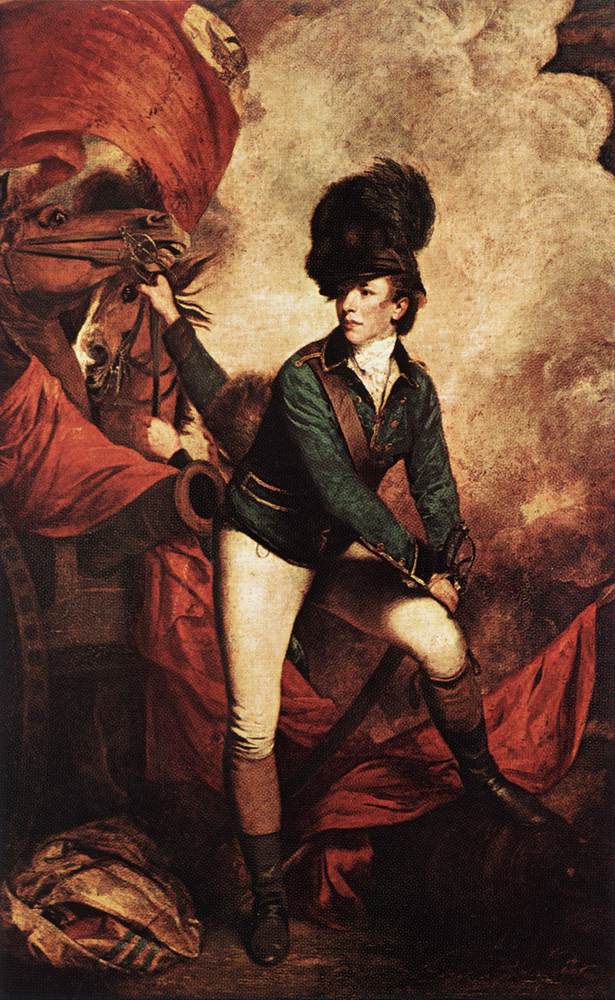
Meet The Most Hated Briton of the Revolution

While King George III was certainly reviled by the American colonists during the Revolutionary War, he was by no means the most hated man on the continent at the time.

That honor went to Major Banastre “Ban” Tarleton, the infamous commander of the Green Dragoons, and the Vermont Division for Historic Preservation is presenting an opportunity to “meet” this historic figure at 7:30 p.m. on Friday, September 24, at the Old First Church barn in Bennington.

“English actor-playwright Howard Burnham really brings these figures from the past to life with his one-man costumed performances,” said Bennington Battle Monument site administrator Marylou Chicote. “He will reminisce – in his old age – about his colorful life and times in America and his legacy.”

Tarleton was the son of a wealthy Liverpool merchant and mayor, but it is reputed that while attending Oxford University the younger Tarleton’s two most successful activities were athletics and gambling.

He reportedly inherited 5,000 pounds upon his father’s death in 1773 and promptly lost it gambling in a year, forcing his family to scrape together enough money to purchase him a commission in the King’s Dragoon Guards in 1775.

Tarleton volunteered to sail to America later that year where he served under both Lord Charles Cornwallis and Gen. William Howe in the attempt to suppress the rebellion. He rose to the rank of brigade major of cavalry and was given command of the British Legion, a mixed unit of mostly Loyalist American infantry and cavalry.

Tarleton’s “Green Dragoons” were involved in a number of battles but earned their infamy during the Battle of Waxhaws on May 29, 1780, near Lancaster, South Carolina.

When the American commander, Colonel Abraham Buford, refused Tarleton’s demand to surrender the latter ordered a full charge, despite being outnumbered nearly two to one.

Buford’s decision not to deploy his troops in battle lines but instead maintain his marching formation proved disastrous as his men were routed, and what happened next would be the subject of great controversy.

Many Americans threw down their weapons and tried to surrender, and even Buford reportedly raised a white flag, but at that precise moment Tarleton’s horse was shot out from under him.

Enraged that their commander had apparently been killed by troops purporting to surrender, Tarleton’s men swarmed in and slaughtered much of the American force with sabers and bayonets.

Tarleton’s own report claimed 113 Americans killed and another 147 wounded, while his own losses were 5 killed and 12 wounded. The incident was called the Waxhaws Massacre by American forces- “Tarleton’s Quarter,” meaning no mercy, was reportedly used as a rallying cry by colonists for the rest of the war.

The next year Tarleton suffered a crushing defeat at the Battle of Cowpens and later surrendered with Cornwallis at Yorktown and returned to England where he was promoted to general and eventually served in the House of Commons.

His political career was as controversial as his military one- though his Whig party opposed the slave trade, Tarleton became a leader in the pro-slavery movement in Parliament, presumably because of its importance to his constituents in Liverpool but perhaps because of his own family’s shipping interests.

In 1815 he was made a baronet and in 1820 knighted. While he carried on a long affair with poet and actress Mary Robinson, he eventually married Susan Pricilla, the illegitimate daughter of Robert Bertie, the Fourth Duke of Ancaster, and died childless in January 1833.

In 2000, the Mel Gibson movie “The Patriot” featured a ruthless British cavalry officer – Colonel William Tavington – whose character was based on Tarleton, a move that inspired protests from some quarters in England that Tarleton was being unfairly smeared.

Burnham has toured the Northeast for several years appearing at Mount Independence, Saratoga, Bunker Hill and Fort Ticonderoga, and other performances have included interpretations of British General John Burgoyne and Lord Cornwallis, as well as American General Horatio Gates and Thomas Paine.

The program is sponsored by the Friends of the Monument and Vermont Division for Historic Preservation. The doors open at 6:30 p.m. Seating is limited- first come first served. A $5.00 donation to the Friends of the Monument is requested.

The Old First Church Barn is located on Monument Circle, near the Bennington Battle Monument in Old Bennington just north of Route 9. The Monument and Gift Shop are open 7 days a week from 9:00 a.m. until 5:00 p.m., mid-April until October 31st.

For information call (802) 447-0550 or visit www.HistoricVermont.org/sites