11th Mohican and Algonquin Peoples Seminar

The Native American Institute of the Hudson River Valley and The New York State Museum invites you to submit a paper or other presentation to be given at the 11th Mohican/Algonquian Peoples Seminar held at the NYS Museum in Albany on April 30th, 2011. Topics can be any aspect of Northeastern Native American culture from prehistory to present. Presentations are allotted 20 minutes speaking time.

Interested parties are encouraged to submit a one page abstract that includes a brief biographical sketch and notes any special scheduling and/ or equipment needs. For presentations other than traditional papers, please describe content and media that will be used to make the presentation. Deadline for abstract submission is February 1, 2011.


The Selection Committee, made up of Board members, will notify presenters no later than February 10, 2011. The final paper should meet common publication standards. The paper should be foot noted “author-date” style- sources are cited in the text in parentheses by author’s last name and date, with a reference to a list of books or
sources at the end of the paper. Also, a disc containing the article, bibliography, illustrations (referred to as figure 1, figure 2 etc.) and captions for the illustrations should be submitted to the Board at the Seminar.

Send abstracts to:

Native American Institute of the Hudson River Valley (NAIHRV)
c/o Mariann Mantzouris
PO Box 327
Sand Lake, NY 12153

Council of Parks Releases Report, 2011 Priorities

The 2010 State Council of Parks Annual Report has been released. The Council issues a report annually pursuant to Article 5.09 of the Parks, Recreation and Historic Preservation Law. The report provides a summary of regional activities and outlines the Council’s 2011 priorities.

The State Council of Parks Recreation and Historic Preservation consists of the Commissioner of State Parks, Recreation and Historic Preservation, the Commissioner of Environmental Conservation, Chairs of the eleven Regional Parks Commissions (including a representative of the Palisades Interstate Park Commission), and Chair of the State Board of Historic Preservation. The Regional Commissions are charged with acting as a central advisory body on all matters affecting parks, recreation and historic preservation within their respective regions, with particular focus on the operations of the State Parks and Historic Sites.

The priorities for 2011 outlined in the report are:

1. Park Operations Funding – Keep Our Parks Open!
New York State must provide adequate funding to keep our 213 state parks open to the public and to provide safe, clean and affordable recreational and educational experiences to the 57 million people that visit our facilities each year.

2. State Parks Capital Budget – Reinstitute the $100 Million Commitment.
New York State must reinstitute the State Parks Capital Initiative to provide $100 million annually in capital funding to begin to address the $1.1 billion backlog of park rehabilitation and health & safety needs in our state parks and historic sites.

3. Dedicated Funding Mechanism.
New York State should establish a new dedicated funding source to provide sustainable funding for the state park system.

4. Public-Private Partnerships.
The State Council and Regional Commissions will continue to help establish new “Friends Groups” – 16 new organizations have been started since 2007 – and to help strengthen existing Friends Groups to increase private support for state parks and historic sites. The State Council of Parks also continues to encourage partnerships with for-profit, non-profit and governmental entities for a wide range
of support, from direct monetary contributions and formal concession agreements to operations and programming. A list of such active and recent partnerships appears as an appendix to the report.

5. Private Fundraising Campaign.
During 2011 the State Council will continue to pursue private funding from individuals, corporations, and foundations – building upon the $5.6 million in private support that has been raised since 2009 to support the State Park System.

The full report can be viewed and downloaded as a pdf here: 2010 Annual Report.

Pennsylvania Historical Association Seeks Journal Editor

The Pennsylvania Historical Association (PHA) invites creative individuals to apply for the position of editor of its quarterly journal, Pennsylvania History: A Journal of Mid-Atlantic Studies.

The editor is responsible for supervising the entier editorial process: soliciting articles, editing, and shaping each individual issue. Assisted by an associate editor, book review editor, and editorial board, the editor is appointed by and works closely with the PHA’s governing council. The editor receives an honorarium and office and travel support to advance the interests of the journal. Modest institutional support is necessary.

Qualifications: The editor should be a practicing historian with an established publication record and familiarity with the current state of the field. They should also be experienced in historical writing and editing and able to work cooperatively with and give direction to the editorial team.

Interested individuals should send a letter of intent that includes a statement of purpose and editorial vision, along with a current CV, to:

Dean Marion W. Roydhouse, School of Liberal Arts, Philadelphia University, School House Lane and Henry Avenue, Philadelphia, PA, 19144.

Review of applications will begin on March 1st, 2011. For questions, e-mail [email protected].

Schenectady/Nijkerk Councils Colonial Festival Dinner

The Schenectady/Nijkerk Council Invites you to this year’s Colonial Festival Dinner Tuesday, February 8, 2011 with Historical and Marine Artist Len F. Tantillo
Bob Cudmore, Master of Ceremonies at the Glen Sanders Mansion, One Glen Avenue &#8211 Scotia, New York

The Schenectady/Nijkerk Council has roots to about 1630, when Arendt Van Curler from Nijkerk established the trading outpost that would become the City of Schenectady. In 1909 the Dutch churches in Nijkerk and Schenectady exchanged tablets memorializing this connection. City-to-City exchanges between inhabitants of the City of Schenectady and the City of Nijkerk have been in existence since 1984.

3:30 p.m. &#8211 Throughout Evening, Exhibit
Tantillo’s Works with Maps of Early Schenectady & Latest Findings from Archaeological Excavations in the Stockade Historic District Select works by Len Tantillo available for purchase.

4:00 &#8211 6:00 p.m. Heritage Seminar &#8211 Conversation with Len Tantillo
Bill Buell, Facilitator, Developing Schenectady’s Historical Legacy

6:00 p.m. Cocktail Hour, Hors D’oeuveres, Cash Bar

7:00 p.m. Dinner
Len Tantillo, Illustrator of life and places in early New York Historical Painting: Schenectady Works

Individual Seminar/Dinner combination ticket $60
Seminar only ticket $20
Dinner only ticket $50

Become a Sponsor of the Colonial Festival Dinner with Seminar/Dinner combination tickets & recognition in the program

A Patroon’s Table: $1000 for 10 tickets and the host receives an unframed Tantillo print

An Old Dorp Table: $750 for 10 tickets and a 10% discount on up to two Tantillo prints

Stockade Settlers: $150 for 2 tickets and reserved seating (Yes a single person may be a Settler at $75)

For more information call Laura Lee Linder at 518-882-6866

Life of Fugitive Slave Lavinia Bell to be Presented

One hundred and fifty years ago, few knew about Lavinia Bell, a fugitive from slavery who trekked from a Texas plantation to Rouses Point, New York, in search of freedom in Canada. Now, for the first time, her experiences will be presented to the public in “Never Give Up: The Story of Lavinia Bell,” reenacted by Melissa Waddy-Thibodeaux at Plattsburgh State University’s Krinovitz Recital Hall. The presentation will begin at 7:00 PM on February 11, 2011. The event is free and open to the public.

Ms. Thibodeaux’s visit to Plattsburgh in February will be her first to the North Country. She has already earned national acclaim for her sensitive depictions of Harriet Tubman and Rosa Parks. The North Country location of the premiere of Mrs. Bell’s story, in the region where her vision was at last realized, is as fitting as are the sponsoring organizations: the North Country Underground Railroad Historical Association, Plattsburgh State University, and Clinton Community College.

Ms. Thibodeaux will also offer performance workshops for university and college students during her stay in Plattsburgh. On February 12, she will cross into Canada
where, under the sponsorship of the Negro Community Center in Montreal, she will
introduce Mrs. Bell to a waiting audience.

To see Ms. Thibodeaux portray Harriet Tubman visit You Tube.

To learn more about this event, contact Don Papson at [email protected] or
(518) 561-0277.

Hudson River School Focus of Major Travelling Exhibit

Forty-five paintings from the collection of the New-York Historical Society will tour the United States in 2011 and 2012 in the major traveling exhibition Nature and the American Vision: Masterpieces of the Hudson River School. Though very seldom loaned, these iconic works of 19th-century landscape painting will now be circulated to four museums throughout the country as part of the Historical Society’s traveling exhibitions program Sharing a National Treasure.

Nature and the American Vision
will allow audiences to enjoy and study superb examples of the Historical Society’s collection of Hudson River School paintings while the galleries of the N-YHS are closed for a transformative $65 million renovation project.

The Historical Society’s rich holdings of American art date back to the second half of the 19th century, when the museum acquired, through generous donation, the extensive painting collections formed by pioneering New York art patron Luman Reed (1787-1836). By 1944, the Society was also home to the extraordinary collection of Hudson River School art amassed by Robert Leighton Stuart (1806-1882), another of New York’s prominent 19th-century art patrons. Works once belonging to these pioneering American collectors form the core of the traveling exhibition.

&#8220Our mission for the Sharing a National Treasure program is to ensure that audiences throughout the United States have access to the great artworks and priceless artifacts of the New-York Historical Society, New York City’s first museum and one of the nation’s oldest collecting institutions,&#8221 stated Louise Mirrer, President and CEO. &#8220Nowhere is this mission more vital than in the traveling exhibition Nature and the American Vision. This tour keeps in public view some of the most important works of Thomas Cole, Frederic Church, Albert Bierstadt, John Kensett, Jasper Cropsey, Asher B. Durand, George Inness and many others: the first artists to have created a consciously American tradition of painting.&#8221

The Hudson River School emerged during the second quarter of the 19th century in New York City. There, a loosely knit group of artists and writers forged the first self-consciously American landscape vision and literary voice. That American vision—still widely influential today—was grounded in a view of the natural world as a source of spiritual renewal and an expression of national identity. This vision was first expressed through the magnificent scenery of the Hudson River Valley region, including the Catskills, which was accessible to writers, artists and sightseers via traffic on the great river that gave the school its name.

The exhibition tells this story in four thematic sections. Within these broad groupings, the paintings show how American artists embodied powerful ideas about nature, culture and history—including the belief that a special providence was manifest to Americans in the continent’s sublime landscape.

The American Grand Tour
features paintings of the Catskill, Adirondack, and White Mountain regions celebrated for their scenic beauty and historic sites, as well as views of Lake George, Niagara Falls and the New England countryside. These were the destinations that most powerfully attracted both artists and travelers. The American Grand Tour also includes paintings that memorialize the Hudson River itself as the gateway to the touring destinations and primary sketching grounds for American landscape painters.

American Artists A-Field
includes works by Hudson River School artists who after 1850 sought inspiration further from home. The paintings of Frederic Edwin Church, Albert Bierstadt, Thomas Hill and Martin Johnson Heade show how these globe-trotting painters embraced the role of artist-explorer and thrilled audiences with images of the landscape wonders of such far-flung places as the American frontier, Yosemite Valley and South America.

Dreams of Arcadia: Americans in Italy features wonderful paintings by Cole, Cropsey, Sanford R. Gifford, and others celebrating Italy as the center of the Old World and the principal destination for Americans on the European Grand Tour. Viewed as the storehouse of Western culture, Italy was a living laboratory of the past, with its cities, galleries, and countryside offering a survey of the artistic heritage from antiquity, as well as a striking contrast to the wilderness vistas of North America portrayed by these same artists.

In the final section of the exhibition, Grand Landscape Narratives, all of these ideas converge in Thomas Cole’s five-painting series The Course of Empire (c. 1834-36), imagining the rise of a great civilization from an unspoiled landscape, and the ultimate decay of that civilization into ruins scattered in the same wilderness. These celebrated paintings explore the tension between Americans’ deep veneration of the wilderness and their equally ardent celebration of progress, recapitulating the larger story told in Nature and the American Vision.

Nature and the American Vision: Masterpieces of the Hudson River School will travel to The Amon Carter Museum, Fort Worth, TX (February 26- June 19, 2011)- the Peabody Essex Museum, Salem, MA (July 30 – November 6, 2011)- the Columbia Museum of Art, Columbia, SC (November 17, 2011 – April 1, 2012)- and the new Crystal Bridges Museum of American Art, Bentonville, AR (May – August, 2012). The paintings will then return to their renovated home.

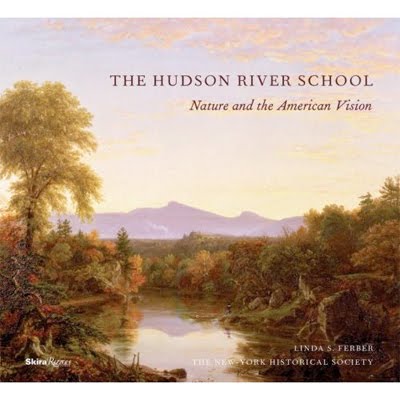
The ideas and beliefs explored in the exhibition are also investigated in an award-winning 224-page catalogue by Linda S. Ferber: The Hudson River School: Nature and the American Vision, published by Skira Rizzoli Publications, Inc. Featuring 150 full-color illustrations of works from the acclaimed collection of the New-York Historical Society, the catalogue places the splendid paintings in the traveling exhibition into a broad historical and cultural context. Dr. Ferber received the 2010 Henry Allen Moe Prize for Catalogues of Distinction in the Arts from the New York State Historical Association for the volume.

This Weeks Top New York History News

Each Friday morning New York History compiles for our readers the previous week’s top stories about New York’s state and local history. You can find all our weekly news round-ups here.

Subscribe! More than 550 people get New York History each day via E-Mail, RSS, or Twitter or Facebook updates.

This Weeks New York History Web Highlights

Each Friday afternoon New York History compiles for our readers a collection of the week’s top weblinks about New York’s state and local history. You can find all our weekly round-ups here.

Subscribe! More than 550 people get New York History each day via E-Mail, RSS, or Twitter or Facebook updates.

Brooklyn Museum Acquires Unusual 18th-Cent Painting

The Brooklyn Museum has acquired, by purchase from the London Gallery Robilant + Voena, Agostino Brunias’s (1730-1796) painting &#8220Free Women of Color with Their Children and Servants in a Landscape,&#8221 (circa 1764-96), a portrait of the eighteenth-century mixed-race colonial elite of the island of Dominica in the West Indies. Brunias, a London-based Italian painter, left England at the height of his career to chronicle Dominica, then one of Britain’s newest colonies in the Lesser Antilles.

The painting depicts two richly dressed mixed race women, one of whom was possibly the wife of the artist’s patron. They are shown accompanied by their mother and their children, along with eight African servants, as they walk on the grounds of a sugar plantation, one of the agricultural estates that were Dominica’s chief source of wealth. Brunias documents colonial women of color as privileged and prosperous. The two wealthy sisters are distinguished from their mother and servants by their fitted European dresses.

The painting is a Caribbean version of contemporaneous English works made popular by artists such as William Hogarth and Thomas Gainsborough, whose art often depicts the landed gentry engaged in leisurely pursuits. Free Women of Color with Their Children and Servants in a Landscape and other Caribbean paintings by Brunias, celebrate the diversity of European, Caribbean, and African influences in the region.

Although Brunias was originally commissioned to promote upper-class plantation life, his works soon assumed a more subversive, political role throughout the Caribbean as endorsements of a free, anti-slavery society, exposing the artificialities of racial hierarchies in the West Indies. Among his supporters was Haiti’s liberator Francois-Dominique Toussaint L’Ouverture, who wore on his waistcoat eighteen buttons decorated with reproductions of Brunias’s paintings.

&#8220Free Women of Color with Their Children and Servants in a Landscape&#8221 will go on view on March 7, 2011 in the European galleries on the portraiture wall between contemporaneous female Spanish colonial and French subjects.

The painting will also be featured in an upcoming Spanish colonial exhibition organized by Rich Aste, Curator of European Art, which is tentatively slated for 2013. Building on the Brooklyn exhibition Converging Cultures: Art & Identity in Spanish America (1996), the upcoming presentation will focus on private art collecting in the colonial Andes and Mexico. Through more than two hundred paintings, drawings, prints, sculpture, and decorative arts from Brooklyn’s European and Spanish and British colonial collections, visitors will get a rare glimpse of the private homes of the colonial elite, who acquired and commissioned sacred and profane works of art as signifiers of their faith, wealth, and status.

Image: Agostino Brunias (Italian, ca. 1730-1796), &#8220Free Women of Color with their Children and Servants in a Landscape,&#8221 ca. 1764-1796, Oil on canvas, 2010.59, Gift of Mrs. Carll H. de Silver in memory of her husband, and gift of George S. Hellman, by exchange.

Still Life Exhibition Opens at The Hyde Museum

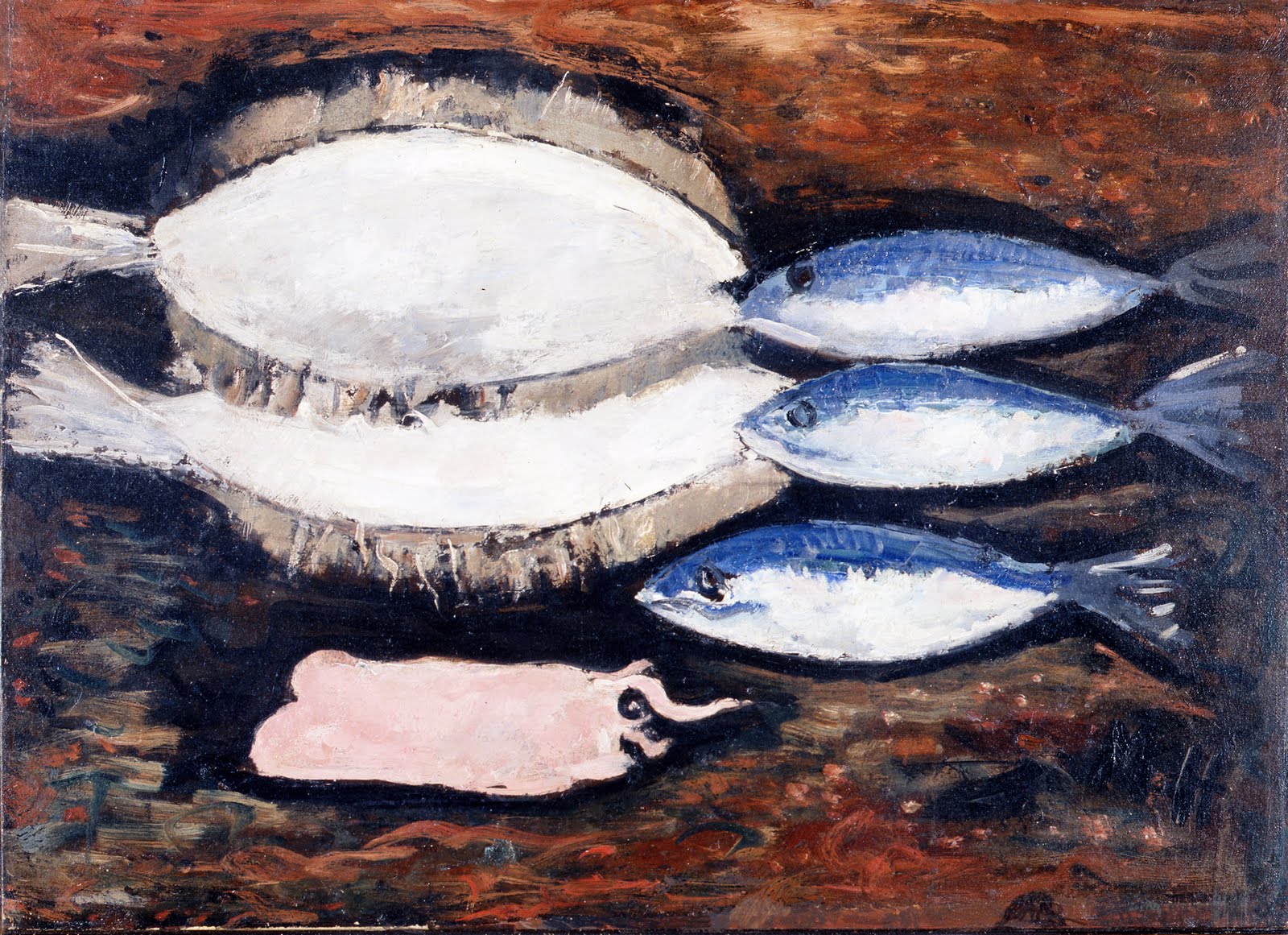
On January 29, the The Hyde Collection in Glens Falls opens its latest exhibition &#8211 Objects of Wonder and Delight: Four Centuries of Still Life from the Norton Museum of Art.

The show brings together fifty-one works of art from the collection of the Norton Museum of Art in West Palm Beach, Florida. The subject matter is still life and the exhibition at The Hyde comprises works in a variety of media including painting, watercolor, collage, sculpture, ceramics, glass, and textiles.

Spanning four centuries, from the Ming dynasty of China to the early twenty-first century, this array of images and objects includes all of the major sub-genres of still life such as tabletop arrangements, flowers, and fruits and vegetables. Arranged thematically, the exhibition illustrates both the diversity and the longevity of the still-life tradition in China, Europe, and the United States.

The exhibition, which runs through April 21, 2011, features some of the most famous artists in Western art history, such as Marc Chagall, Gustave Courbet, William Harnett, Robert Mapplethorpe, Henri Matisse, Pablo Picasso, Georgia O’Keeffe, Yinka Shonibare, and Andy Warhol.

At 2:30 pm on January 29th, Dr. Roger Ward, chief curator of the Norton Museum of Art and organizer of the exhibition, Objects of Wonder and Delight, will provide a lively presentation entitled Birds Pecking at Grapes and Other Shiny Objects: Four Centuries of Still Life from the Norton Museum. The talk will be a fast-paced account of the evolution of still-life painting in Europe and America, from Antiquity to the present, and how the diverse collection for which he is responsible has been deployed to create this exhibition.

The exhibition was organized by the Norton Museum of Art, West Palm Beach, Florida.

Illustration: Marsden Hartley (American, 1877–1943): Flounders and Blue Fish, 1942. Oil on rag board. Norton Museum of Art, West Palm Beach, Florida. Bequest of R.H. Norton.