Revisiting Great Literature With Penguin Classics on Air

“Penguin Classics On Air” is an online radio series devoted to the discussion and exploration of some of Penguin Classics’ more than 1400 titles from many eras, cultures and regions of the world. The program is hosted by Penguin Classics Editorial Director Elda Rotor and features in-depth conversations on new, timely and rediscovered classics between Elda Rotor or Classics editor John Siciliano and scholars, translators, or experts of a specific Penguin Classic.

The show wraps up with Associate Publisher Stephen Morrison offering a sampling of the Classic by reading the first pages from one of the works discussed. In addition, each episode of “Penguin Classics On Air” features a review by Alan Walker, Senior Director of Academic Marketing, on one of the Classics he’s recently read, as he fulfills his mission to read one Penguin Classic by an author per letter of the alphabet from A to Z.

As a sample of the goods, take a look at The Birth of Knickerbocker: Washington Irving’s A History of New York. Elda Rotor interviews Betsy Bradley, the introducer and editor of Washington Irving’s A History of New York , Irving’s popular first book is an early nineteenth century satirical novel of colonial New Amsterdam. It follows the fictional historian Diedrich Knickerbocker as he narrates the development of New York cultural life—from the creation of the doughnut to the creation of Wall Street. Alan Walker introduces listeners to The Emigrants by Gilbert Imlay and Stephen Morrison offers up the opening to Washington Irving’s beloved story “Rip Van Winkle.” in his segment, “First Pages.”

The Adirondack Guide at the Adirondack Museum

Don Williams, storyteller, author, and retired Adirondack guide, will deliver a presentation entitled &#8220Adirondack Guides&#8221 at the Adirondack Museum at Blue Mountain Lake Monday, August 24. Part of the museum’s Monday Evening Lecture series, the presentation will be held in the Auditorium at 7:30 p.m. There is no charge for museum members. Admission is $5.00 for non-members.

William’s program will include the portrayal of a historic Adirondack farmer-lumberman-guide, Adirondack humor as found in folk tales, and the introduction of skunk oil, ginseng, and spruce gum, as well as traditional Adirondack skills and tools well known by guides. He will focus on the role played by jack-of-all trade Adirondackers in opening up and popularizing the rugged North Country with sportsmen and tourists.

Don Williams (that’s him above) is known throughout New York State for his Adirondack storytelling, sharing the lives of Adirondack settlers and visitors through oral histories and humorous tales. He has been an Adirondack lecturer and storyteller at schools and organizations throughout the Northeast for more than forty years.

A retired teacher, school principal, and Adirondack guide, Williams has provided presentations about the Adirondacks at elementary and high schools, colleges, libraries, and Elderhostel programs.

Williams is the author of nine books about Adirondack and local history. He has written more than 250 articles for magazines including Adirondack Life and the Journal of Outdoor Education. He served as Adirondack regional editor for New York Sportsman for twenty years. His &#8220Inside the Blueline&#8221 column has appeared weekly in four regional newspapers since 1989.

Williams hosted an Adirondack television show in Gloversville and Glens Falls, N.Y. for six years and appears in the PBS documentary, The Adirondacks, produced by WNED Buffalo.

A Program On Americas Only World War II Refugee Camp

Sixty-five years ago 982 people arrived at Fort Ontario in Oswego, NY. They would stay the next 18 months at the only World War II refugee camp on American soil. On August 20th at 6 pm in Sackets Harbor, Safe Haven President Elizabeth A. Kahl will share the story of those 982 “guests” of President Franklin D. Roosevelt from August 1944 to February 1946. The program is part of the 2009 Great Lakes Seaway Trail Experience Series at the Great Lakes Seaway Trail Discovery Center.

Kahl, who has served on the board of the nonprofit that administers the Safe Haven Museum and Education Center in Oswego since 1999, said in a press release that “The maelstrom that was World War II had millions of fugitives fleeing for their lives in Europe. A continent away, Oswego, New York on the shores of Lake Ontario was to play a unique role in history as the small community who gave 982 people shelter and hope.”

First Lady Eleanor Roosevelt is among those who visited the refugees at the fort.

The $5 admission to the August 20th program benefits the Seaway Trail Foundation and its educational programming.

Finger Lakes Museum Site Submission Process Closed

The Board of Trustees of the Finger Lakes Cultural & Natural History Museum have officially closed the site submission process. Nineteen potential building sites were proposed by seven Finger Lakes Region counties and the City of Geneva before the deadline of July 15th.

Counties that submitted proposals include Cayuga, Schuyler, Seneca, Steuben, Tioga, Tompkins, and Yates. The City of Geneva is partnering with Seneca County on a site that straddles the Ontario/Seneca county line at the north end of Seneca Lake.

The deadline, which had been originally set for June 15th, was extended by the board for 30 days to give some counties more time to complete title searches. The sites are now being toured and evaluated by the project’s Site Selection Committee.

A question arose concerning a 20th site being added to the list when a landowner inquired about submitting a parcel in Ontario County. The board considered the inquiry but determined that the deadline should be upheld in fairness to the counties that worked hard to make submissions on time, according to a press release issued last week. The landowner is not being identified.

The search for a building site has ramped up the level of excitement for the initiative to develop a cultural and natural history museum to showcase the 9,000 square-mile Finger Lakes Region.

Thomas Cole Historic Site Gets $1 Million Bequest


The Thomas Cole Historic Site has announced that it has received a bequest of $1,000,000 from the estate of Raymond Beecher (1917–2008), a guiding light in the preservation of the Thomas Cole Site as well as countless other historic properties in the area. The newly established Raymond and Catharine Beecher Memorial Fund will be used for the maintenance of the buildings and grounds of Cedar Grove, the 19th- century home of Hudson River School painter Thomas Cole.

The bequest is restricted to funding the maintenance of the building and grounds of the Thomas Cole Historic Site, and only a portion of the interest may be used each year so that the principal will endure. Were it not for Raymond Beecher, who passed away in October at the age of 91, there might not be a Cedar Grove today. When the property was up for sale and possibly headed for demolition, Beecher put up his own money to buy the property and begin the restoration process. According to Thomas Cole Historic Site Executive Director Elizabeth Jacks, “It might not have happened without him. He led the charge. So we are delighted that his legacy lives on in a way that helps maintain the site he loved so much.”

Raymond Beecher was a soldier, educator, historian, writer, philanthropist, and public servant. He was the Chairman of the Greene County Historical Society and the Greene County Historian for many years. He was a leader in the establishment of the Vedder Library – a collection of important pieces of Greene County history. Beecher was a World War II veteran serving in both Europe and the Pacific. He wrote several books and for many years wrote a weekly column in local newspapers. He was declared a “Greene County Treasure” by the County Legislature in 2007.

Cedar Grove is the historic name for the Thomas Cole Historic Site, a non-profit organization that preserves and interprets the site where the artist Thomas Cole lived, worked, was married, and where he died at the age of 47. Today the site consists of the Federal style brick home (c. 1815) in which Thomas Cole resided with his family, as well as the artist’s original studio building, on five landscaped acres with a magnificent view of the Catskill Mountains.

Photo: Raymond Beecher in the grounds of his beloved Cedar Grove. Photo Richard Philp.

Weekly New York History Blogging Round-Up

  • Progressive Historians: Progressive Historians is Hiring
  • Historiann: Why Not Start At The Top?
  • Patell and Waterman: And What, Pray Tell, Is An Automat?
  • The Cranky Professor: &#8220Charming&#8221 in A New Context.
  • Tenement Museum Blog: Tenement Talks on YouTube
  • The Poesten Kill: Early Dutch Farms on The Poesten Kill
  • Mindful Walker: Taking In the Subway’s Old Powerhouse
  • Lost City: Coney Island Tries to Get the City to Listen, Take Two
  • The Bowery Boys: Cafe Wha? The Whys, Wheres, Whos and Hows
  • Berne, New York: 1787 Survey Map
  • Algonkian Church History: William Dick: The Last to Speak Mohican
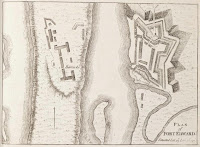
  • Pieces of Fort Edward Revealed During Dredging

    A piece of historic Fort Edward, site of the Great Carrying Place portage between the Hudson River and Lake George and prominent in the history of the French and Indian War and the American Revolution, is reported to have been brought up while dredging the Hudson River for PCBs according to the Glens Falls Post Star.

    &#8220Neal Orsini said he was awakened at 4 a.m. by the noise of a clamshell dredge pulling the piece of wood, which he estimated to be about 14 feet long, from his property,&#8221 the paper reported. &#8220There was a breakdown somewhere in the system and they took a piece of old Fort Edward out of the bank they weren’t supposed to be touching,&#8221 Orsini said, &#8220It was really loud.&#8221

    Orsini also told the paper that a clamshell dredge removed a section of riverbank. &#8220It left a gaping hole in my river bank,&#8221 he said. The paper is reporting that archeologists are on the scene and a &#8220survey is being performed on the pieces taken from the area.&#8221

    Fort Edward was built in 1755 on &#8220The Great Warpath&#8221 between Albany and the head of northward navigation at Lake George. It’s three components, the fort itself, a fortified encampment on Rogers Island, and a Royal blockhouse built in 1758 across the river was Britain’s largest military outpost in North America during the French and Indian War housing more than 15,000 troops. An earlier stockaded area named Fort Nicholson was located there in 1709 during Queen Anne’s War- it was rebuilt as Fort Lydus (primarily the trading post of John Lydus) and in 1731 was rebuilt as Fort Lyman. It was renamed For Edward by Sir William Johnson during the French and Indian War in 1755.

    Although the historic site is listed on the National Register of Historic Places, it has been largely forgotten, after the area was heavily contaminated with PCBs, and has fallen into disuse except for the Rogers Island Visitors Center. The Associated Press reported this week that three entities are hoping to purchase parts of the site including the Archaeological Conservancy, the state Office of Parks, Recreation and Historic Preservation, and archeologist David Starbuck, who has been excavating the site since at least 2001.

    Rogers Island was also the base camp of Major Robert Rogers and his company of Rangers and it was there that he composed his &#8220Ranging Rules&#8221 which form the basis of military tactics adopted by irregular fighting forces all over the world. The site is considered the birthplace of the U.S. Army Rangers. The fort fell to British forces under John Burgoyne in 1777 during the American Revolution.

    The dredging project is in its fourth month of removing approximately 2.65 million cubic yards of Hudson Riverbed sediment contaminated with polychlorinated biphenyls (PCBs). General Electric is believed to have dischargeed more than 1 million pounds of PCBs from its plants in Hudson Falls and Fort Edward into the Hudson River. The company then fought a legal, political, and media battle to avoid cleanup for nearly 20 years. GE fought the Superfund law in court and conducted a media campaign to convince the public that cleaning the toxic waste from the river would stir up PCBs. This week high levels of PCBs downriver slowed the dredging. GE was ordered by the EPA to clean up a 40-mile stretch of the Hudson River it contaminated in 2002.

    Photo: Fort Edward from &#8220A Set of Plans and Forts in Americas, Reduced From Actual Surveys&#8221 [1763]

    Four New Diaries By Upstate New York Teenagers

    Four new books provide readers with first person narratives of rural Upstate New York teenage life in the 1860s through the 1890s. These accounts of young peoples’ lives on the farm, or in the home, offers a unique perspective and serves as an important primary resource in the study of American history.

    The first is A Darned Good Time by 13-year old Lucy Potter of Taylor, New York (in Cortland County) in 1868. She writes of classes, teachers, friends, boys, a new stepmother, an invalid aunt, and complains about upstate New York weather.

    Second in the series is My Centennial Diary &#8211 A Year in the Life of a Country Boy by 18-year old Earll Gurnee of Sennett, New York (near Skaneateles) in 1876. He writes of school, family life, social life, farm life, girlfriends, and hard work. His teacher gets arrested for being too brutal to children, he juggles two girlfriends, he plows, cuts hay, cleans out the horse barn&#8230-.then wonders why his back hurts!

    Third in the series, My Story – A Year in the Life of a Country Girl, is by 15-year old Ida Burnett of Logan, New York (in Schuyler County) in 1880. Ida churned butter, milked cows, sewed her own underwear, canned fruit, but also had time for boys and parties. She lived in the country in Upstate New York and in the whole year did not venture any farther than twenty miles from home. The book will be released soon.

    The fourth (forthcoming) will be Home in the Hills by 14–year old Edna Kendall of Altay, New York (in Schuyler County) in 1891. It will be available in early 2010.

    You can check out these and more publications from the New York History Review Press at http://www.newyorkhistoryreview.com.