This Weeks Top New York History News

Each Friday morning New York History compiles for our readers the previous week’s top stories about New York’s state and local history. You can find all our weekly news round-ups here.

Subscribe! More than 2,800 people get New York History each day via E-mail, RSS, or Twitter or Facebook updates.

This Weeks New York History Web Highlights

Each Friday afternoon New York History compiles for our readers the previous week’s top weblinks about New York’s state and local history. You can find all our weekly round-ups here.

Subscribe! More than 2,800 people get New York History each day via E-Mail, RSS, or Twitter or Facebook updates.

Defiance & Independence Battle Re-enactment at Ticonderoga

Fort Ticonderoga will hold a two-day battle re-enactment highlighting the climatic summer of 1777 as the Fort’s American garrison was outflanked by a British invasion force descending from Canada. The event takes place this Saturday and Sunday, July 21-22, 9:30 am to 5 pm.Highlighted programming featured throughout the weekend is planned to bring to life the surprising American retreat and British capture of Fort Ticonderoga in early July 1777.  American and British armies will maneuver across Fort Ticonderoga’s historic landscape at 1:30 pm each day. This two-day battle re-enactment will dramatically show how General Arthur St. Clair’s decision to evacuate Ticonderoga set the stage for British General John Burgoyne’s advance towards Albany.
“‘Defiance and Independence’ will take place on the actual ground where the events of early July 1777 took place,” said Stuart Lilie,Fort Ticonderoga’s Director of Interpretation. “British artillery officer, General William Phillips’, brilliant decision to place cannon atop Mount Defiance will be recreated in historic downtown Ticonderoga Saturday evening as Fort Ticonderoga staff and volunteers haul artillery up Montcalm and Defiance Streets on their way to the mount’s summit.” Sunday morning visitors and re-enactors will experience shock and chaos as General Phillips’ heavy guns break the dawn over Ticonderoga.

“Visitors will experience the excitement as mounted command staff gallop into the Fort announcing its imminent capture,” said Beth Hill, Fort Ticonderoga’s Executive Director. “They will be immersed in the moment when American Continental command staff assess their dire situation and debate whether or not to abandon America’s critical stronghold on Lake Champlain. Meanwhile in the British camp, visitors can explore General Burgoyne’s battle-hardened army of British, German, and Loyalist troops and discover the sights and sounds of an army on campaign as soldiers cook their rations, clean their muskets, and enjoy the humble comforts of a bed of straw and canvas tent.”

Schedule for “Defiance & Independence” Battle Re-enactment, July 21-22

Saturday, July 21

9:30 am: Fort Opens to Visitors

10 am: Inspection (British Army in the King’s Garden, Continental Army on the Fort’s Parade)

See General Arthur St. Clair’s Continental soldiers and militia muster together to defend Fort Ticonderoga and the vital waterways it guards. Meanwhile General John Burgoyne’s Army parades before maneuvering to surround the American fortifications.

10:30 am -1 pm: British & American Guards and Pickets Posted (Along the Recreated French Lines)

Watch the scouts skirmishes that happened along the front lines, as advanced scouts of two armies worked to lift the fog of war that could cloud each general’s battle plan.

11 am: Mapping Ticonderoga, Surveying the Northern Army (Inside Fort Ticonderoga)

11:30 am: Artillery Demonstration (Adjacent to the British Camp)

1 pm: Alarm, Assembly & Inspection (British Army in the King’s Garden, Continental Army on the Fort’s Parade)

With a few quick shots in an expected place along the front lines messages rush back to the headquarters of each Army. Staff officers and generals alike take this message from the front lines and a slew of others to make a decision. Alarm! The orders go out- soldiers assemble and are inspected before marching off to their place in the battle line.

1:30 pm: Skirmish at Recreated French Lines

Watch as General Burgoyne’s advanced guard of soldiers probe the American Fortifications rebuilt from the famous French Lines of 1758. Unlikely to assault these Fortifications, British soldiers keep up a hot fire as they probe around these lines, finding out where to flank them, and valuable information about the American soldiers facing them 100 yards away.

2:30 pm: Program: The Northern Army of 1777: The Northern Department General Staff (Inside Fort Ticonderoga)

General Arthur St. Clair and the senior officers of his staff, discuss the British attack, their situation, and even evacuating Fort Ticonderoga, the great American bulwark to protect Albany and certain British victory.

3:30 pm: Program: People of the Brigade &#8211 Soldiers and Citizens in July of 1777. (Adjacent the Fort)

Meet some of the average people and soldiers you would have met in the Armies of the Northern Campaign in 1777.

4 pm: Program: British Engineers Discuss and Demonstrate the Science of their Trade. (Inside the British Camp)

4:30 pm: Program: Sutlers for the Army &#8211 Phil Dunning explains the role of sutlers within the Continental and British Armies. (Inside the British Camp)

5 pm: Fort Closes to Visitors

6:30 pm: Royal Artillery Gun crews haul their cannons through downtown Ticonderoga, on their way to the summit of MountDefiance. (Downtown Ticonderoga)

Sunday, July 22

9:30 am: Fort Opens to Visitors

9:30 am: Guns on Mount Defiance Open Fire

Discovered by an errant shot, General Burgoyne’s cannons atop Mount Defiance announce their presence to a baffled Continental Army.

10 am: Continental Musick Beats the “General”

General Arthur St. Clair prepares his Army for what he hopes will be an orderly retreat. American soldiers break camp. They prepare for what will at best be a fighting withdrawal, at worst a panicked retreat. Veterans and green soldiers alike ready themselves to live on the march.

10:30 am: Guards and Pickets Posted (Along the Recreated French Lines)

Watch the scouts skirmishes that happened along the front lines, as advanced scouts of two armies worked to lift the fog of war that could cloud each general’s battle plan.

11:00 am-12:00 pm: Program: Joel Anderson, Fort Ticonderoga Artificer Superviser, describes the flight of the Continental Army from the Fort.

Learn about the brave actions and misadventures of General Arthur St. Clair’s army as it began its retreat south from FortTiconderoga to fight another day.

11:30 am: Artillery Demonstration (Adjacent to the British Camp)

1 pm: Alarm, Assembly & Inspection (British Army in the King’s Garden, Continental Army on the Fort’s Parade)

With a few quick shots in an expected place along the front lines messages rushes back to the headquarters of each Army. Staff officers and generals alike, take this information and a slough of others to make a decision. Alarm! The orders go out- soldiers assemble and are inspected before marching off to their place in the battle line.

1:30 pm: Skirmish at Recreated French Lines

Hemmed in from the north, east and west, the Continental Army holds their lines against the advances of the British army, emboldened by its advantageous position.

2:30 pm: Program: The Northern Army of 1777- The Northern Department General Staff (Inside Fort Ticonderoga)

General Arthur St. Clair and his senior officers discuss their desperate situation and attempt to bring some order to what no doubt will be a rushed evacuation of the Army. With supplies to salvage, wounded to transport and a bridge across the lake to destroy behind them, these officers attempt to make the best preparations to fight another day.

3 pm: Continental Army Evacuation

See the Continental Army packing up tents, supplies, loading up their wagons to save what they can for what will be another long campaign.

5 pm: Site Closes to Visitors

Admission to “Defiance & Independence” is included with Fort Ticonderoga’s general admission ticket. A complete highlighted event schedule can be found online, or call 518-585-2821 for more information.

Photo provided. 

Women’s Rights Anniversary Events Begin Today

The Women’s Rights National Historical Park program for the 164th Anniversary of the First Women’s Rights Convention begins today and continue through July 22, 2012 in Seneca Falls, NY. All events will be free of
charge.

Several programs are being offered during the Anniversary events. Artist Carol Flueckiger will present a program and several art workshops as a part of Women’s Rights NHP’s ongoing ARTS AFIRE! programs. Melinda Grube will portray Elizabeth Cady Stanton in two different programs on Saturday, July 21, and Pamela L. Poulin will portray Matilda Joslyn Gage in two different programs on Saturday, July 21, and Sunday, July 22.Paul and Mary Kuhn will present phrenology demonstrations, and Bonnie Breed will present lace-making demonstrations as part of the Anniversary events. The Hutchinson Family Revival will perform abolitionist, temperance, and women’s rights songs. Also, Women’s Rights NHP Social Media Coordinator Stephanie Freese will live-blog during the Anniversary events.

For more information about the program of events visit their website. A listing of the Convention Days events in Seneca Falls can be found on the Convention Days Committee website.

For more information, visit he Women’s Rights National Historical Park website or call (315) 568-0024. You can also follow the park’s social media sites for Facebook and Twitter to learn more about their upcoming programs.

A.J. Schenkman: Old Graveyards in Ulster County

Many years ago, I was fortunate enough to meet the late historian Kenneth E. Hasbrouck, Sr., who at that time was the Executive Director of Historic Huguenot Street located in New Paltz, New York. I requested a meeting with him to inquire about a house that my aunt owned at that time. Read more

Who Do These People Think They Are? at Knox’s Headquarters

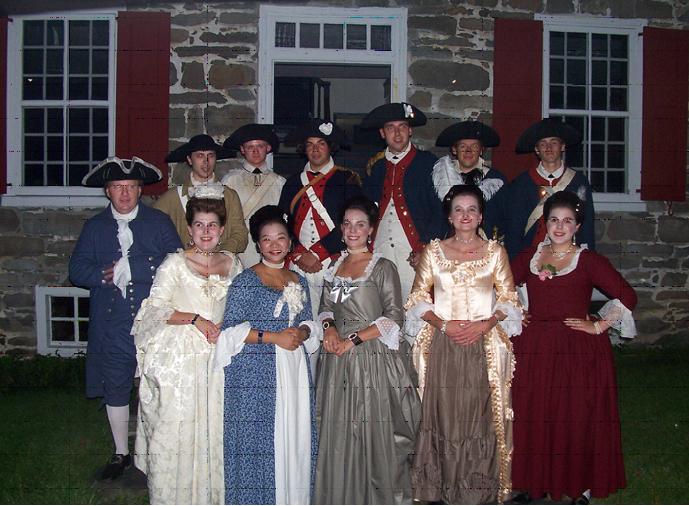
General George Washington knew exactly what he was about, in the summer of 1781, by trying to convince the British and his own soldiers that he would attack New York City. Unbeknownst to all, but trusted officials, he had agreed to move with the French Army south to Virginia. In Virginia, a French naval force from the Caribbean would join them to complete the encirclement of the British Army at Yorktown.ВThe soldiers of the 2nd and 3rd Continental Artillery Regiments, encamped at New Windsor, since the previous November, spent their time assembling and training on heavy siege artillery. Without the heavy guns to batter down the fortifications of British General Cornwallis’ Army at Yorktown, the decisive victory achieved there would not have been possible.В On Saturday July 28 from 7:00 to 9:00 PM costumed historians will think and act like they were the actual participants, at Knox’s Headquarters, in New Windsor, in July 1781, making the final arrangements for the movement of the artillery to the south.

As the evening progresses, the masking darkness gives the grounds a surreal experience, adding significantly to the authenticity of the setting. The residents will beguile visitors with tales of past glories, suffering, and share their hopes and aspirations for an uncertain future. Tour the grounds and mansion by the glow of tin lanterns and experience the tense days before Yorktown with the soldiers and civilians, who once made their homes in the area.В 

The “residents” have no knowledge of the fact that Washington wants to take them south instead of to New York. Visitors will meet few, if any, names that they recognize from history, but instead humble souls whose efforts combined with thousands of others, helped forge a nation. This type of presentation, called “first-person living history,” has developed into a very exciting way to make history more meaningful to visitors. This technique is used at Plimoth Plantation in Massachusetts and Colonial Williamsburg, in Virginia. For more information please call (845) 561-1765 ext. 22. Knox’s Headquarters is at 289 Forge Hill Road, in Vails Gate, New York at the intersection of Route 94 and Forge Hill Road, four miles east of Stewart Airport and three miles from the intersection of I-87 and I-84.Photo: New Windsor Cantonment Staff in Front of Knox’s Headquarters, the John Ellison House (provided).

Historic Local Recordings Now Available in Plattsburgh

Access to hundreds of audio recordings that reveal the rich histories of Clinton, Essex, and Franklin Counties are now available at SUNY Plattsburgh’s Feinberg Library’s Special Collections.

Recordings include Adirondack Folk Music- Clinton, Essex, and Franklin County oral histories, including those by local residents born prior to the American Civil War- SUNY Plattsburgh concerts- a 1963 recording of Edward “Doc” Redcay on piano and Junior Barber on dobro- and four-time Pulitzer Prize winner Robert Frost reading his works.

The collection of recordings is the result of a collaborative effort by SUNY Plattsburgh Communications Professor Timothy Clukey and Feinberg Library’s Special Collections staff. According to a statement released to the press &#8220copyright restrictions require that researchers visit Special Collections during open hours to listen to any of these recordings.&#8221 The recordings are available as mp3 files on a new Audio Station computer kiosk.

A Soundscriber Recorder was used in the mid-20th century by Marjorie Lansing Porter, historian for Clinton and Essex counties. Porter recorded 456 interviews with elderly local residents telling stories and singing traditional Adirondack folk music.

Among the folk music examples, Granma Delorme sang more than one hundred folk songs for Porter, including a Battle of Plattsburgh ballad composed by General Alexander Macomb’s wife. Included also is &#8220Yankee&#8221 John Galusha singing &#8220The Three Hunters,&#8221 &#8220A Lumbering We Shall Go,&#8221 and &#8220Adirondack Eagle.&#8221 Francis Delong sings &#8220My Adirondack Home,&#8221 and &#8220Peddler Jack.&#8221

Many of the recorded songs deal with mining, lumbering, Adirondack folk tales, and other subjects, as well as traditional Irish and French folk music handed down through generations. The Porter Oral History Interviews cover many topics of historical interest in Clinton and Essex Counties, such as ferry boats, Redford glass, mining, and lumbering.

The Audio Station also includes 96 interviews conducted by William Langlois and Robert McGowan with elder Franklin County residents in the 1970s.Plans in the works for additions to the Audio Station include:

Rockwell Kent audio recordings (now on reel-to-reel tapes in Special Collections’ Rockwell Kent Collection)-

SUNY Plattsburgh Past President Dr. George Angell speaking on antiwar action in 1967—“Protest is Not Enough&#8221-The 1965 SUNY Plattsburgh Students for a Democratic Society and S.E.A.N.Y.S. teach-in, “The Vietnam Question,” with introduction by Dr. Angell- A1964 speech by Senator-Elect Robert Kennedy on the Plattsburgh campus- and a 1964 meeting between Senator-Elect Kennedy and Dr. Angell, discussing various local and county concerns and other topics.For more information, contact Debra Kimok, Special Collections Librarian (email: [email protected] telephone: 518-564-5206).

During the summer, the Feinberg Special Collections will be open on Mondays and Tuesdays, from 1 pm – 4 pm, and on Wednesdays, Thursdays, and Fridays, from 10 am &#8211 noon and 1 pm – 4 pm. Saturday appointments can be arranged with the Special Collections Librarian.

Hudson River Greenway Offers Trail Grant Program

Applications are now available for the 2012 Greenway Conservancy Small Grant Program from the The Hudson River Valley Greenway. A total of $50,000 is available for matching grants in this year’s program.The Greenway Conservancy Small Grant Program is an annual competitive grant funding opportunity available to communities and not-for-profit organizations within the designated Hudson River Valley Greenway area, which extends from Saratoga and Washington counties to Battery Park, Manhattan.
The program offers funding for trail planning and design, construction and rehabilitation, and education and interpretation. Emphasis is placed on trail projects that seek to implement the goals of the Greenway Trail Vision Plan, fill in identified gaps in the Greenway Trail System, and make improvements to designated Greenway Trails. Copies of the Hudson River Valley Greenway Trail Vision Plan may be downloaded online. This annual program has offered technical and financial assistance to municipalities and not-for-profit organizations since 1995.

Projects that will be considered for funding through this year’s grant program include:

· Education and Interpretation projects, including trail signs, kiosks, guides, maps, brochures, one-day conferences or workshop series. 

· Projects to construct, design or plan trail segments or trail links that further the goals of the Greenway Trail Program.

· Rehabilitation projects to improve trails/trail segments that further the goals of the Greenway Trail Program.

Applications can be requested by calling (518) 473-3835, by emailing the Greenway at [email protected], or by download from the Greenway website. All applications must be postmarked by 5:00 pm, August 17, 2012. Late, incomplete, faxed or emailed applications will not be accepted.

Odetta, Richard Wright Being Honored Today in NYC

Today, Tuesday, July 17, 2012 the Historic Districts Council and the Historic Landmarks Preservation Center in New York City will unveil new cultural medallions for two pioneers in the fields of literature and music.

First at 11:00am, in collaboration with the Fort Greene Association, author Richard Wright will be celebrated with a medallion unveiling at 175 Carlton Avenue in Fort Greene, Brooklyn. Then at 2:00 pm their will be an unveiling of a medallion commemorating the life of Odetta, the legendary singer, songwriter and political activist, at her longtime residence, 1270 Fifth Avenue, in East Harlem. The public is invited to both events.

Odetta: The Voice of the Civil-Rights Movement, 1930-2008

Odetta Holmes, born on December 31, 1930 in Birmingham, Alabama was a true activist, performance artist and musician. Her powerful image and robust voice was and continues to represent the politically driven folk-music of the 1950’s and 1960’s. As an African-American female performance artist during a time of political and racial upheaval, Odetta was a leader and voice for the civil rights movement- marching with Martin Luther King Jr. and performing a show for John F. Kennedy. The ability she had to convey meaning and life into her music inspired others to follow in her pursuit of fairness, equality and justice.

Author Richard Wright, 1908- 1960

Born in Mississippi, Richard Wright spent the majority of his childhood living in poverty in the oppressive racial and social atmosphere of the south. Wright escaped familial and social constraints by immersing himself in the world of literature, and became one of the first great African American writer’s of his time. Richard Wright relocated to Brooklyn’s Fort Greene neighborhood and was living here in 1938 when he drafted his first novel, Native Son. He wrote several controversial novels, short-stories and semi-autobiographical accounts that reflected the brutalities often inflicted on the African American people of the south during this period. Wright eventually left New York City for Paris. His grave is located in the Pere Lachaise Cemetery.

About the Ceremony and Cultural Medallion Program

Distinguished scholars, artists and elected officials will be participating in both of the cultural medallion ceremonies. The Richard Wright program will include Brooklyn Borough President Marty Markowitz, celebrated playwright Lynn Nottage, Paul Palazzo of the Fort Greene Association, musician and author Carl Hancock Rux, and Howard Pitsch will read a message from Wright’s daughter, Julia Wright, who currently resides in Paris. Pianist Dave Keyes will perform Odetta’s signature piece, This Little Light of Mine, at the Odetta ceremony.

The Cultural Medallions are a program of the Historic Landmarks Preservation Center. Barbaralee Diamonstein-Spielvogel, Chair of the HLPC, created the Cultural Medallions program, and will lead the ceremony. The HLPC has installed almost 100 medallions around the city to heighten public awareness of the cultural and social history of New York City.