Race Fans Invited to Meet Hall of Fame Members

The New York State Stock Car Association’s (NYSSCA) annual “Meet the New Hall of Fame Members” program will be held on Sunday, January 23rd at the Saratoga Automobile Museum, site of the permanent NYSSCA Hall of Fame exhibit.

Set for 11 am, the popular event will let fans and racers unable to attend Saturday night’s NYSSCA awards banquet meet and listen to the new inductees, drivers Dickie Larkin and Jack Cottrell, car owner Paul Emerick and officials Hertha and Marty Beberwyk.

“It’s my favorite event of the year,” NYSSCA Hall of Fame chairman and Racing in New York gallery coordinator Ron Hedger said. “It brings together the hard-core racing community and the area’s dedicated race fans in a relaxed setting and lets us relive the highlights of the inductee’s racing careers. We’ll have presenters Tom Boggie, Jim King, Hertha Beberwyk and myself on hand to introduce the inductees, who will then make remarks. After that, I usually ask a few questions and then we’ll take questions from the audience, so everyone gets involved in the festivities.&#8221

For the first time, the event will be held in the museum’s main gallery instead of the Racing in New York exhibit.

The Saratoga Automobile Museum is located on the Avenue of the Pines in the Saratoga Spa State Park. Visitors should exit I-87, the Adirondack Northway, at Exit 13N, then proceed north on Rt. 9 to the Avenue of the Pines park entrance.

NYSSCA Hall of Fame members will be admitted free of charge with other visitors paying the standard museum admission. The current featured exhibit in the Golub Gallery is “Right Coast Rods” while the Racing in New York gallery features a look at the history of NASCAR in New York.

More information is available online.

Bicycle Technology: Then and Now

Bicycles have come a long way. They are one of the most important methods of transportation ever created. Millions of people all over the world rely on them and enjoy them as both a primary means of transport and as a personal means of recreation.

Lifelong bicycle aficionados Rob van der Plas and Stuart Baird have indulged their passion for cycling and created a richly illustrated compendium dedicated to the technology and engineering that goes into the modern bicycle and its key historical components.

Their new book, titled Bicycle Technology, covers every detail and aspect of the bicycle, from the frame materials to the drivetrain, gears, to the wheels, suspension lights, bells and whistles, and more. They have shared their technical know-how and love of the history and the developments of the bicycle from its inauspicious beginnings to the use of space-age materials, and the incorporation of electronic innovations of today.
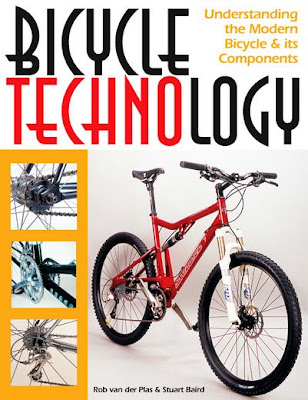
The book is a thorough and up-to-date treatment of the technical aspects of the modern (and historic) bicycle, illustrated with 800 photographs and other illustrations. This new, 2nd edition was completely rewritten, with up-to-date material and numerous clear illustrations, covering bsoth the modern bike itself and its components in a historical context.

The first bicycle was invented in 1817 by Carl Von Drais (no, not three centuries earlier by Leonardo Da Vinci, as has sometimes been claimed). Drais viewed it as a substitute for a horse, which was in very short supply at the time due to a very harsh winter. His earliest machine was protected by a patent, which was soon copied by many people, some under license, some simply pirated. However, interest soon diminished, and by 1830, they were all but forgotten relics of a short-lived craze.

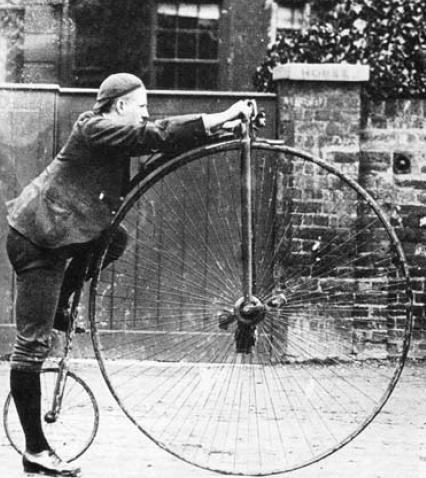
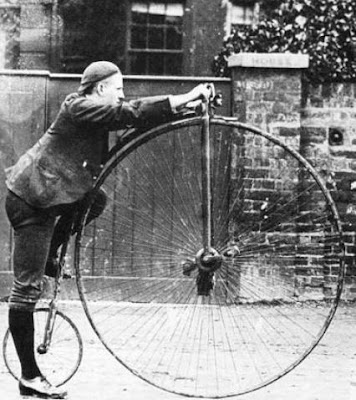
The pedal-drive was first introduced in the 1950s for use on a workman’s tricycle powered by means of cranks on the front wheel, and later found use on Michaux’s two-wheel velocipeds. Tension wire spokes were introduced in 1869, making it possible to build very large wheels of the iconic high-wheel, or “ordinary” bicycle of the 1870 and 1880s.

The first chain-driven bicycle was patented in 1879. Within a few years of their introduction the safety bicycle, with chain-drive and two equal-sized had superseded the high-wheel bicycle.

During much of the 20th Century, bicycle developments were confined to “tweaking” the details rather than the overall re-design of the bicycle as a whole. The most important development of the 20th Century was the introduction and perfection of gearing systems. A modern bicycle derailleur gearing system in the process of changing gear by literally “derailing” the chain to a smaller or larger rear cog

Technical developments in bicycles continue to undergo subtle refinements. There have been, and continue to be, significant developments in areas like brake systems, gearing, suspension, and frame materials. High-tech, lightweight materials, including carbon and titanium, sometimes in combination, are now used in the frames and components of high-end bicycles.

Many bicycles are now available with full suspension and hydraulic disk brakes. Fully equipped urban commuter bikes are available with carriers for a briefcase or laptop, effective lights for night riding, and other electronic and mechanical accessories.

In recent years, electric-assist bikes, or “E-bikes” have gained popularity amongst casual riders and utility cyclists. There are four E-bike categories: CEBs, which are conventional electric bikes- SABs, or simple assisted bikes- EHBs, or electro-hybrid bikes- and SHBs, or Synergetic Hybrid Bicycles, which can be seen as pedal-powered equivalent of hybrid cars.

Modern lighting systems of course, now use ultra-bright multi-light LEDs with rechargeable battery packs and on board generators. Modern audio warning systems are also electronic.

No matter what advances in technology we may see, some people may still choose on installing an old-fashioned bell or horn.

Note: Books noticed on this site have been provided by the publishers. Purchases made through this Amazon link help support this site.

Photo: Early High-Wheel or Ordinary Bicycle (c 1872).

This Weeks Top New York History News

Each Friday morning New York History compiles for our readers the previous week’s top stories about New York’s state and local history. You can find all our weekly news round-ups here.

Subscribe! More than 550 people get New York History each day via E-Mail, RSS, or Twitter or Facebook updates.

New Netherland Research Residencies

The Quinn Library Research Residency consists of specialized research in Dutch-related documents and printed materials at the New York State Library. Researchers interested in the history of New Netherland and the Dutch Colonial Atlantic World are also encouraged to apply for the special Cunningham Grant of $2,500.

The Quinn Archives Research Residency consists of up to one year in Albany, working in the rich collections of the New Netherland Institute and the New York State Archives.

Researchers interested in the history of New Netherland and the Dutch Colonial Atlantic World are also encouraged to apply for the research residency, which carries a stipend of $2,500.

The Quinn Library Research Residency Award application must be postmarked by January 28,2011 and is due January 29,2011. The Archives Research Residency Award application is due January 15,2011. Each award is for $2,500 and the successful candidate has a year from the time the awards are announced to complete his/her research.

A panel of scholars and library staff will review proposals. The panel’s decisions will be announced by April 14, 2011.

More information and the application link can be found at http://www.nnp.org/nni/Research%20&%20Education/quinn.html

If you’d like to discuss the suitability of your research topic for one of these awards, contact [email protected] or [email protected] or [email protected]

Brooklyn Museum to Open Lorna Simpson Photography Exhibition

Brooklyn-based artist and photographer Lorna Simpson will have a solo exhibition at Brooklyn Museum. Lorna Simpson: Gathered presents photographic and other works that explore the artist’s interest in the interplay between fact and fiction, identity, and history. Through works that incorporate hundreds of original and found vintage photographs of African Americans that she collected from eBay and flea markets, Simpson undermines the assumption that archival materials are objective documents of history. The exhibition will be open to the public January 28 through August 21, 2011.

The exhibition also includes examples of Simpson’s series of installations of black-and-white photo-booth portraits of African Americans from the Jim Crow era and a new film work.

Lorna Simpson: Gathered is organized by Catherine Morris, Curator of the Elizabeth A. Sackler Center for Feminist Art, Brooklyn Museum.

Photo: Lorna Simpson (American, b. 1960). 1957-2009 Interiors (detail), 2009. Gelatin silver print. 5 1/2 x 5 1/2 inches each (14 x 14 cm)- overall dimensions variable. © Lorna Simpson, 2009- courtesy of the artist and Salon 94, New York

Historic Saranac Lake Gets Preservation Grant

Historic Saranac Lake (HSL) was recently awarded National Endowment for the Humanities Preservation Assistance Grant. The grant will support the services of a professional consultant and the purchase of storage materials for the HSL collection.

Eileen Corcoran, of Vergennes Vermont, will conduct a general preservation assessment and to help draft a long-range plan for the care of the HSL collection. She will also provide on site training to staff in methods and materials for the storage of collections, best practices for cataloging collections, and proper methods for the arrangement and description of archival collections.

Historic Saranac Lake houses a collection of letters and manuscripts, photographs and objects pertaining to the early scientific research of tuberculosis and care of TB patients in Saranac Lake, as well as a variety of items relating to the architecture and general history of the community. A number of these items are rare survivors of the many, many examples that once existed, such as an inspection certificate, or a record of patient treatments. They tell the story of a community of healing.

The Historic Saranac Lake collection is used for exhibitions, educational programs and by researchers. Historic Saranac Lake currently maintains two exhibitions at the Saranac Laboratory Museum. The main laboratory space is a model of a very early science lab. Visitors explore and gain an appreciation for the history of science by observing artifacts and letters on display such as early microscopes and laboratory equipment, early scientific journals and photographs of important men in the history of science.

An alcove in the laboratory has been arranged as an exhibit on patient care, another important facet of Saranac Lake’s TB history. Items from the collection are displayed such as a cure chair, photos of cure cottages, letters from patients, sputum cups, a pneumothorax machine for collapsing the lung, and items made by patients in occupational therapy. Visitors gain an understanding of the patient experience taking the fresh air cure in Saranac Lake.

The main floor meeting space contains another exhibition, “The Great War, WWI in Saranac Lake.” This exhibit includes letters from local soldiers, medals, photos, and a complete WWI uniform and supplies such as a gas mask and mess kit. The exhibit interprets this important time period in history and how it impacted Saranac Lake.

Historic Saranac Lake is a not-for-profit architectural preservation organization that captures and presents local history from their center at the Saranac Laboratory Museum. Founded in 1980, Historic Saranac Lake offers professional knowledge and experience to the public in support of Historic Preservation, architectural and historical research and education. HSL operates the Saranac Laboratory Museum and an online museum of local history at hsl.wikispot.org.

NEH is an independent grant-making agency of the United States government dedicated to supporting research, education, preservation, and public programs in the humanities. Preservation Assistance Grants help small and mid-sized institutions—such as libraries, museums, historical societies, archival repositories, cultural organizations, town and county records offices, and colleges and universities—improve their ability to preserve and care for their humanities collections.

Preservation League, NYSERDA Plan Workshops for 2011

The Preservation League of New York State recently entered into a partnership with the New York State Energy Research and Development Authority (NYSERDA) to provide workshops throughout New York State that will address code compliance and energy conservation in existing and historic structures.

The League will offer a series of workshops in 2011, held regionally throughout New York State, specifically targeting the merging of historic preservation principles and practice with the requirements of the 2010 NYS Energy Conservation Construction Code.

&#8220The technology for enhancing the energy efficiency of historic buildings is improving all the time,&#8221 said Jay DiLorenzo, President of the Preservation League. &#8220The choices property owners make today can extend the useful life of their buildings and pay dividends for owners and residents both now and in the future.&#8221

Additional information and a schedule of workshops will be made available on the League’s website at www.preservenys.org later in 2011.

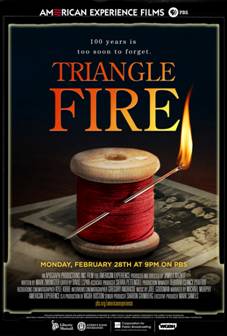
Broadcast Marks 100th Anniversary of Triangle Factory Fire

On March 25th, 1911, a deadly fire broke out in the Triangle Shirtwaist Factory in New York’s Greenwich Village. The blaze ripped through the congested loft as petrified workers &#8212- mostly young immigrant women &#8212- desperately tried to make their way downstairs. One door was blocked by fire and the other had been locked by the factory owners to prevent theft.

Some workers managed to cram onto the elevator while others ran down an inadequate fire escape which soon pulled away from the masonry and sent them to their deaths. Hundreds of horrified onlookers arrived just in time to see young men and women jumping from the windows, framed by flames. By the time the fire burned itself out, 146 people were dead. All but 23 of the dead were women and nearly half were teenagers.

The harrowing story of an event that changed labor laws forever, AMERICAN EXPERIENCE Triangle Fire is directed and produced by Jamila Wignot (Walt Whitman, The Rehnquist Revolution) and will premiere on Monday, February 28, 2011 at 9:00 PM (check local listings.)

State Museum Presents States Great Places Event

State historic sites and cultural institutions will provide fun hands-on activities and educational artifacts to explore to acquaint visitors with “New York State’s Great Places and Spaces” January 15 at the New York State Museum.

The free event, which is part of the Museum’s January Family Fun Day, will be held from noon to 4 p.m. in several first floor galleries including Adirondack Wilderness, Birds of New York, Native Peoples of New York and South Hall.

Participants include the State Museum, State Library, Schuyler Mansion State Historic Site, Olana State Historic Site, Thomas Cole National Historic Site, Clermont State Historic Site, Shaker Heritage Society, Albany County Historical Society/Ten Broeck Mansion, Historic Cherry Hill, Crailo State Historic Site, Johnson Hall Historic Site, the Underground Railroad History Project, Salem Art Works, the Adirondack Museum, the New York State Military Museum, the Arkell Art Museum, Schoharie Crossing Historic Site, the Empire State Aero Space Museum, the National Museum of Racing and Hall of Fame and the Living History Education Foundation.

Visitors will be able to play the Hudson River Valley Trading Game on a 32-foot long game board, explore objects from Thomas Cole’s studio and add to a community landscape, try landscape drawing, weave on a small loom and view reproduction 1870’s stereographs of the Shaker site. There also will be many hands-on activities, including
opportunities to touch bear fur, try on a cradleboard and learn more about the Haudenosaunee at the State Museum’s Native Peoples cart.

Also, Craig Gravina, a State Museum exhibition designer, will provide a behind-the-scenes tour to discuss the design and installation of the Museum’s Citizen Soldier: New York’s National Guard in the American Century exhibition.

Located on Madison Avenue in Albany, the Museum is open Monday through Saturday from 9:30 a.m. to 5 p.m. except on Thanksgiving, Christmas and New Year’s Day. Admission is free. Further information can be obtained by calling (518) 474-5877 or visiting the Museum website.