 The Librarian of Congress James H. Billington has announced 25 motion pictures that will be preserved as cultural, artistic and/or historical treasures. Spanning the period 1911-1995, the films named to the 2009 National Film Registry of the Library of Congress range from the sci-fi classic “The Incredible Shrinking Man” and Bette Davis’ Oscar-winning performance in “Jezebel” to the Muppets’ movie debut and Michael Jackson’s iconic video “Thriller.” This year’s selections bring the number of films in the registry to 525.
Under the terms of the National Film Preservation Act, each year the Librarian of Congress names 25 films to the registry that are “culturally, historically or aesthetically” significant to be preserved for all time. These films are not selected as the “best” American films of all time, but rather as works of enduring importance to American culture.
“Established by Congress in 1989, the National Film Registry spotlights the importance of protecting America’s matchless film heritage and cinematic creativity,” said Billington. “By preserving the nation’s films, we safeguard a significant element of our cultural patrimony and history.”
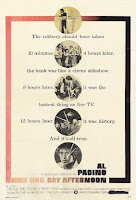
Other selections to this year’s registry include Al Pacino’s “Dog Day Afternoon,” the World War II drama “Mrs. Miniver,” the swashbuckling adventure “The Mark of Zorro” and the popular spaghetti Western “Once Upon a Time in the West.” Among the lesser-known films named to the registry are “The Jungle,” a hybrid documentary/dramatization made by a group of young African-American gang members- “A Study in Reds,” directed by amateur filmmaker Miriam Bennett- and Martin Brest’s student film “Hot Dogs for Gauguin.”
Annual selections to the registry are finalized by the Librarian after his review of hundreds of titles nominated by the public and extensive discussions with members of the National Film Preservation Board, as well as the Library’s motion-picture staff. The Librarian urges the public to make nominations for next year’s registry at the Film Board’s website (www.loc.gov/film/).
For each title named to the registry, the Library of Congress Packard Campus for Audio Visual Conservation works to ensure that the film is preserved for future generations, either through the Library’s massive motion-picture preservation program or through collaborative ventures with other archives, motion-picture studios and independent filmmakers. The Packard Campus is a state-of-the-art facility that acquires, preserves and provides access to the world’s largest and most comprehensive collection of films, television programs, radio broadcasts and sound recordings.
2009 National Film Registry
Dog Day Afternoon (1975)
Director Sidney Lumet balances suspense, violence and humor in Frank Pierson’s Oscar-winning adaptation of a true-life bank robbery turned media circus. Al Pacino is the engaging Sonny, a smart yet self-destructive Brooklyn tough guy whose plan to rob the local bank to pay for his lover’s sex change goes awry. Lumet artfully conducts his talented cast through machinations that twist and turn from the political to the personal, and inevitably lead to a downward spiral played out before an audience of millions.
The Exiles (1961)
Released nearly 48 years ago, “The Exiles” remains one of the few non-stereotypical films that honestly depict Native Americans. With the perspective of a true outsider, filmmaker Kent MacKenzie captures the raw essence of a group of 20-something Native Americans who left reservation life in the 1950s to live among the decayed Victorian mansions of Los Angeles’ Bunker Hill district. MacKenzie’s day-in-the-life narrative pieces together interviews that allow the people in his film to tell their own stories without ascribing artificial sentimentality.
Heroes All (1920)
The Red Cross Bureau of Pictures produced more than 100 films, including “Heroes All,” from 1917-1921, which are invaluable historical and visual records of the era with footage from World War I and its aftermath. “Heroes All” examines returning wounded WWI veterans and their treatment at Walter Reed Hospital, along with visits to iconic Washington, D.C., landmarks. Several Red Cross cinematographers achieved notable film careers, including Ernest Schoedsack and A. Farciot Edouart.
Hot Dogs for Gauguin (1972)
This hilarious New York University student film (with a cast including Danny DeVito and Rhea Perlman in her film debut) was written and directed by Martin Brest who later went on to direct “Beverly Hills Cop,” “Scent of a Woman” and “Meet Joe Black.” In the film, DeVito plays a down-on-his-luck photographer determined to capture visual magic and fame. He concocts an intricate plot to blow up the Statue of Liberty and sets his camera to record the exact moment of its destruction.
The Incredible Shrinking Man (1957)
This sci-fi classic about a man who starts to shrink after being exposed to a strange cloud while on vacation is notable for its intelligent script and imaginative special effects. Jack Arnold’s sparse direction and Richard Matheson’s poignant script allow the tension to build naturally in a world where a house cat and common spider become the ultimate threat to existence and leave an indelible mark on the audience’s consciousness.
Jezebel (1938)
Bette Davis won her second Academy Award for this William Wyler-directed classic. Cast to perfection as a tempestuous southern belle, Davis’ head-strong heroine must eventually learn self-sacrifice in order to save the man she loves. Despite its melodramatic underpinnings, the film endures because of Davis’ flawless performance and for its examination of both the American South and women’s societal roles. The movie co-stars Henry Fonda and Fay Bainter, who also won an Oscar for her work.
The Jungle (1967)
With the guidance of Temple University social worker Harold Haskins, a group of African-American teenage boys in Philadelphia made this hybrid documentary/dramatization of their lives in the 12th and Oxford Street gang. Shot in an original and natural style, this 22-minute film was recognized with festival awards, but was never theatrically released. In 1968, Churchill Films distributed the film in 16mm for the educational market. The production led several of the gang members to earn high school and college degrees.
The Lead Shoes (1949)
“The Lead Shoes” is a dreamlike trance showing the unconscious acts of a disturbed mind through a distorted lens and other abstract visual techniques (such as reverse and stop motion). “Narrative succumbs to the comic devices of inconsequence and illogic,” said writer and independent filmmaker Sidney Peterson of his film. Peterson is considered the father of San Francisco avant-garde cinema.
Little Nemo (1911)
This classic work, a mix of live action and animation, was adapted from Winsor McCay’s famed 1905 comic strip “Little Nemo in Slumberland.” Its fluidity, graphics and story-telling was light years beyond other films made during that time. A seminal figure in both animation and comic art, McCay profoundly influenced many generations of future animators, including Walt Disney.
Mabel’s Blunder (1914)
Mabel Normand, who wrote, directed and starred in “Mabel’s Blunder,” was the most successful of the early silent screen comediennes. The film tells the tale
of a young woman who is secretly engaged to the boss’ son. When a new employee catches the young man’s eye, a jealous Mabel dresses up as a chauffeur to spy on them, which leads to a series of mistaken identities. The film showcases Normand’s spontaneous and intuitive playfulness and her ability to be both romantically appealing and boisterously funny.
The Mark of Zorro (1940)
Under Rouben Mamoulian’s inventive direction, Tyrone Power plays Don Diego, son of a 19th-century Los Angeles governor who has been unseated by a mercenary despot and his sadistic captain, portrayed by Basil Rathbone. Convincingly foppish by day, Don Diego conceals his heroic alter-ego to avenge his father and the terrorized citizenry, carving his signature “Z” with his trusty sword as he goes. Mamoulian cleverly cuts in and out of scenes to heighten the drama and action as the film crescendos to a thrilling duel between Rathbone and Power.
Mrs. Miniver (1942)
This remarkably touching wartime melodrama pictorializes the classic British stiff upper lip and the courage of a middle-class English family (headed by Greer Garson and Walter Pidgeon) amid the chaos of air raids and family loss. The film’s iconic tribute to the sacrifices on the home front, as movingly directed by William Wyler, did much to rally America’s support for its British allies. “Mrs. Miniver” won six Oscars including Best Picture, Best Director and Best Actress.
The Muppet Movie (1979)
Muppet creators Jim Henson and Frank Oz immersed their characters into a well-crafted combination of musical comedy and fantasy adventure. Kermit the Frog leads TV series regulars Miss Piggy, Fozzie Bear, Ralph and Animal on a road trip to Hollywood where they encounter numerous characters played by such actors as Steve Martin, Mel Brooks and Charles Durning.
Once Upon a Time in the West (1968)
Disdained as “Spaghetti Westerns” when they first appeared in American movie theaters, the best of these films, such as “Once Upon a Time in the West,” are now recognized as among the greatest achievements of the Western movie genre. Director Sergio Leone’s operatic visual homage to the American Western legend is a chilling tale of vengeance set against the backdrop of the coming of the railroad. Ennio Morricone’s magnificent score (especially the elegiac “Jill’s Theme”) is likewise recognized for its brilliance.
Pillow Talk (1959 )
The first film to co-star Doris Day and Rock Hudson, “Pillow Talk” remains one of the screen’s most definitive, influential and timeless romantic comedies. Sweet and sophisticated, it is a time capsule of 1950s America. Two single New Yorkers develop an anonymous, antagonistic relationship by sharing a telephone “party line.” Both romance and complications ensue when they finally meet in person. The film is a perfect showcase for its two charismatic stars, especially the effervescent Day who demonstrates why she was both America’s Sweetheart and one of cinema’s finest comediennes.
Precious Images (1986)
Chuck Workman’s legendary compilation film to commemorate the 50th anniversary of the Directors Guild of America is also a dazzling celebration of the first near-century of American cinema. The pioneer of rapid-fire film history montages, “Precious Images” contains in the space of seven short minutes nearly 500 clips from classic films spanning the years 1903-1985. It became the most influential and widely shown short film in history. Workman is known for creating the montages shown during the annual Academy Awards broadcast.
Quasi at the Quackadero (1975)
“Quasi at the Quackadero” has earned the term “unique.” Once described as a “mixture of 1930s Van Beuren cartoons and 1960s R. Crumb comics with a dash of Sam Flax,” and a descendent of the “Depression-era funny animal cartoon,” Sally Cruikshank’s wildly imaginative tale of odd creatures visiting a psychedelic amusement park careens creatively from strange to truly wacky scenes. It became a favorite of the Midnight Movie circuit in the 1970s. Cruikshank later created animation sequences for “Sesame Street,” the 1986 film “Ruthless People” and the “Cartoon Land” sequence in the 1983 film “Twilight Zone: The Movie.”
The Red Book (1994)
Renowned experimental filmmaker and theater/installation artist Janie Geiser’s work is
known for its ambiguity, explorations of memory and emotional states and exceptional design. She describes “The Red Book” as “an elliptical, pictographic animated film that uses flat, painted figures and collage elements in both two and three dimensional settings to explore the realms of memory, language and identity from the point of view of a woman amnesiac.”
The Revenge of Pancho Villa (1930-36)
This extraordinary compilation film was made by the Padilla family in El Paso, Texas, from dozens of fact-based and fictional films about Pancho Villa. The films were stitched together with original bilingual title cards and dramatic reenactments of Villa’s assassination were added to the revised print. “The Revenge of Pancho Villa” provides stirring evidence of a vital Mexican-American film presence during the 1910-30s.
Scratch and Crow (1995)
Helen Hill’s student film was made at the California Institute of the Arts. Consistent with the short films she made from age 11 until her death at 36, this animated short work is filled with vivid color and a light sense of humor. It is also a poetic and spiritual homage to animals and the human soul.
Stark Love (1927)
A maverick production in both design and concept, “Stark Love” is a beautifully photographed mix of lyrical anthropology and action melodrama from director Karl Brown. “Man is absolute ruler. Woman is working slave.” Such are the rigid attitudes framing this tale of a country boy’s beliefs about chivalry that lead him to try to escape a brutal father with the girl he loves. “Stark Love,” cast exclusively with amateur actors and filmed entirely in the Great Smoky Mountains, is an illuminating portrayal of the Appalachian people.
The Story of G.I. Joe (1945)
William Wellman’s gritty portrayal of the realities of war was based on the newspaper columns of war correspondent Ernie Pyle, played with understated realism by Burgess Meredith. In the film, Pyle follows a small group of ordinary infantrymen from North Africa into Italy, and his observations reflect the full gamut of human emotion that war invokes while trying to make sense of the inhuman randomness of war’s destruction.
A Study in Reds (1932)
This polished amateur film by Miriam Bennett spoofs women’s clubs and the Soviet menace in the 1930s. While listening to a tedious lecture on the Soviet threat, Wisconsin Dells’ Tuesday Club members fall asleep and find themselves laboring in an all-women collective in Russia under the unflinching eye of the Soviet special police.
Thriller (1983)
The most famous music video of all time, “Thriller” caused such a buzz that it was also released theatrically in 35mm. As a follow-up to his smash 1982 album and single, Michael Jackson revolutionized the music industry with this lavish and expensive production. Acclaimed filmmaker John Landis (“Animal House” and “Blues Brothers”) directed and co-wrote the video.
Under Western Stars (1938)
“Under Western Stars” turned Roy Rogers into a movie star. In the film, Rogers plays a populist cowboy/congressman elected to champion for small ranchers’ water rights during the Dust Bowl. He and his golden palomino Trigger appeared in nearly 100 films and a long-running television series. Known as “King of the Cowboys,” the popular Rogers had an enormous impact on American audiences. Rogers was perceived as the
almost perfect embodiment of what a cowboy should be in appearance, values, good manners and chivalrous behavior.
 Over at Adirondack Almanack we’re still looking for ideas about who should be included on a list of the Adirondack region’s most influential people. We’ll be offering a list of the people who have had the greatest impact on the Adirondacks on January 18th. Head over to the original post to leave your suggestions in the comments.


