Hyde Collection Celebrates Milestones

Hyde Collection executive director David F. Setford announces two important celebratory milestones in 2012 and 2013. Hyde House, the cornerstone of our museum and the former home of museum founders Louis and Charlotte Hyde, is 100 years old this year.

On the National Register of Historic Places since 1984, the beautiful structure has stood the test of time and is a testament to both the Hydes and its architect, Henry Forbes Bigelow. And in 2013, look for more events as we will celebrate the 50th anniversary of The Hyde Collection as a public museum in Glens Falls, Warren County, with special programming to focus on that achievement.

“The next two years offers us the opportunity to celebrate Mr. & Mrs. Hyde’s vision, their love of art and their strong relationship to our community, both from personal and historical perspective. As we look to the future, we are always reminded of their legacy and important role we play as caretakers of this magnificent collection, the buildings and campus as a whole,” says Setford.

Public events planned for this year include:

Hyde House Tour and Lunch
Thursday, March 15, 2012 • Noon-1 pm
With Erin Coe, Chief Curator, followed by lunch and discussion. Limit 12 people. Call 518-792-1761, ext. 27 to register by March 12- $20 members / $25 non-members (lunch is included).

Hyde House Tour and Lunch
Thursday, April 19, 2012 • Noon-1 pm
With David F. Setford, Executive Director, followed by lunch and discussion. Limit 12 people. Call 518-792-1761, ext. 27 to register by April 16- $20 members/$25 non-members (lunch is included).

The Hyde Celebrates! Lecture and Book Signing
May, 2012 (date to be determined)
A Museum of One’s Own: Private Collecting, Public Gift
Anne Higonnet, author and professor of art history, Barnard College. Free with museum admission- free to members- Book available for purchase in Museum Store.

Boonvilles Jesse Knight, Wyoming Pioneer Judge

Among the North Country men who made their mark in the Old West was a native of Boonville, in the foothills of the southwestern Adirondacks. He became a success in business, politics, farming, and law, and played an important role in the development of a wild territory into our 44th state. But it was ties to some notorious characters that brought him a measure of fame.

Jesse Knight was born in Boonville on July 5, 1850, the son of Jesse and Henrietta Knight. His grandfather, Isaac, had settled in Oneida County in the early 1800s and raised a family, among them Jesse’s father. But young Jesse never knew his dad, who left that same year for California, and died of yellow fever on the Isthmus of Panama. (The isthmus was a newly created US Mail route to reach California and Oregon, and a popular path for pioneers headed West.)

Jesse attended schools in Lewis, Oneida, and Fulton counties, and at 17 went to live with an uncle in Minnesota for two years. He moved to Omaha, and then settled in the Wyoming Territory. Within a decade, Knight progressed from store clerk and postmaster to court clerk and attorney. At Evanston near Wyoming’s southwest border, while running a successful law practice, he served as Territorial Auditor.

He also acted as a land sales agent for Union Pacific. Among the properties he sold was 1,906 acres on the Bear River … to one Jesse Knight.

In 1888 he was elected prosecuting attorney of Uinta County, and in 1890, when Wyoming attained statehood, he was voted a member of the state constitutional convention. He was also elected as judge of the Third Judicial District.

By this time, Knight was doing quite well financially and had added to his landholdings. On nearly 1400 acres along the Bear River and more than 800 acres of hills, the judge’s ranch had developed into an impressive enterprise. Within the fenced property, he grew high-quality hay (250 tons) and rye (50 tons), and raised herds of superior-grade cattle and horses.

Irrigation was a key element: two main ditches (one was 3 miles long, 20 feet wide, and 4 feet deep) supplied ample water. The Union Pacific rail line bisected the property, allowing Jesse’s products easy access to markets elsewhere.
Besides his showcase farming operation, Knight’s public career was also flourishing. In 1896, he suffered what appeared to be a setback, failing to win the Republican re-nomination for district judge. Unfazed, he ran as an Independent and won handily. A year later, he was appointed as an associate justice of the Supreme Court of Wyoming to fill an unexpired term. In 1898, Knight was elected to a full 8-year term.

His business ventures were similarly successful. Besides the ranch, he owned part of a copper mine. He was also one of only two Americans working with several of Europe’s wealthiest men in developing oil wells in Wyoming. The consortium was valued at $10 million (equal to over a quarter billion in 2011). Jesse had a seat on the board of directors.

In 1902, his prominence was noted in the naming of the Knight Post Office, which served a community near Evanston for 19 years.

On April 9, 1905, though still a young man of only 55, Supreme Court Justice Jesse Knight died of pneumonia. He had accomplished a great deal for any man, let alone a poor, fatherless boy from the wilds of New York. His survivors included a wife and five children.

Among Knight’s legacy are connections to some of the West’s notorious characters. In his capacities as rancher, lawyer, prosecutor, and judge, he dealt with many violent, dangerous men over the years. According to biographers of “Big Nose” George Parrott, it was Judge Jesse Knight who sentenced Parrott to hang for the attempted robbery of a Union Pacific pay car and the subsequent killing of two lawmen who were pursuing him.

It was pretty much an average crime story until Parrott tried to escape from jail before Knight’s sentence could be carried out. The attempt prompted an angry mob to forcibly remove Big Nose from his cell and string him up from a telegraph pole.

John Osborne, one of the doctors who had possession of Parrott’s body, examined the brain for abnormalities. Further dissection of the body led to lasting fame for Parrott’s remains. The skull cap that had been removed was saved, and over the years it served as an ash tray, a pen holder, and a doorstop. A death mask of his face was also made. That aside, now it gets gruesome.

His body was flayed, and the skin was sent to a tannery, where it was made into a medical bag, a coin purse, and a pair of shoes, all of which were used by Osborne. The shoes were two-toned—the dark half came from the shoes Parrott wore during the hanging, and the lighter part was made from his own skin.

Doctor Osborne wore the shoes for years—even to the inaugural ball when he was elected governor of Wyoming! The rest of Parrott’s remains were placed in a whiskey barrel filled with a salt solution, and eventually buried. The barrel was uncovered in 1950, and it was found that the skull cap neatly fit the remains, proving it was Parrott’s body. Other tests later confirmed the results. The death mask and “skin shoes” are now on display in a museum in Rawlins, Wyoming.

In 1903, Supreme Court Justice Knight was involved in the famous case of Tom Horn, a former lawman and detective turned outlaw and hired gun. In a controversial trial, Horn was convicted and sentenced to hang for the killing of a 14-year-old boy. Justice Knight was among those who reviewed the appeal, which was denied. Horn was hanged in November, 1903.

The most famous character linked to Knight was Roy Parker, who was actually Robert LeRoy Parker, better known as Butch Cassidy. They met when Cassidy was arrested for horse theft, a case tried in “Knight court.” After delays, the trial was finally held in 1894. Cassidy was very popular, and many of his friends were in town with the intent of intervening on his behalf.
A verdict was reached, but Knight ordered it sealed, to be opened on the following Monday, by which time it was hoped many of the visitors would have left town. But Cassidy’s friends were loyal, and high anxiety reigned in the packed courtroom when the verdict was read. To counter the danger, the sheriff, several town officials, many private citizens, and the attorneys all came to court armed. Famously, Judge Jesse Knight carried a pistol, hidden beneath his robes.

The jury pronounced Cassidy guilty, recommending him to the mercy of the court. Knight sentenced him to two years in the Wyoming State Penitentiary at Laramie. A few months before his scheduled release, Cassidy’s sentence was commuted. The term imposed by Judge Knight was the only prison time Butch Cassidy ever served during his lengthy, notorious career.

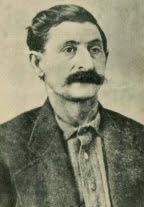
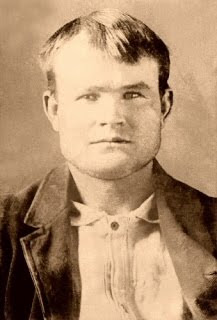
Photos?Top, Jesse Knight- Middle right, Big Nose George Parrott- Middle left, Shoes of George Parrott … literally- Bottom, Robert LeRo
y Parker, aka Butch Cassidy.

Lawrence Gooley has authored ten books and dozens of articles on the North Country’s past. He and his partner, Jill McKee, founded Bloated Toe Enterprises in 2004. Expanding their services in 2008, they have produced 19 titles to date, and are now offering web design. For information on book publishing, visit Bloated Toe Publishing.

Women’s Writes: A Reading and Writing Workshop

The weekend of March 3rd and 4th, Historic Huguenot Street (HHS) is presenting Women’s Writes, a reading and writing workshop featuring two popular authors, Nava Atlas and Kate Hymes. The weekend kicks-off on Saturday, March 3, at 3pm with a guided tour of HHS’s Deyo House, which is set and interpreted in the Edwardian period, a popular time for many celebrated women authors.

At 4pm, Nava Atlas will read from her latest book, The Literary Ladies’ Guide to the Writing Life, which explores the writing life of twelve celebrated women writers, including such renowned authors as Jane Austen, Charlotte Bronte, Madeleine L’Engle, Anais Nin, George Sand, Edith Wharton, and Virginia Woolf through their journals, letters, and diaries. On Saturday evening at 7, the Wallkill Valley Writers will read from their anthology which includes personal essays, poems, and stories.

Sunday, March 4 will feature two three-hour Wallkill Valley Writers Workshops led by Kate Hymes. Session 1 is from 9– 12pm and Session 2 is from 1-4 pm. Anyone with a desire to write, whether a beginner or experienced, is invited to attend these workshops which will be held in a safe environment. Sources culled from the HHS archives and other local history will serve as an inspiration for writing throughout the weekend.

Saturday includes a book signing and refreshments. Fees are as follows: Saturday Deyo House Edwardian tour and reading with Nava Atlas: $15. Saturday evening reading with Wallkill Valley Writers: $5. Sunday per session: $40. Full weekend including one workshop on Sunday: $50.

To register or for more information, call 845-255-1660, x103 or email Jan Melchior at [email protected].

About the Presenters

Nava Atlas is the author and illustrator of visual books on family themes, humor, and women’s issues, including The Literary Ladies’ Guide to the Writing Life (2011), exploring first-person narratives on the writing lives of twelve classic women authors, and commenting on the universal relevance of their experiences to all women who love to write. Secret Recipes for the Modern Wife (2009) is a satiric look at contemporary marriage and motherhood through the lens of a faux 1950s cookbook. Nava Atlas is also the author and illustrator of many books on vegetarian cooking, a book on leafy greens will be on the shelves in the spring of 2012. An active fine artist specializing in limited edition artist’s books and text-driven objects, her work is shown and collected by museums and universities across the U.S.

Kate Hymes, a poet and educator living in the Hudson Valley, leads weekly writing workshops and writing retreats. She has over twenty years experience as an educator with experience teaching writing on college level, and over ten years leading workshops for people who make writing an artistic practice. Kate is certified to lead workshops using the Amherst Writers and Artists method. She has co-led trainings with Pat Schneider and other AWA instructors to teach others how to lead workshops. Kate and Pat also lead the workshop: If We Are Sisters: Black and White Women Writing Across Race. Kate serves as Executive Director of the Hudson Valley/Catskill Partnership: Regional Adult Education Network providing technical assistance and staff development to adult educators in a ten-county region of New York State. Kate currently serves as a member of the Dutchess County Arts Council and as panelist for Special Project, New York State Council on the Arts. She has a Master of Arts in American Literature from SUNY Stony Brook.

History Habits: National Parks Passports for Kids

History Habits is a series designed to offer activities to parents to encourage their children’s love and enjoyment of history. The goal is to provide parents with tools they can use to stimulate your children’s active involvement in the history that surrounds them every day.

Next time you go exploring either locally or across the country, do not forget your Passport. That is your Passports to Your National Parks and, most importantly for parents, do not forget to bring along your Kids’ Passport to Your National Parks Companion. Passports are a way to &#8220record&#8221 your visits to National Parks, Monuments, Recreation Areas, etc. National Park visitors centers and book stores usually have passport stations where you can stamp your books with their location stamp. (Many sites in New York actually have more than one stamp.) The cancellations, similar to those received on an international passport, record the name of the park and the date you visited.

“It is always a delight for me to see families with children come to Martin Van Buren National Historic Site and the first thing they ask for is the stamp for their NPS passports” explains Park Superintendent Dan Dattilio. “Once they get that important task done they
go out and enjoy the park.”

As a parent of two preschoolers, I have seen these passports engage my children by creating a fun learning experience. What I really appreciate is the Kids’ Passport to Your National Parks Companion is an owner manual to the National Parks for children. This companion allows children (guided by parents) to develop a connection with history and the natural world. I hopeful someday my children will appreciate having this record and that is will spark great memories.

These passports provides background information on the National Park Service (NPS) and encourages children to use all of their senses to explore parks. There is plenty of space to record observations, sketch plants and animals, list accomplishments, track visits, and even collect park ranger autographs. The collecting of autographs has created a dialogue between my children and the Park Rangers. It is great fun to see the children engaged in learning and it is my hope that this is the first step in creating stewards for history and National Park sites.

Passports are easy to obtain. You don’t even need a birth certificate or photo. Most NPS visitors centers sell the spiral-bound 6 x 3.5 inch passports and a special Kids’ Passport to Your National Parks Companion for $13.95. For further information call Eastern National 1 (877) NAT-PARK or go to www.eparks.com.

One suggestion for parents to extend the learning is to bring extra index cards and collect each cancellation stamps on its own index card. This allows for scrap booking the stamp with photos from the site to create a memory book.

If you want to dig deeper into NPS cancellation stamps, think of joining the National Parks Travelers Club. This is a nonprofit, hobbyist organization that have an entire list of where NPS stamps and non-NPS stamps (lighthouses, National Registry homes, State Parks, etc) are located. It is free to join the discussion boards for information on National Park travel or for $10 a year one has access to the entire stamp database, as well as Google Earth maps to each location.

Cancellation sites in New York include:

African Burial Ground NM—New York City

Castle Clinton NM—New York City

Eleanor Roosevelt NHS—Hyde Park

Ellis Island—New York City, N.J./N.Y.

Erie Canalway NHC—Waterford, Buffalo,Rome, Stillwater, Seneca Falls, AKWAABA, Amherst Museum, Burden IronWorks, Camillus Erie Canal Park, Chittenango Landing Canal Boat Museum, Day Peckinpaugh, Erie Canal Discovery Center, Erie Canal Museum, Erie Canalway Visitor Center, Historic Palmyra Museums, Mabee Farm HS, Mary Jemison, Port of Newark Canal Park, RiverSpark VC, Rochester Museum & Science Center, Sam Patch, Sch’dy CHS History Museum, Schoharie Crossing SHS, Seneca Museum of Industry & Waterways, Spencerport Depot & Canal Museum, UGR History Project

Federal Hall N MEM—New York City

Fire Island NS—Wilderness, Watch Hill, Lighthouse, Sailors Haven, William Floyd Estate, Patchogue, Long Island

Fort Stanwix NM—Rome

Gateway NRA—Jamaica Bay- Floyd Bennett Field, Brooklyn- Wildlife Refuge District, Queens- Breezy Point, Fort Tilden, Ft. Wadsworth- Miller Field, Staten Island- Great Kills Park, Staten Island

General Grant N MEM—New York City

Governors Island NM—New York City

Hamilton Grange NM–New York City

Home of Franklin D. Roosevelt NHS–Hyde Park

Lower East Side Tenement Museum NHS— New York City

Manhattan Sites–Federal Hall, St. Paul’s Church NHS Mount Vernon, General Grant New York City

Martin Van Buren NHS—Kinderhook

North Country National Scenic Trail

Sagamore Hill NHS—Oyster Bay, Sagamore Hill Nature Trail, Roosevelt Museum at Old Orchard,

Saint Paul’s Church NHS–Mount Vernon

Saratoga NHP—Stillwater

Statue of Liberty NM—New York City

Theodore Roosevelt Birthplace NHS—New York City

Theodore Roosevelt Inaugural NHS—Buffalo

Thomas Cole NHS—Catskill

Upper Delaware SRR—Narrowsburg, Zane Grey Museum

Vanderbilt Mansion NHS—Hyde Park,

Women’s Rights NHP—Seneca Falls, M’Clintock House

Sean Kelleher. Kelleher is the Historian for the Town of Saratoga and Village of Victory in the Upper Hudson Valley. As an educator, he was a New Hampshire Council for the Social Studies Executive Board member and the Director of the New Hampshire Teacher Training Institute for Character and Citizenship Education.

Brooklyn Museum Plans New Museum Gift Shop

A completely new, significantly larger Brooklyn Museum Gift Shop, designed by the architectural firm Visbeen Associates, is opening Wednesday April 4, 2012 in space previously devoted to temporary exhibitions. At 4,150 square feet, the new shop is 1,600 square feet larger than the shop it replaces. The store is part of a multiphase transformation of much of the Museum’s first floor designed by Ennead Architects that has already resulted in an extensive renovation of the Museum’s historic Great Hall and the creation of a major new exhibition space.

&#8220The major goals of the new design for the first floor of the Museum have been to create a more coherent visitor experience, larger footprints for the Museum’s shop, restaurant, and exhibition galleries, and space to create a remarkable installation of major works from the Museum’s permanent collections,&#8221 comments Museum Director Arnold L. Lehman.

&#8220The design for the new Museum Shop has created a significantly enhanced shopping environment for our visitors along with an exciting new approach to merchandising. The shop will offer a fresh selection of unique items related to the world cultures represented in the Museum’s rich permanent collection. An important feature will be products from both established as well as emerging Brooklyn designers and artisans,&#8221 states Vice Director of Merchandising Sallie Stutz.

The newly created store will be organized around an arc shape that will be reflected in a curved jewelry counter in the center that forms the focal point of the space and will be echoed in a coffered ceiling containing recessed lighting. Two light fixtures, created by Brooklyn artist David Weeks, will be focal points of the design. The shop will feature 225 linear feet of lightly stained oak casework with metal fittings, with additional free standing fixtures in which merchandise will be displayed.

The new space, along the east side of the front facade of the building, was originally built in 1904 and is one of the oldest sections in the nearly 600,000-square-foot landmark building designed by McKim, Mead, & White. A wider entrance to the shop from the Lobby will provide greater visual access to the Great Hall, assisting circulation, and a rear entrance will connect it to planned temporary exhibition galleries.

One of the first in a museum in the United States, the Brooklyn Museum Shop began in 1935 as a sales desk offering publications, postcards, and photographs of objects in the Museum’s collections. In 1954 it evolved into a Gallery Shop that specialized in toys and original folk art and crafts from around the world, as well as objects related to special exhibitions. In 1963-64, the Museum Shop produced the first shopping bag created by a museum, featuring a four-color graphic.

Following the April opening of the Museum Shop, the next phase of the first-floor transformation, scheduled for completion in late summer of 2012, will include a new Museum restaurant and cafe, a bar, and an outdoor dining terrace, all planned to be opened for lunch and dinner. The dining room will also accommodate special functions. Casual dining areas will overlook the Steinberg Family Sculpture Garden. There will be direct access to the various dining areas and bar from the Museum’s 350-car parking lot.

The final phase of the first-floor renovation will transform space that has been occupied by the current Museum Cafe into special exhibition galleries that will add 50 percent more floor space to the previous temporary exhibition gallery, the Robert E. Blum Gallery.

The first-floor renovation continues a major redesign of the Museum’s ground level that began in 2004 with the opening of the Martha A. and Robert S. Rubin Pavilion, the Ennead-designed and critically acclaimed front entrance, as well as the renovated lobby, newly created front plaza and South Entrance, and expanded parking facilities.

Major support for the Museum’s extensive first floor renovation project has been provided by the City of New York through the Department of Cultural Affairs and the City Council.

Support has also been provided by Martha A. and Robert S. Rubin, Arline and Norman M. Feinberg, and Lisa and Dick Cashin.

Illustration: Brooklyn Museum Retail Shop Sketch by Visbeen Associates.

Statue of Liberty Book Celebrates 125 Years

A new book written in celebration of the Statue of Liberty’s 125th birthday (October 28, 2011) has been published to support projects of The Statue of Liberty-Ellis Island Foundation. The Statue of Liberty: A Symbol of Hope and Freedom for 125 Years, is a commemorative, photo-and-fact-filled journal that spans the statue’s beginnings as an idea of French sculptor Frederic Auguste Bartholdi, to becoming a symbol of welcome to millions of immigrants, her quirky role in American pop culture, and the historic 1986 restoration.

The book is offered for $9.99 through the Ellis Island online gift shop. Proceeds support the The Statue of Liberty-Ellis Island Foundation.

Note: Books noticed on this site have been provided by the publishers.

Call For Papers: Textile History Forum

The Textile History Forum, to be held June 8th-10th, 2012 at Hyde Hall in Springfield, NY, seeks papers and presentations on all aspects of textile history from the Pre-Columbian period through the twenty-first century, including textile technology, costume, quilts, weaving, dyeing, spinning, technological innovations, and textile availability. Current and unpublished research is especially encouraged.

Those interested in presenting a paper at the Forum should submit a one-page proposal by March 31st, 2012. Proposals chosen for presentation will be announced by May 1, 2012. Final papers are due by May 31st. Authors will retain copyright and are free to publish their work in other venues. Final papers should be no more than 16 pages long, including citations, bibliography, and illustrations. Read more

Ten Tea Parties: Protests that History Forgot

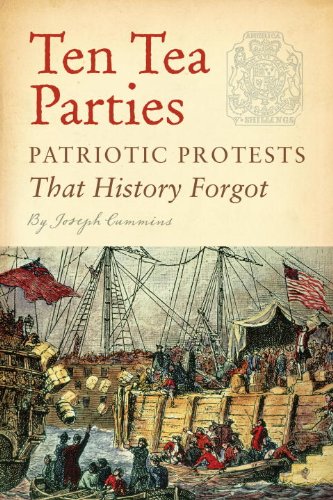
Everyone knows about the Boston Tea Party, where angry colonists hurled 92,000 pounds of tea into Boston Harbor, but few realize it was part of a larger movement that swept across the colonies through the late 1700s. New York, New Jersey, Pennsylvania, Maine, North Carolina all had their own versions of the now celebrated theft and destruction of private property protest. A new book by historian Joseph Cummins, Ten Tea Parties: Patriotic Protests that History Forgot, (Quirk Books, 2012) highlights some of those protests, and includes an appendix with eight more.

Cummins includes the story of Philadelphian Samuel Ayres, who was nearly tarred and feathered by a mob of 8,000 patriots, and that of Annapolis, MD, where 2,320 pounds of tea was burned to ashes. He also includes a short history of the East India Company, which was the world’s most powerful trading company for 250 years and relates how the men who participated in the Boston Tea Party kept their identities hidden for over 40 years fearing civil suit from the East India Company.

Note: Books noticed on this site have been provided by the publishers. Purchases made through this Amazon link help support this site.

Hendrick Vrooman Family Being Celebrated

The Schenectady County Historical Society (32 Washington Ave., Schenectady), will hold a celebrate the life and legacy of Hendrick Meese Vrooman, a Dutch settler who came to Schenectady in 1664 and was ultimately killed in the 1690 Massacre. Vrooman was the father of Adam and Jan Vrooman, who came with their father from Holland and many of whose descendants still live in the Schenectady and Schoharie County area.

A letter written by Vrooman in 1664, along with many other letters, were seized by the English from Dutch ships during the 17th-century Anglo–Dutch wars. These seized letters were recently discovered in the archives in Kew, England. In Vrooman’s letter, he comments on the changing rule in the colonies from Dutch to English, and describes his life in Schenectady: “It has been a good summer there. Very fine corn has grown there and the cultivation was good and the land still pleases me. At snechtendeel [Schenectady and the surrounding area] the land is more beautiful than I have ever seen in Holland.”

The Dutch national television station KRO will be filming this event for its program “Brieven Boven Water” (roughly translated as “Surfacing Letters”). The program attempts to make contact with living descendants of people who wrote the seized letters.

Descendants of Hendrick Meese Vrooman are especially encouraged to attend this event- the Grems-Doolittle Library staff and volunteers can help trace lineages back to the Vroomans. Please contact the Librarian for assistance.

The event will be held at the Historical Society on Thursday, February 9, at 2:00 p.m. The cost is $5.00 for the general public- Free for Schenectady County Historical Society members. For more information, please contact Melissa Tacke, Librarian, 518-374-0263, option 3, or by email at [email protected].

Illustration: Map of Schenectady in 1690, courtesy Brown and Wheeler Family History.

This Weeks Top New York History News

  • JFK Library Releasing Last Secret Tapes
  • Brooklyn Historic Skyscraper District Upheald
  • Manning Marable Up For US Critics Award
  • Ancestry, Historical Society of PA Partner Online
  • AHA 2013 Call for Proposals
  • Irish American Museum Opens
  • South St Seaport Museum Reopens
  • Seaway Trail Director Mitchell Dies
  • 2 Champlain Society Pubs Digitized
  • Each Friday morning New York History compiles for our readers the previous week’s top stories about New York’s state and local history. You can find all our weekly news round-ups here.

    Subscribe! More than 2,300 people get New York History each day via E-mail, RSS, or Twitter or Facebook updates.