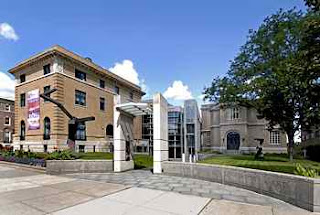
Native Encampment at Champlain Maritime Museum

There will be a Native American Encampment event on Saturday and Sunday, June 19-20, 2010, 10am-5pm daily at the Lake Champlain Maritime Museum, 4472 Basin Harbor Rd, Vergennes, VT.

Dressed in clothing of earlier times, members of El-nu and Missisquoi Abenaki portray their ancestors and share traditional life skills, tools, clothing, personal adornments, and weapons used by Native Americans in the Champlain Valley through the centuries. Event includes traditional songs, cooking and camp skills, wampum readings, Native American weapons and armor, film showings and much more. Participating craftspeople combine archaeological evidence with personal expression to create beautiful and utilitarian objects.

Fredrick M. Wiseman, PhD will describe the sophisticated crafts and technologies of the region’s indigenous people and sign his newest publications, Champlain Tech, and Baseline 1609, which provide new insight into the region’s earliest and most enduring craft traditions.

Register in advance for on-water Paddle to Prehistory Sunday June 20. Information: 802 475-2022, [email protected], www.lcmm.org.

Fenimore Museum Lecture on John Singer Sargent

Join Patricia Hills, Professor of Art History at Boston University, for an insightful lecture on John Singer Sargent’s male subjects titled &#8220Sargent’s Men.&#8221 Known for his superb portraits of women, John Singer Sargent could paint equally stunning and brilliant portraits men. Whether they be informal sketches of his artist friends or stately portraits of American international financiers, French literary types, English aristocrats, or Bedouin chieftains, he knew how to collaborate with his sitters to fashion an attractive and commanding persona.

The lecture takes place Saturday, June 19 at 2:00 p.m. in the Fenimore Art Museum auditorium and is free with paid admission to the Museum. NYSHA members are free.

The lecture is just a portion of the programming that accompanies the new exhibition John Singer Sargent: Portraits in Praise of Women. Visit FenimoreArtMuseum.org for more information.

Albany Institute Announces Summer Family Programs

The Albany Institute of History & Art has announced its summer art programming schedule for children and families. Programs are designed to offer children and their adult companions an opportunity to experience a wide range of artistic workshops and creativity-based lessons, experienced in combination with the museum’s current exhibits and collections. Programs to be offered are as follows:

THREE-DAY ART CAMPS

9:00 a.m.–noon (ages 6–8), 1:00–4:00 p.m. (ages 9–11)
Students will deepen their engagement in the artistic process and share their creations on the third day of the workshop at a show of the students’ work. Classes are taught by a NYS certified art educator. Program fee of $60 for non-members and $45 for members includes materials and museum admission for all three days.
June 29, 30, and July 1: Masterpiece Puppet Theater—Create an original puppet show with your own marionettes.

August 31, September 1 and 2: Art That Goes—Use art and objects related to transportation as inspiration for your own work.

THE ’TUTE FOR TOTS

Wednesdays through July and August, 10:00–11:30 am (ages 3–5)

An inspiring setting gives preschool children and their adult companions a chance to become familiar with the museum and explore and grow through art. Gallery visits are followed by an art activity in our studio. Workshops last one-and-a-half hours and are taught by a NYS certified art educator. Program fee: $5 per person for non-members or $4 per person for members.

July 7–Fishy Drawings

July 14–Resist Painting

July 21–Textures and Shapes

July 28–Funny Faces Sculptures

August 4–Popsicle Stick Buildings.

August 11–Animal Collage

August 18–Vegetable Growth Cycles Book

August 25–Landscape Collage

SUMMER IN THE CITY

Wednesdays through July and August, 1:00–4:00 p.m. (ages 12–15)

Experience the art of Albany. Instructors will lead neighborhood walks to examine shape, color, pattern, texture, and architecture. Use a variety of materials to create a collage inspired by the landscape design of Washington Park. Classes are taught by a NYS certified art educator. A fee of $20 per class for non-members and $15 for members per class includes materials and museum admission. Great for home school students.

July 7–One-Point Perspective Drawings

July 14–Watercolor Facades

July 21–Collagraph Building Prints

July 28–Ceramic Gargoyle Faces

August 4–Tunnel Book Cities

August 11–One Picture, Many Media

August 18–Botanical Brown Bag Books

August 25–Landscape Collage

THURSDAY ART WORKSHOPS

Through July and August, 9:00 a.m.–noon (ages 6–8)- 1:00–4:00 p.m. (ages 9–11)

Emphasizing fine art techniques, materials and vocabulary, children will experience inspiration and the many ways in which artists work. Classes are taught by a NYS certified art educator. A fee of $20 per class for non-members and $15 for members per class includes materials and museum admission.

July 8–Creating Mystery Creatures

July 15–Still-Life

July 22–Fabric Collage Totes

July 29–Textured Tessellations

August 5–My Fantastic Room

August 12–Photography: Making the New Old

August 19–Botanical Brown Bag Books

August 26–Narrative Collage

More information and online registration is available through the Albany Institute’s website at www.albanyinstitute.org. Public requests for additional information should be addressed to Barbara Collins, Education Coordinator, (518) 463-4478, ext. 405- [email protected].

Books: Silver Seasons of Rochester Baseball

Taking us back to the early nineteenth century, when baseball was played in the meadows and streets of Rochester, New York, Silver Seasons and a New Frontier: The Story of the Rochester Red Wings retraces the careers of the players and managers who honed their skills at the city’s Silver Stadium and later at Frontier Field. The many greats who played for the Rochester Red Wings—Stan Musial, Cal Ripken, Jr. (who provides the book’s forward), Bob Gibson, Boog Powell, Jim Palmer, Eddie Murray, and Justin Morneau are among those brought to life in this story rich with quirky performances and poignant moments.

This updated version of Silver Seasons: The Story of the Rochester Red Wings, first published in 1996, includes three new chapters covering the team’s record-setting tenth International League championship, being named top minor league franchise by Baseball America, and their new affiliation with the Minnesota Twins.

Silver Stadium opened in 1929, as Red Wing Stadium, in the middle of a thriving urban residential neighborhood which later fell into decline. In late 1956, the St. Louis Cardinals, then the major league affiliate of the Rochester Red Wings considered abandoning the franchise. In response, Morrie Silver, a Rochester businessman, spearheaded an effort to purchase the team and the stadium was renamed Silver Stadium in 1968. Although renovated in the 1980s, the desire for corporate suites and better parking led to the construction of Frontier Field, a new stadium located in downtown Rochester, which opened in 1996- Silver Stadium was demolished the following year is now an industrial and office park.

Silver Seasons tracks the history of the two stadiums and the teams that played there and in the process recalls moments like the longest game in pro baseball history, a thirty-three-inning affair between the Red Wings and the Pawtucket Red Sox that stretched from April to June. Highlights also include one of the greatest teams in minor league history, the 1971 Junior World Series champion Red Wings, homers hit by Estel Crabtree in 1939 and Jim Finigan in 1961 and the unlikely Red Wings championship in the first season at their new park in 1997.

About the Authors
Jim Mandelaro has covered the Rochester Red Wings for the Democrat and Chronicle since 1991. He has twice been honored as Sportswriter of the Year by the Rochester Press-Radio Club. He was inducted into the Frontier Field Walk of Fame in 2007.

Scott Pitoniak is the author of ten books, including Memories of Yankee Stadium. He was inducted into the Frontier Field Walk of Fame in 1999 and the Newhouse School of Public Communications Hall of Fame in 2000.

Note: Books noticed on this site have been provided by the publishers. Purchases made through this Amazon link help support this site.

Finger Lakes Museum, State Announce Partnership

The president of the Finger Lakes Museum and the Regional Director of Finger Lakes State Parks have announced the formation of a partnership that will work to move the proposed Finger Lakes Museum forward. In April, the museum’s board of trustees announced that Keuka Lake State Park had been selected as the preferred site for a world­class museum that is planned to showcase the cultural and natural history of the 9,000 square­mile Finger Lakes Region.

Museum president, John Adamski, said that board members and Office of Parks, Recreation, & Historic Preservation (OPRHP) officials from Albany and the region have already met and toured the park as the first step in developing a joint master plan for the museum and public use of state parkland. Regional parks director, Tim Joseph, arranged the meeting and led the tour.

A little­-used 60­-acre section at the north end of the park, bordering Route 54A, is
being considered as the location for the museum’s main campus. Opportunities for interpretive exhibits in other areas of the park are also being examined. Camping and public use of the existing beach, facilities, and boat launch will not be affected.

Andy Beers, OPRHP Executive Deputy Commissioner, stated that while the agency will not be involved in funding the $40 million project, it will make its expertise and services available to help museum organizers develop their plans.

The Finger Lakes Museum is a privately held not-­for­-profit educational institution that was chartered by the New York State Board of Regents in 2009. While some federal and state funding may be available through grant programs, the bulk of the funding is planned to come from private sources and corporations.

In other developments, museum trustee and former site selection committee chairman, Don Naetzker, resigned from the board in May to accept a paid position as the museum’s Project Manager. A licensed landscape architect and professional land planner, Naetzker will coordinate planning efforts with museum organizers, state parks, and architectural and exhibit designers. His recent master planning projects include Frontier Field, Corn Hill Landing, and Charlotte Harbor at the Port of Rochester.
Commercial real estate developer and president of the Finger Lakes Visitors Association, David Wegman, was elected to the museum’s board of trustees in May. He is also owner of Esperanza Mansion Inn and Restaurant in the hamlet of Keuka Park and the tour boat, Esperanza Rose, which offers dinner cruises on Keuka Lake. Wegman was instrumental in bringing the Finger Lakes Museum to Keuka Lake State Park.

Photo: Finger Lakes Museum board members and officials from the state Office of
Parks, Recreation & Historic Preservation met last month in order to develop a joint
master plan for Keuka Lake State Park. From left to right: Don Naetzker, FLM project manager? Tim Joseph, Finger Lakes State Parks Regional Director? Mike Wasilco, DEC Region 8 wildlife biologist? Andy Beers, OPRHP Executive Deputy Commissioner? Chris Pushkarsh, OPRHP, Tom Alworth, OPRHP? Bill Banaszewski, FLM? John Adamski, FLM president? John Eberhard, OPRHP? Henry Maus, FLM? Jim Zimpfer, OPRHP? Dan Davis, OPRHP? and Tom Lyons, OPRHP.

Rocking Another Boat at the Adirondack Museum

There is a new boat on the small pond at the Adirondack Museum, Blue Mountain Lake, New York. It is a Bisby Scow and will be used to provide a genuine &#8220on the water&#8221 experience for thousands of museum visitors this summer.

The new boat is a reproduction of one in the museum’s extensive collection. Although &#8220Adirondack&#8221 in design and history, this Bisby scow started life far from the North Country. The hand-made boat is the work of young boat builders from the Bronx, participants in Rocking the Boat, a non-profit youth development organization.

On Saturday, May 22, 2010, the boat building crew, accompanied by adult builders and faculty, delivered, christened, and launched the Bisby Scow on the museum pond. This is the second boat created by Rocking the Boat expressly for the Adirondack Museum. The first, a replica of an Adirondack logging bateau, was launched in 2007.

Rocking the Boat is a traditional wooden boat building and environmental education program based in the southwest Bronx, New York City. Through an alternative multi-faceted hands-on approach to education and youth development, Rocking the Boat addresses the need for inner city youth to achieve practical and tangible goals, relevant to both everyday life and future aspirations. The program was founded in 1995.

Young people enrolled in the program have built well more than twenty boats over the time, and Rocking the Boat is recognized as one of the most dynamic after school and summer programs in New York City. For more information, visit www.rockingtheboat.org.

Museum Curator Hallie Bond, who coordinated the project, says that a member of the Bisby Club designed the original Bisby Scow in 1888. The craft was intended for all-purpose every day use and few exist today. The Bisby Scow in the collection of the Adirondack Museum &#8211 a rare survivor &#8212- dates from the 1920s: the name of the builder is unknown.

The Adirondack Museum has the second largest collection of inland wooden watercraft in the United States. Many extraordinary examples are on display in the popular exhibit &#8220Boats and Boating in the Adirondacks, 1850 &#8211 1950.&#8221

Photo: Young boat builders from the Rocking the Boat project with their new boat, christened Naomi II.

Residents of The Grinnell Launch Centennial Celebration

The residents of The Grinnell, a land-marked nine-story, triangular cooperative apartment house at 800 Riverside Drive in the Audubon Park Historic District, will begin a year-long celebration of their building’s centennial on June 10, 2010.

Heralding the festivities is the launch of www.TheGrinnellat100.com, a website combining oral history, media clips, historical essays, and images spanning the building’s 100-year history. The year’s events will also include centennial logo and photography competitions, exhibitions in the Grinnell’s community room, apartment tours, a gardening project, and a birthday party. A calendar of events is available on the website.

Constructed between June 10, 1910 and July 23, 1911, the Grinnell sits on a triangular plot of land in Washington Heights where the family of George Blake Grinnell once pastured a few cows when the surrounding area was known as Audubon Park. “The Park,” a bucolic suburb that grew out of John James Audubon’s farm Minnie’s Land, remained suburban into the 20th Century, but became prime property for real estate development when the subway opened at 157th Street in November 1904. Six years later, when the extended Riverside Drive opened, its path crossing Audubon Park, the Grinnell heirs, led by eldest son George Bird Grinnell, sold their property. Developers quickly snapped it up and between 1909 and 1911 erected a group of Beaux Arts apartment houses. Noting the effects of rapid transit, newspaper commentators dubbed the two-year period Audubon Park’s “rapid transformation.”

Like neighboring apartment buildings, the Grinnell lured the prosperous middle-class uptown with amenities such as uniformed staff, spacious apartments “adapted to those accustomed to private houses,” enameled woodwork and paneled dining rooms, and proximity to the subway (“only 200 feet”) – all at prices “30% less than the Middle West Side.” Built around an airy courtyard, The Grinnell remained a fashionable building through the Great Depression, usually fully occupied. In the late 1940s, the Evangelist Daddy Grace bought the Grinnell, considering it and the Eldorado on Central Park West the prime properties in his real estate portfolio. Both were part of his estate when he died in 1960. Although Daddy Grace reputedly refused to integrate his properties, the actress, playwright, and author Alice Childress lived at the Grinnell from the 1950s into the 1970s, though in the ‘50s, she was certainly an exception, rather than the rule.

During the 1970s, the Grinnell suffered landlord neglect as did many apartment buildings in Manhattan. Grinnell tenants organized and demanded better services, eventually resorting to a rent strike to force the owner into providing basic amenities such as heat and hot water. When the landlord abandoned the Grinnell, owing large tax and utility bills, the residents began the arduous process of assuming management of the building, eventually buying it from New York City in 1982. The resulting co-op became The Grinnell, HDFC (Housing Development Finance Corporation).

During the ensuing three decades, determined boards of directors and dedicated residents revived what was virtually a dead building, replacing and upgrading building systems and restoring common areas to their original beauty. Individual co-op shareholders have restored their apartments, improving their personal investments as well as the co-op’s financial health.

The centennial events will celebrate these achievements as well as the diversity of the Grinnell’s population. From a homogenous population at the beginning of the 20th Century, the Grinnell has progressed to a multi-cultural, multi-ethnic population mirroring the city around it.

A theme running through the centennial celebration is the Grinnell’s place in its community. Grinnell residents actively supported the Audubon Park Historic District effort and are the first private participants in the Heritage Rose District of New York City, a project sponsored by Borough President Scott Stringer’s office. During the centennial year, the Grinnell garden committee will increase its heritage rose collection to thirty bushes, all of them fully visible to the neighborhood, and will dedicate its Heritage Rose Garden in June 2011. An exhibition in September 2010, “The Ground beneath Our Feet,” will trace the close ties between the Grinnell and land surrounding it. A photo competition and exhibition in February 2011 will focus on the Grinnell’s neighbors- submissions must be views of the neighborhood as seen from the Grinnell’s windows. All events, including the Grinnell’s birthday party on October 17, 2010, will be open to the public.

Civilian Conservation Corps Program, Reunions

On Friday, June 25th, 2010, the Schenectady County Historical Society will host a reunion of Civilian Conservation Corps (CCC) alumni, family, & friends, from 10:00 am to noon at 32 Washington Avenue, Schenectady, NY. Marty Podskoch, CCC researcher, will give a short presentation and will invite participants to share memories of the camps.

The Civilian Conservation Corps (CCC) began on March 31, 1933 under President Roosevelt’s “New Deal” to relieve the poverty and unemployment of the Depression. Camps were set up in many New York towns, state parks, & forests. Workers built trails, roads, campsites, dams, fire tower observer’s cabins & telephone lines- fought fires- stocked fish- and planted millions of trees. The CCC disbanded in 1942 due to the need for men in WW II.

A part of the history of the CCC was saved recently by the daughter of a man who was in one of the camps. She donated a CCC Schenectady District yearbook for 1937 to the Historical Society. The yearbook has a history of the District, along with photos of officers and the men at the camps. Many men from Schenectady were in Company 219 (Cherry Plain, NY)- and Company 222 (Middleburg, NY).

Marty Podskoch is a retired teacher and the author of five books: Fire Towers of the Catskills: Their History and Lore, two Adirondack fire tower books: Adirondack Fire Towers: Their History and Lore, the Southern Districts, and Northern Districts and two other books, Adirondack Stories: Historical Sketches and Adirondack Stories II: Historical Sketches from his weekly illustrated newspaper column.

Presently, Marty Podskoch is conducting research on the Civilian Conservation Camps in the Adirondacks and Connecticut. He is interested in meeting individuals who may have CCC stories to contribute to his next book. Marty Podskoch will have all of his books available after the presentation for sale and signing. For those unable to attend this reunion, Marty Podskoch has planned five other reunions:

June 22 6:30 pm Oneida Historical Society, 1608 Genesee St., Utica (315) 735-3642
June 23 6:30 pm Franklin Co. Hist. Society, 51 Milwaukee St. Malone (518) 483-2750
June 26 1 pm Fulton Co. Hist. Society, 237 Kingsboro Ave., Gloversville (518) 725-8314
June 27 2 pm Bolton Landing Hist. Society, Bolton Free Library (518) 644-2233

For more information on the reunion in Schenectady, contact Katherine Chansky,Librarian/Archivist, Grems-Doolittle Library at: (518) 374-0263, [email protected]. The Schenectady County Historical Society is wheelchair accessible, with off-street parking.

If any one has information or pictures to share of relatives or friends who worked at one of the CCC camps, please contact, Katherine Chansky (518) 374-0263 at the Grems-Doolittle Library, or Marty Podskoch at: 36 Waterhole Rd., Colchester, CT 06415 or 860-267-2442, or [email protected]