Free Admission to Adirondack Museum For Locals

The Adirondack Museum is once again extending an invitation to year-round residents of the Adirondack Park to visit free of charge from October 1 &#8211 18, 2010. Through this annual gift to close friends and neighbors, the museum welcomes visitors from all corners of the Adirondack Park. Proof of residency &#8211 such as a driver’s license, passport, or voter registration card &#8211 is required.

The museum is open daily, 10:00 a.m. until 5:00 p.m., through October 18, 2010. There is still plenty of time to enjoy the museum’s three special exhibits: &#8220Common Threads: 150 Years of Adirondack Quilts and Comforters,&#8221 &#8220Let’s Eat! Adirondack Food Traditions,&#8221 and &#8220A &#8216-Wild, Unsettled Country’: Early Reflections of the Adirondacks.&#8221

In addition to &#8220Common Threads&#8221 visitors can see contemporary quilts on display in the &#8220Great Adirondack Quilt Show&#8221 through October 18. The special show features nearly fifty quilts inspired by or used in the Adirondack Mountains.

NNY Museums, History Scaled Back Over Economy

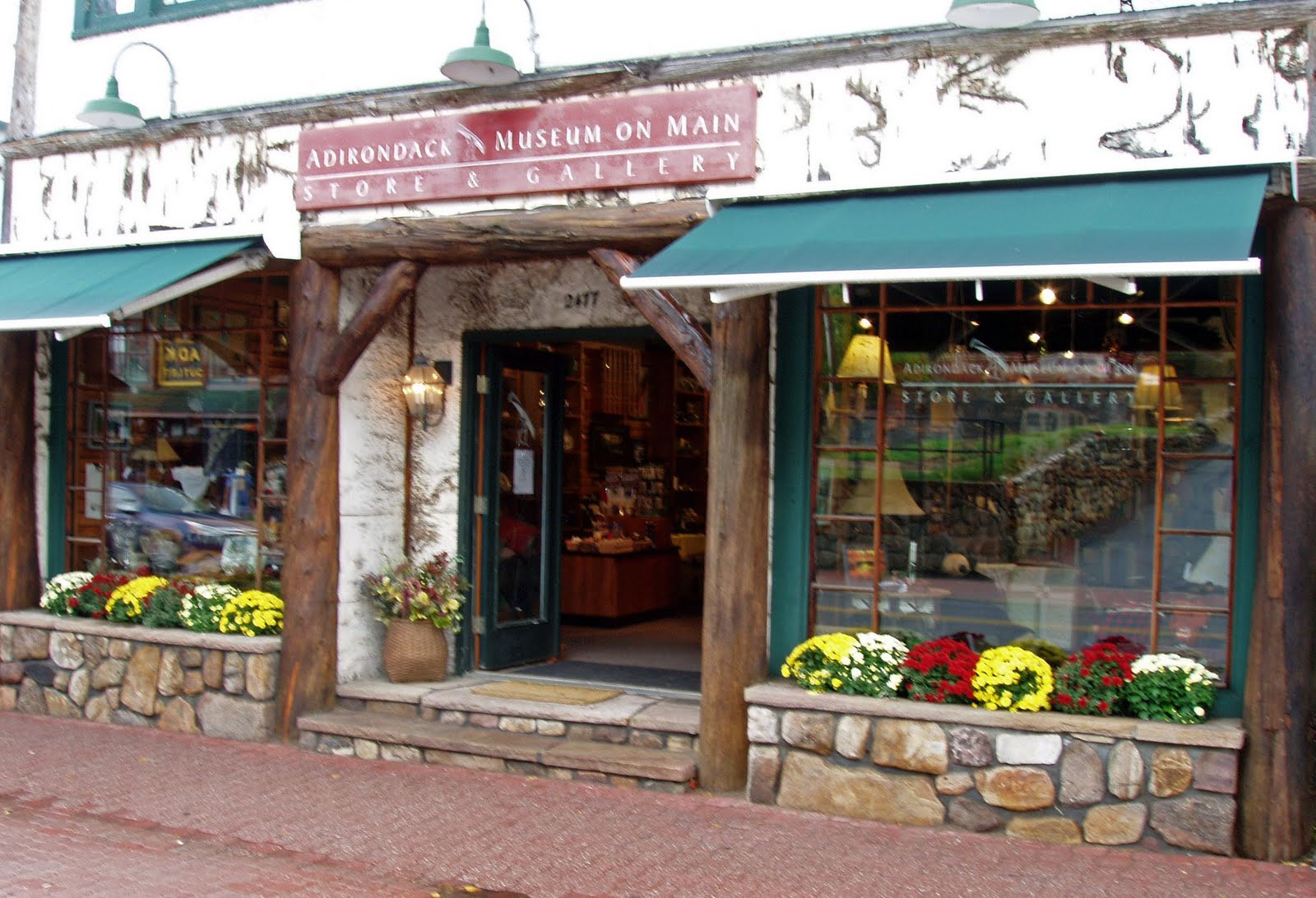
The Adirondack Museum in Blue Mountain Lake has announced that it will close it’s satellite retail store in Lake Placid on October 30th. The store, which opened in 2003, was an initial step in the museum’s long-range plan to reach out to communities in the Adirondack Park. Lake Placid was considered by museum officials to be the best place to begin.

&#8220The subsequent and continuing economic downturn have forced a strategic re-thinking of the museum’s plans,&#8221 Adirodnack Museum spokesperson Katherine Moore told the press in a recent announcement. &#8220At the present time it is no longer feasible to operate two retail operations and maintain a growing online sales presence.&#8221 The museum will concentrate its efforts and financial resources on the Blue Mountain Lake campus Moore told the press.

It’s the second set-back for the Adirondack Museum in Lake Placid. In June of 2008, the museum ended its plan to erect a building on Main Street to house a new branch of the museum and its existing store. That decision was made &#8220very reluctantly&#8221 museum officials said, citing a strained economic situation.

Last year, Adirondack Museum Marketing Director Susan Dineen told WNBZ that they were feeling the effects of the recession. “Like many large nonprofit institutions, our endowment has seen a downturn,” she told Chris Morris, “It’s unavoidable.” Dineen said today that the museum has not yet instituted a museum-wide hiring freeze or any layoffs. However, three employees at the Lake Placid store have been notified that their positions will be eliminated.

The Adirondack Museum’s economic travails are part of wider trend for local historical organizations. First Fort Ticonderoga faced financial ruin after Deborah Mars, a Ticonderoga native married to the billionaire co-owner of the Mars candy company Forrest Mars Jr., bailed on her long-time support for the fort just before completion of a new $23 million Deborah Clarke Mars Education Center. The Mars paid for nearly all of the new building’s construction but left before it was finished leaving Fort Ti about two million dollars in debt.

Then there was the well-publicized New York State Historic Site closure debacle that threatened the John Brown Farm in Essex County and the Macomb Reservation State Park and Point Au Roche State Park, both in Clinton County.

The long-awaited preservation of Rogers Island in Fort Edward is on hold after preservation funds dried up in July. Earlier this month, Governor David Paterson vetoed a bill that would have funded the celebration of the 200th Anniversary of America’s Second War of Independence, the War of 1812.

The news about the Adirondack Museum’s retreat was not the only troubling local museum news this week. The Lake Champlain Maritime Museum (LCMM) abandoned its plan to occupy a 7,000 square foot former generating plant on the Burlington waterfront. The LCMM had planned an installation of the museum’s collection of historic shipwrecks.

“The City of Burlington has done an outstanding job putting together a sound plan for redeveloping the Moran site, but the Maritime Museum has significant concerns about our ability to raise sufficient funds to participate in the project and the long-term financial sustainability of a future Moran maritime museum site. We felt our continued participation in the project, given our funding concerns, was not helpful to the City in meeting their overall goal of redeveloping the Moran site,” Art Cohn, Executive Director of the Lake Champlain Maritime Museum, announced.

Photo: The Adirondack Museum’s store on Main Street in Lake Placid. Photo courtesy Sarah and Marc Galvin, Owners of The Bookstore Plus in Lake Placid.

The Black Pirate Showing in Albany

&#8220The Black Pirate&#8221 (United States, 1926, 94 minutes, color, silent with live piano accompaniment provided by Mike Schiffer) will be shown on Friday, October 15 at 7:30 p.m. in the Recital Hall, Performing Arts Center, on the University at Albany’s uptown campus. Sponsored by the New York State Writers Institute, the screening is free and open to the public.

Starring the greatest of all swashbucklers, Douglas Fairbanks (who also wrote the script), &#8220The Black Pirate&#8221 is widely hailed as one of the most spectacular action films of the silent era. Directed by Albert Parker, the film also pioneered the art of color with its use of &#8220two-strip Technicolor.&#8221

For additional information contact the Writers Institute at 518-442-5620 or online at http://www.albany.edu/writers-inst.

Study: Audio Preservation, Access in Dire State

Digital technology alone will not ensure the preservation and survival of the nation’s sound history. That is one of the findings in a major study released by the Library of Congress National Recording Preservation Board (NRPB) detailing the state of sound-recording preservation and access. The study was mandated by the U.S. Congress under the &#8220National Recording Preservation Act of 2000&#8243- (P.L. 106-174) and is the first comprehensive study on a national level that examines the state of America’s sound-recording preservation ever conducted in the United States.

Titled &#8220The State of Recorded Sound Preservation in the United States: A National Legacy at Risk in the Digital Age,&#8221 the study outlines the interlocking issues that now threaten the long-term survival of America’s sound-recording history. It also identifies the public and private policy issues that strongly bear on whether the nation’s most culturally and historically important sound recordings will be preserved for future generations.

Although public institutions, libraries and archives hold an estimated 46 million recordings, the study finds that major areas of America’s recorded sound heritage have already deteriorated or remain inaccessible to the public. Only an estimated 14 percent of pre-1965 commercially released recordings are currently available from rights-holders. Of music released in the United States in the 1930s, only about 10 percent of it can now be readily accessed by the public.

In his introduction to the study, Librarian of Congress James H. Billington noted: &#8220Sound recordings have existed as one of the most salient features of America’s cultural landscape for more than 130 years. As a nation, we have good reason to be proud of our historical record of creativity in the sound-recording arts and sciences. However, our collective energy in creating and consuming sound recordings in all genres has not been matched by an equal level of interest, over the same period of time, in preserving them for posterity.&#8221

Authored by Rob Bamberger and Sam Brylawski under the auspices of NRPB, the study points out the lack of conformity between federal and state laws, which has adversely affected the survival of pre-1972 sound recording. One of the major conclusions in the report is that the advent of digital technologies and distribution platforms has made inseparable the issues surrounding both the preservation of sound recordings and access to them.

The authors also conclude that analog recordings made more than 100 years ago are likelier to survive than digital recordings made today. In addition, the report warns that there must be a coordinated effort by the various stakeholders to address the scope of the problem, the complexity of the technical landscape, the need for preservation education and the copyright conundrum.

Finally, the report notes that newer materials such as born-digital audio are at greater risk of loss than older recordings, such as 78-rpm discs- that there is a lack of a comprehensive program to preserve born-digital audio- and that open-reel preservation tapes made in the 1970s and 1980s are deteriorating faster than older tape recordings. For more findings from the report, review the appendix at www.loc.gov/today/pr/2010/PR10-194SRstudyAppendixwithkeyfindings.pdf and the introduction/executive summary at www.loc.gov/today/pr/2010/CLIRpub148Intro.pdf.

&#8220The State of Recorded Sound Preservation in the United States: A National Legacy at Risk in the Digital Age&#8221 is available for purchase and as a free download at www.clir.org/pubs/abstract/pub148abst.html. Information for this study was gathered through interviews, public hearings and written submissions. NRPB previously commissioned five ancillary studies in support of this final report, which will lay the groundwork for the National Recording Preservation Plan, to be developed and published later this year.

The Library of Congress Packard Campus for Audio Visual Conservation has already begun initiatives to solve some of the problems identified during preparation of the study. For example, the Recorded Sound Section of the Packard Campus has obtained a license to stream acoustical recordings controlled by the Sony Music Entertainment for the Library of Congress National Jukebox, which will debut later in 2010.

The Library of Congress Packard Campus for Audio Visual Conservation is a state-of-the-art facility funded as a gift to the nation by the Packard Humanities Institute. The Packard Campus is the site where the nation’s library acquires, preserves and provides access to the world’s largest and most comprehensive collection of motion pictures, television programs, radio broadcasts and sound recordings (www.loc.gov/avconservation/). The Packard Campus is home to more than six million collection items, including nearly three million sound recordings. It provides staff support for the Library of Congress National Film Preservation Board, the National Recording Preservation Board, and the National Registries for film and recorded sound.

Photo: Vice-President Elect Harry Truman’s family listening to election returns, 1944.

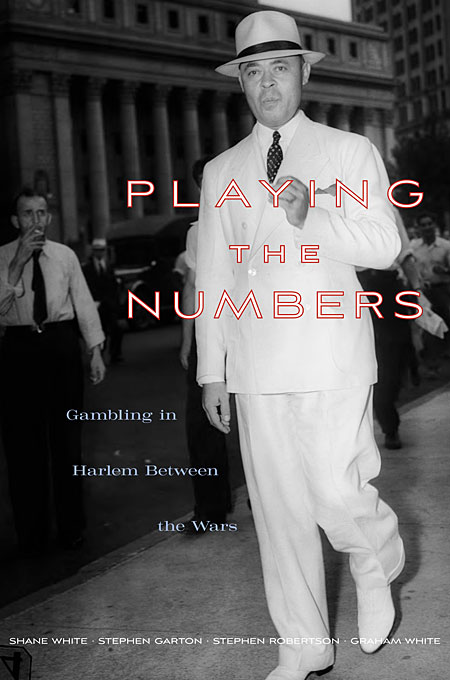
Harlem Vice: Playing the Numbers

In New York City during the 1920s, an employee of the New York Clearing House, an august downtown financial institution composed of the city’s elite banks, would descend every day and mark three numbers on a chalkboard, each of which was meant as a general economic indicator to be used by the financial industry. Two of these numbers were immediately copied down by a different sort of employee and phoned uptown to a different sort of bank, one whose doings possessed a good deal more relevance for the hundreds of thousands of African Americans who had recently transformed the sleepy neighborhood of Harlem into a budding “black metropolis.”

The uptown bankers, known colloquially as “kings” and “queens,” dealt not in stocks and bonds but in millions of paper slips, each one marked in pencil and each one representing a one, five, or maybe a ten-cent bet placed by a resident on the outcome of a three-digit number derived via a set formula from that day’s Clearing House results. “Playing the numbers” was a cultural institution in Harlem, one that about half the neighborhood’s population seems to have engaged in each day, one that tied them in strange ways to the city’s licit economy, but one that has been strangely understudied by scholars, who in the past have trained their focus largely on the high-cultural manifestations of Harlem’s remarkable flowering.

Playing the Numbers: Gambling in Harlem Between the Wars takes a different tack, utilizing the authors’ remarkable research to tell a story that illuminates the lives of the ordinary Harlemites who most often form little more than a colorful backdrop to accounts of the Harlem Renaissance. For a dozen years the “numbers game” was one of America’s rare black-owned businesses, turning over tens of millions of dollars every year. The astronomical success of “bankers” like Stephanie St. Clair and Casper Holstein attracted Dutch Schultz, Lucky Luciano, and organized crime, fresh off Prohibition and in need of a new hustle, to the game. By the late 1930s, most of the profits were being siphoned out of Harlem. All in all, Playing the Numbers reveals a unique dimension of African American culture that made not only Harlem but New York City itself the vibrant and energizing metropolis it was.

Interestingly, the authors of Playing the Numbers are four Australian academics who received a grant from their government to research this remarkable phenomenon. You can get a taste of the data itself on an innovative website they’ve produced called Digital Harlem: Everyday Life, 1915-1930, which won the Roy Rosenzweig Fellowship for Innovation in Digital History this year from the American Historical Association.

Note: Books noticed on this site have been provided by the publishers. Purchases made through this Amazon link help support this site.

This Weeks Top New York History News

Each Friday morning New York History compiles for our readers the previous week’s top stories about New York’s state and local history. You can find all our weekly news round-ups here.
Subscribe!

More than 400 people get New York History each day via E-Mail, RSS, or Twitter or Facebook updates.

Month of the Macabre At Historic Huguenot Street

October is the month of the macabre at Historic Huguenot Street in New Paltz. The six-acre site, continually occupied for over 330 years and lived on by Native Americans as far back at 8,000 B.C., is filled with the stories of those who have come before us. Two events this weekend help kick off the month, which will wrap up the organization’s popular Haunted Huguenot Street event at the end of the month.

Tonight, Friday, October 1st, from 8 to 9:30pm, HHS will host a Lantern Walk in its historic burial ground. The autumn night is the perfect time to venture into the graveyard, one of the region’s oldest. By the flame of the lanterns, guests will learn about the tragedies and triumphs of the people buried there. The dead are among us on Huguenot Street.

On Saturday, October 2nd, from 10am to 12pm, HHS will take a small group of individuals underground to the organization’s archives. Here, among documents, photos and images that go all the way back to 17th Europe, Curatorial Assistant Ashley Hurlburt will select glimpses of the ghoulish and the macabre from the archives. Space is limited to 15.

he cost is of each program is $12 per person or $10 for Friends of Huguenot Street. Advance reservations are strongly recommended. Individuals may register online at www.huguenotstreet.org or call 255-1889 to register over the phone. Both programs leave from the DuBois Fort Visitor Center, which is located at 81 Huguenot Street in downtown New Paltz.

Haunted Huguenot Street will be offered on the evenings of Friday, October 29th to Sunday, October 31st. More information about this event is also available at the website for Historic Huguenot Street.

This Weeks New York History Web Highlights

Each Friday afternoon New York History compiles for our readers a collection of the week’s top weblinks about New York’s state and local history. You can find all our weekly round-ups here.

Subscribe! More than 400 people get New York History each day via E-Mail, RSS, or Twitter or Facebook updates.

Adirondack Museum Hosts Harvest Fest

The annual Harvest Festival will be held at the Adirondack Museum, in Blue Mountain Lake, on Saturday, October 2 and Sunday, October 3. Both days will feature activities for the entire family from 10:00 a.m. until 5:00 p.m. The Adirondack Museum offers free admission to year-round residents of the Adirondack Park in the month of October &#8211 making Harvest Festival an affordable and enjoyable fall getaway for every Adirondacker.

Circle B Ranch of Chestertown, N.Y. will provide leisurely rides through the museum’s beautiful grounds in a rustic wagon filled with hay bales. Youngsters can enjoy pony rides as well.

On Saturday, October 2nd only, Chef Tom Morris of the Mirror Lake Inn will offer a demonstration entitled &#8220Extending the Season&#8221 at 11:00 a.m. and 2:00 p.m. Chef Morris will discuss techniques for canning, jarring, pickling, and other methods of food preservation.

On Sunday, October 3rd only, Sally Longo of Aunt Sally’s Adirondack Catering will offer harvest related food demonstrations at 11:00 a.m. and 2:00 p.m.

Visitors can relax in an Adirondack chair and enjoy guitar and banjo tunes played by musician Bill Hall. Hall’s love of music and the Adirondacks has inspired his original compositions about early Adirondack logging, mining, and railroading.

Bill studied guitar with the legendary Chet Atkins, and is self-taught in classical style guitar and banjo. He has merged classic style with nature to create a unique finger picking method he calls &#8220pick-a-dilly.&#8221 Bill has performed in various venues throughout the region including Teddy Roosevelt celebrations in the towns of Newcomb, Minerva, and North Creek, N.Y.

Other Harvest Festival highlights include cider pressing, barn raising for young and old, as well as pumpkin painting and crafts inspired by nature. Kids can jump in a giant leaf pile on the museum’s center campus.

The museum will accept donations of food and winter clothing for a full month this fall, in collaboration with Hamilton County Community Action.

From September 20 through October 18, 2010, donations of dried or canned foods, winter outerwear to include coats, hats, scarves, mittens, or boots for adults and children, as well as warm blankets, comforters, or quilts will be collected in the museum’s Visitor Center.